
Caught off guard by how your normally calm dog turns into a bundle of nerves during Halloween? It’s not uncommon—Halloween overstimulation from constant doorbell ringing, strange noises, and eerie costumes can easily raise your dog’s stress levels, turning even the calmest pet into an anxious mess.
Halloween’s history as a time for tricks and treats has made it a stressful event for many dogs. A study by the National Pet Owners Survey revealed that nearly 40% of dogs show heightened stress behaviors on Halloween night. One way to alleviate this is through early desensitization training by exposing your dog to similar noises and costumes weeks in advance.
-
Create a safe space away from the noise with calming accessories.
-
Introduce desensitization techniques early, using sounds and sights related to Halloween.
-
Manage trick-or-treat activity by keeping your dog on a leash and calm.
-
Consult with a veterinarian or professional trainer for personalized advice.
How to Calm Your Dog During Halloween Overstimulation?
On Halloween night, creating a safe space for your dog is crucial. Choose a quiet room away from the front door where they won’t hear constant knocking or see costumed visitors. Make this space cozy with their favorite bed and toys. Add soothing music or white noise to mask the external sounds.
Using calming accessories can also make a big difference. Try a dog anxiety wrap or a weighted blanket. Experiment to find what works best for your furry friend.
Another effective strategy is desensitization. Start by exposing your dog to Halloween sounds and sights weeks before the big day. Play recordings of doorbells and spooky sounds at a low volume, gradually increasing it. Introduce costumes slowly and reinforce calm behavior with treats and praise.
Managing trick-or-treat activity is also essential. Keep your dog on a leash if they’re near the door to prevent unexpected dashes. Inform neighbors and trick-or-treaters to move along after receiving treats. Sticking to a routine can help reduce overstimulation.

Step #1: Create a Safe Space for Your Dog
- Pick a quiet room away from the entrance, so your dog isn’t affected by constant door knocking or bell ringing. Add a cozy bed, favorite toys, and a water bowl. Consider placing an item with your scent, like an old shirt, to provide comfort.
- Use calming music or white noise in this area to mask scary sounds. Turn the volume to a soothing level that is comfortable for your dog.
- Ensure the room is free from potential hazards. Remove items your dog might chew or swallow out of anxiety. Secure windows and blinds to prevent accidental injury.
- Finally, make this safe space accessible throughout Halloween night. Allow your dog to come and go as they please. This helps them feel more in control and relaxed.
Step #2: Use Calming Accessories and Products
- Anxiety wraps, like a ThunderShirt, provide gentle pressure that can soothe nervous dogs.
- A weighted blanket can offer added comfort. Ensure it’s the right size for your dog. Experiment with combinations of these products to see what works best.
- Remember that calming accessories are just one part of your overall Halloween strategy. They can greatly contribute to a more peaceful night for your pet.
Step #3: Desensitize Your Dog to Strange Sounds and Sights
- Begin by exposing your dog gradually to Halloween sounds and visuals. Start with low-intensity stimuli and increase slowly. Play doorbells or spooky noises softly and pair them with treats.
- Introduce costumes and decorations early. Let your dog sniff and explore them calmly. Reward relaxed behavior.
- Keep sessions short—5 to 10 minutes daily. Consistency builds confidence and reduces fear.
- Give your dog something fun to focus on—like a chew toy, puzzle, or a quick game of tug or fetch. Engaging in high-energy play helps release tension and build confidence in scary situations.
- Monitor progress and adjust as needed. If your dog struggles, consult a professional trainer for guidance.
Step #4: Manage the Trick-or-Treat Activity
- Keep your dog away from the front door to avoid overstimulation. Use barriers like baby gates to prevent escapes.
- If your dog wants to observe, use a leash for control and reward calm behavior. Post a polite sign asking visitors to be quiet near your home.
- Provide distractions such as a chew treat or food puzzle to keep your dog occupied. Stick to your regular feeding and walking routine.
- If the night gets busy, enlist a friend or family member to help manage your dog or the door.
Step #5: Consult with a Veterinarian or a Professional Trainer
- A veterinarian can rule out medical issues and recommend safe calming medications. Trainers can teach behavior modification techniques like counterconditioning and desensitization.
- Seek professional help if your dog shows severe anxiety. Experts may suggest a combination of medication, training, and lifestyle adjustments.
- Reach out early—don’t wait until Halloween night. Early preparation ensures a smoother experience for your pet and peace of mind for you.
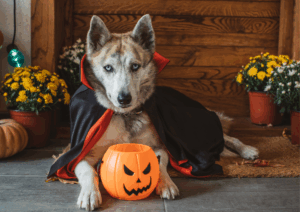
Recognizing Signs of Stress in Dogs During Halloween
Common stress indicators include excessive barking, whining, pacing, trembling, and drooling. Some dogs may hide or avoid interaction.
Changes in eating or sleeping habits can also signal distress. If you notice several of these signs, act quickly. Move your dog to a calm area and use calming aids. Consult a vet if symptoms persist.
Benefits of Preparing Your Dog for Halloween
Preparation familiarizes your dog with Halloween sights and sounds, reducing anxiety. It strengthens your bond through training and trust-building.
A calm dog is less likely to panic or escape, keeping both your home and pet safe.
The skills learned can help during other stressful events like fireworks or storms. Preparation provides long-term benefits for both you and your dog.
Critical Mistakes to Avoid During Halloween
- Avoid leaving your dog unsupervised. The excitement can cause them to dart out or get into danger.
- Don’t force costumes if your dog seems uncomfortable. Choose breathable, nonrestrictive outfits without small parts.
- Never ignore stress signs like trembling or hiding—remove them from the stressful area immediately.
- Keep candles, decorations, and small objects out of reach. These can cause burns, choking, or other injuries.
- Use calming aids if needed and avoid overwhelming your dog with too many new experiences at once.
Strategies for Post-Halloween Recovery
- After Halloween, let your dog rest in their safe space and return to their regular routine quickly. Predictability helps them feel secure.
- Offer gentle play or calm walks. Monitor behavior and consult your vet if anxiety lingers.
- Provide extra affection and remove leftover decorations or hazards to maintain a calm environment.
Frequently Asked Questions
1. How can I prevent my dog from getting scared of costumes?
Gradually introduce costumes before Halloween. Let your dog explore them and reward calm behavior. Short, frequent sessions help build comfort.
2. What are some effective calming aids for dogs during Halloween?
Anxiety wraps and calming chews can reduce stress. Introduce them early and consult your vet before use.
3. Should I keep my dog indoors during trick-or-treat hours?
Yes. The noise and activity can overwhelm pets. Keep them indoors with their favorite toys and blankets.
4. Can exercise help reduce my dog’s anxiety on Halloween?
Yes. A long walk or play session earlier in the day helps burn off energy, making them calmer at night.
5. What should I do if my dog becomes too anxious despite preparations?
Remove them from the stressful area and use a calm voice. If anxiety persists, contact your vet for guidance or safe medication options.
Conclusion
By creating a safe space, using calming accessories, and preparing in advance, you can help your dog stay relaxed during Halloween. Professional advice adds extra support.
Monitor your dog’s behavior, stay consistent, and prioritize comfort. A calm dog means a more enjoyable Halloween for everyone.
"*" indicates required fields
