
Garages are often overlooked when it comes to dog safety in the garage, yet they can be one of the most dangerous areas in the home. From toxic chemicals and sharp tools to unsecured trash, this space poses serious risks if not properly managed. Understanding these hidden dangers can help prevent accidents before they happen and keep your dog safe.
Trash That Attracts Dogs
Garbage in the garage often contains food wrappers, grease soaked packaging, and sharp objects. Dogs are naturally curious and driven by scent, making trash an easy target.
Common risks include:
• Ingesting toxic or spoiled food
• Swallowing bones, plastic, or metal
• Choking or intestinal blockages
Always use secured trash bins with tight lids and keep them out of reach.
Dangerous Tools and Equipment
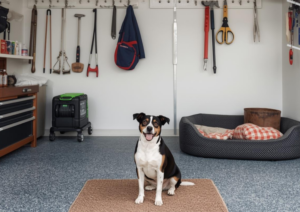
Many garages store tools that can cause injury if a dog investigates them. Sharp edges, heavy objects, and power tools can easily harm a curious dog.
Watch out for:
• Nails, screws, and sharp tools
• Lawn equipment and machinery
• Extension cords and cables
• Unstable shelves or stacked items
Keeping tools organized and stored properly reduces the risk of cuts, punctures, or accidents.
Toxic Chemicals and Substances
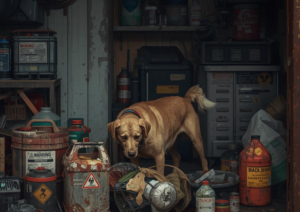
Garages often hold highly toxic substances that can be deadly if ingested or inhaled.
Common toxins include:
• Antifreeze
• Pesticides and herbicides
• Paint, paint thinners, and solvents
• Motor oil and automotive fluids
• Cleaning products
Even small amounts of these substances can be fatal. Store chemicals in sealed containers and place them in locked cabinets whenever possible.
Rodenticides and Pest Control Products
Many garages contain rat or insect poison. These products are extremely dangerous to dogs and can cause severe illness or death.
Avoid leaving pest control products accessible and consider pet safe alternatives when possible.
Doors, Vehicles, and Entrapment Risks
Open garage doors can lead to escapes or accidents. Dogs may dart outside, get trapped behind doors, or be injured by moving vehicles.
Always check the area before opening or closing the garage door and ensure your dog is secured when vehicles are in motion.
Create a Dog Safe Garage
Simple changes can make your garage safer:
• Keep the door closed when unsupervised
• Store toxins in locked cabinets
• Secure trash and tools
• Block access using baby gates or closed doors
A few preventative steps can eliminate most risks.
Final Thoughts
The garage is one of the most dangerous areas for dogs if left unmanaged. By securing trash, tools, and toxic substances, and supervising access, you greatly reduce the chance of accidents. A dog safe garage protects your pet and gives you peace of mind knowing hidden dangers are under control.
"*" indicates required fields
