
Introduction
A puppy socialization checklist is a structured guide that ensures your new puppy encounters at least 100 different positive experiences across six essential categories during the critical 8–16 week developmental window. Without deliberate, varied exposure during this brief period, puppies are far more likely to develop fear, aggression, and anxiety that persist into adulthood. This checklist gives you a clear, trackable system to build your pup’s confidence and prevent the behavioral problems that cut too many dogs’ lives short.
This post is designed for new puppy owners in Southwest Florida who want a practical, science-backed roadmap for raising a well-adjusted dog. Whether you just brought home an 8-week-old retriever or you’re planning for a litter, the information here covers what to expose your puppy to, how to do it safely (even before full vaccination), and where in the Fort Myers, Naples, Cape Coral, and Bonita Springs areas to find the best socialization opportunities.
A comprehensive puppy socialization checklist includes 100+ positive experiences across six key categories: people, animals, environments, sounds, surfaces, and handling. Puppies should experience these stimuli before 16 weeks of age, when the brain’s capacity to form positive associations with new things begins to narrow significantly.
By following this guide, you will:
- Understand why the socialization period between 8 and 16 weeks shapes your puppy’s lifelong temperament
- Learn to read your puppy’s body language so every exposure stays positive
- Access a detailed checklist of 100+ experiences organized into six categories
- Know how to implement a week-by-week plan that matches your pup’s age and vaccination status
- Discover Southwest Florida–specific locations and seasonal strategies for safe, effective socialization
Understanding Puppy Socialization Fundamentals
Puppy socialization is the deliberate, positive process of introducing your puppy to the world-people, other animals, environments, sounds, surfaces, and handling-during the period when their brain is most receptive to forming lasting impressions. Puppies are primed for bonding and learning from 3 weeks to 4 months, and what happens during this window permanently shapes how your dog responds to the world for the rest of their life.
The Science Behind Socialization
During the critical socialization window of roughly 8 to 16 weeks, a puppy’s brain undergoes rapid neurological change. Research by Bray et al. (2020) demonstrates that white matter connectivity, gray matter volume, and myelination-the insulation of neural pathways-are all accelerating during this phase. Distinct cognitive skills, including social cognition, inhibitory control, and causal reasoning, emerge at different points within this span and are highly sensitive to the quality and variety of a puppy’s experiences.
The foundational research by Freedman et al. (1961) established that puppies isolated from human contact beyond approximately 14 to 16 weeks developed withdrawal and fear responses that were extremely difficult to reverse. Puppy socialization is crucial during the first 14 to 16 weeks of age because after this window, neuroplasticity decreases and the brain begins to solidify avoidance patterns rather than curiosity patterns.
The stakes are real: the American Veterinary Society of Animal Behavior states that behavioral issues are the leading cause of death for dogs under three. Incomplete socialization increases behavioral problems in dogs, making early, structured exposure one of the most important investments you can make in your puppy’s life.
Positive vs. Negative Associations
What separates effective socialization from harmful exposure is whether the puppy forms a positive or negative association with each experience. Positive reinforcement is crucial during puppy socialization-pairing every new encounter with high value treats, calm praise, and the puppy’s own choice to engage creates a brain that views new situations as safe and rewarding.
A single overwhelming experience can create a negative association that lasts a lifetime. Forcing a terrified puppy to interact with strangers, dragging them across a scary surface, or exposing them to loud sounds without gradual introduction does more harm than skipping the experience entirely. The goal is always quality over force: short and frequent socialization sessions are more effective than lengthy exposures, and every encounter should end on a positive note.
Understanding what your puppy is telling you through body language is the key to keeping every socialization experience in the positive zone.
Reading Your Puppy’s Body Language During Socialization
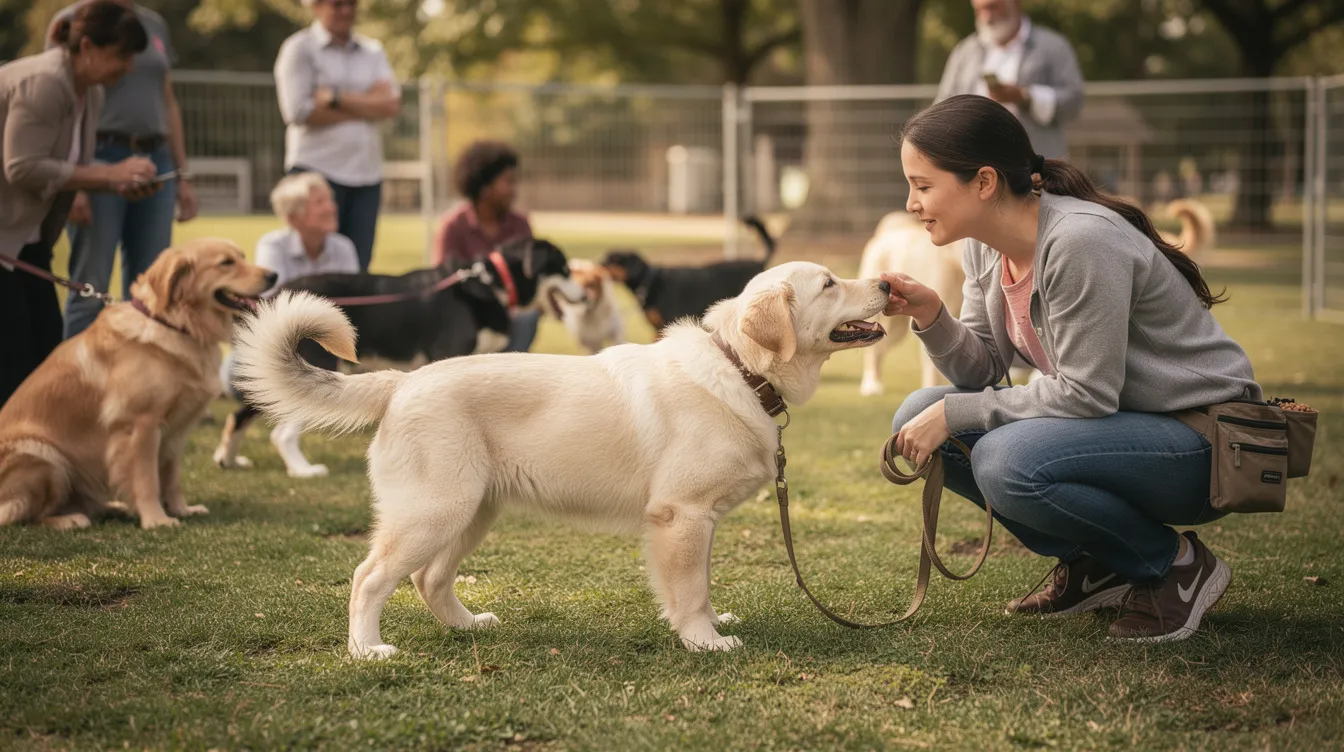
Monitoring your puppy’s comfort level during every socialization session is non-negotiable. Your pup cannot tell you in words when something is too much, but their body communicates clearly if you know what to watch for. Learning to read these signals protects your puppy from forming fears and ensures each experience builds genuine confidence.
Signs of Positive Engagement
A puppy showing relaxed body language is telling you the experience is going well. Look for:
- Loose, wiggly body movements – the whole body seems soft and fluid
- Play bows – front legs down, rear up, inviting interaction
- Soft eyes – relaxed eyelids, no visible whites of the eyes
- Ears in natural position – not pinned back or rigidly forward
- Relaxed mouth – slightly open, no tension in the jaw
- Curious sniffing and exploration – moving toward new things voluntarily
- Willing to eat treats or engage with food – appetite signals comfort
- Quick recovery from mild surprises – a brief startle followed by renewed curiosity
A puppy displaying these signals is in the ideal state for learning. Continue the exposure, reward with treats and praise, and allow them to explore at their own pace.
Stress and Overwhelm Signals
Stress signals range from subtle to obvious. Early warning signs include:
- Lip licking unrelated to food
- Yawning when not tired
- Turning away or averting gaze from the stimulus
- Ears pinned back against the head
- Body tension or crouching low
As stress escalates, you may see:
- Whale eye – visible whites of the eyes
- Tail tucked tightly between legs
- Trembling or freezing in place
- Excessive panting or pacing
- Refusal to eat treats – one of the clearest indicators that a puppy is over threshold
- Hiding behind you or attempting to flee
When you observe two or more of these stress signals occurring together, or any severe signal appears, the session needs to pause or end immediately. Pushing past these signals risks creating exactly the kind of negative association you are trying to prevent.
Recovery and Reset Techniques
If your puppy shows signs of overwhelm, immediately reduce the intensity: increase distance from the stimulus, lower the volume, move to a quiet space, or simply stop the interaction. Let the puppy decompress by offering gentle praise, a favorite treat, and time to choose their own engagement.
Watch for the natural “shake off” – a full-body shake that dogs use to release tension. This is a healthy reset behavior. After the puppy has calmed, you can reintroduce the stimulus at a much lower intensity, always pairing it with something positive. Keep future sessions shorter, and always end before the puppy reaches their stress threshold rather than after.
With this body language foundation in place, you are ready to work through the complete socialization checklist systematically.
The Complete Socialization Checklist: 6 Essential Categories
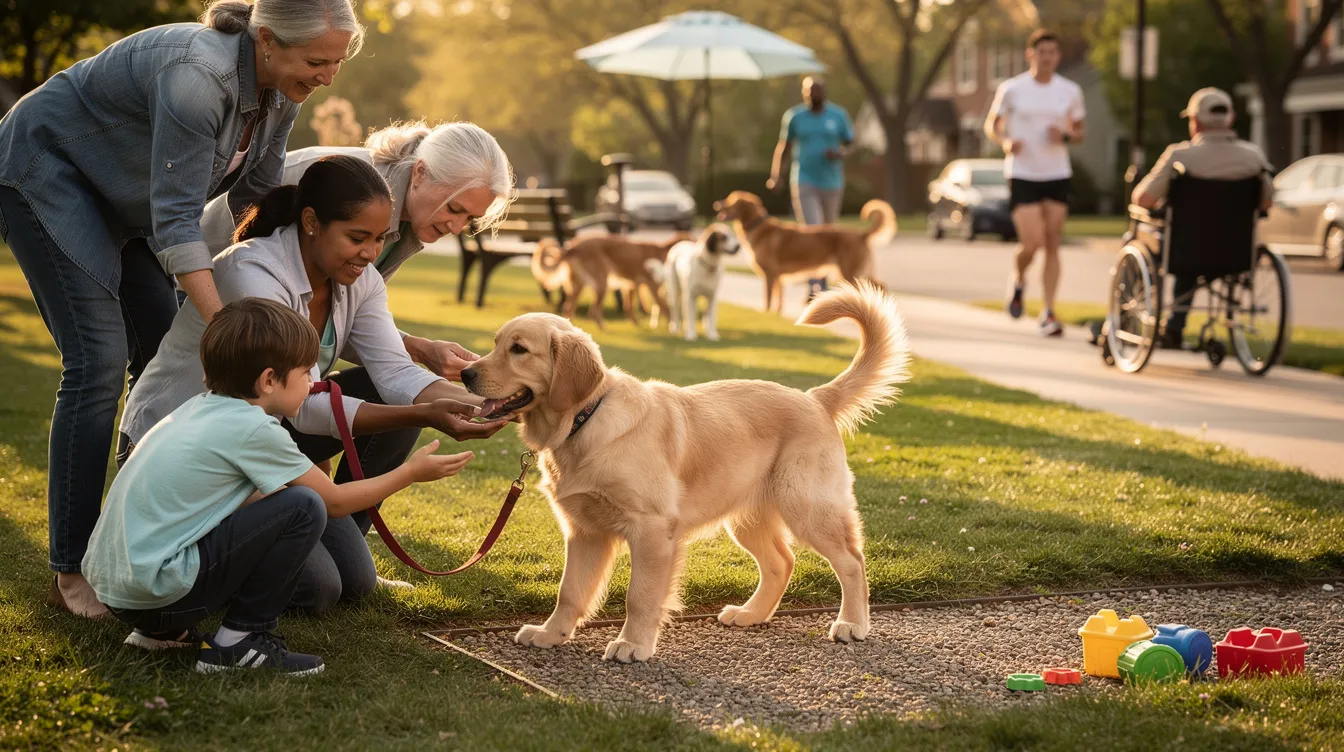
This checklist covers 100+ experiences organized into six categories that together give your puppy broad, balanced exposure to the world. Puppies should experience 100 different stimuli by 16 weeks-some trainers frame it as 100 different experiences in 100 days. The goal is not to rush through a list, but to ensure your pup positively encounters variety, with each category receiving consistent attention throughout the socialization period.
Track your progress with a simple log: record the date, the specific experience, your puppy’s response, and any stress signals observed. This tracking helps you identify categories that need more focus and experiences that may need gentler reintroduction.
People Socialization (25+ Experiences)
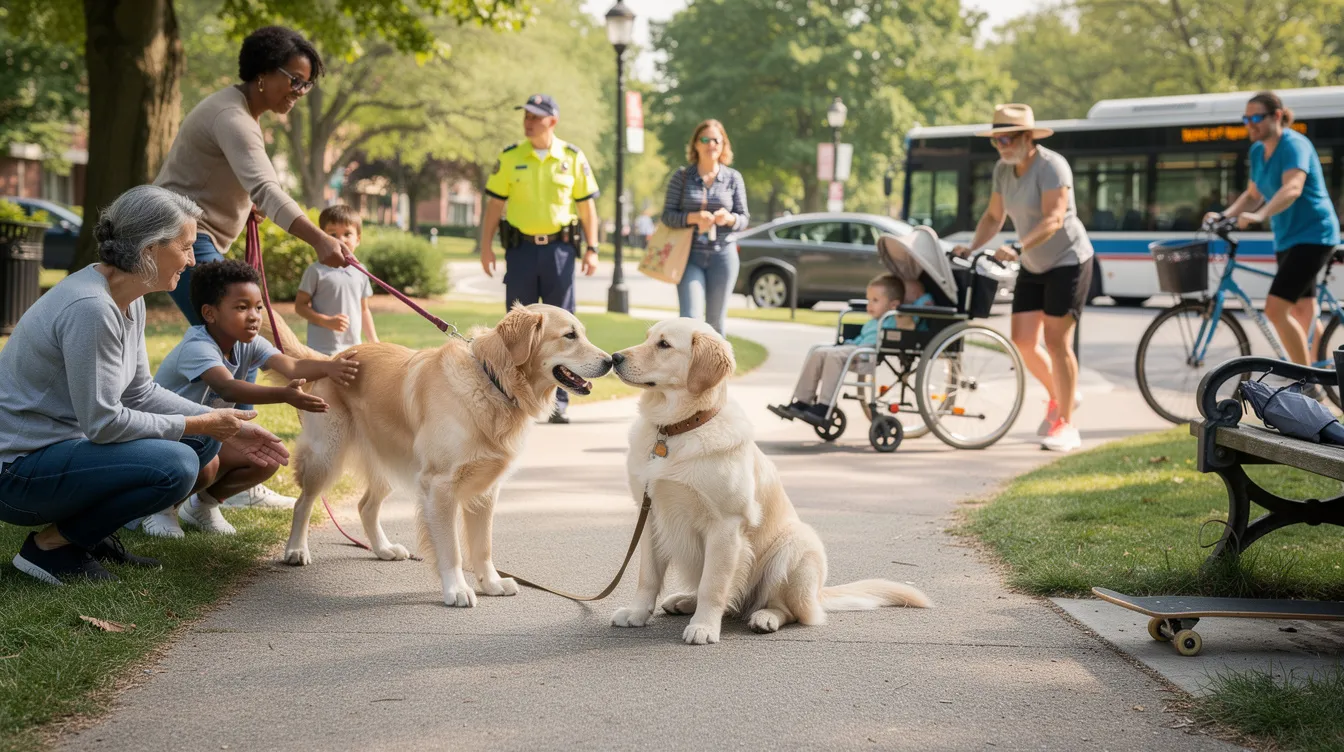
Witnessing diverse people is essential for a puppy’s socialization. Puppies should meet at least 10 new people weekly during the critical window. Your checklist should include exposure to:
- Babies and toddlers (supervised, at a safe distance)
- Children of different ages
- Teenagers
- Adults of varying ages
- Seniors with walkers, canes, or wheelchairs
- People of different ethnicities and body types
- People with beards, hats, sunglasses, hoodies, or face masks
- People in uniforms (postal workers, police, construction crews, lifeguards)
- People carrying umbrellas, backpacks, grocery bags, or plastic bags
- Strangers approaching from different directions
- People on bicycles, skateboards, or electric scooters
- People jogging or walking quickly past
Southwest Florida specifics: Beach-goers in swimwear carrying towels and coolers, tourists speaking different languages, retirees on golf carts, anglers with long fishing rods at piers, vendors at farmers’ markets, and the area’s large Latino community in various cultural contexts all provide excellent, naturally diverse exposure.
Protocol: Always let the puppy choose to approach. Offer treats and praise when your pup shows curiosity toward a new person. Never force interaction-allow your puppy the space to observe from a distance if they prefer.
Animal Encounters (15+ Experiences)
Exposure to other dogs and other animals teaches your puppy appropriate social behavior and prevents reactivity. Include:
- Puppies of similar age and size
- Calm, friendly adult dog interactions (vaccinated, known-temperament dogs)
- Small, medium, and large breed dogs
- Dogs with different ear types (floppy vs. erect), coat types, and face shapes
- Shy or calm dogs (modeling settled behavior)
- Confident, playful dogs
- Cats (at a safe distance, controlled setting)
- Domestic birds
- Livestock at farms or petting zoos (if accessible)
Southwest Florida wildlife encounters (at a safe distance): Iguanas basking on sidewalks, great blue herons and ibis in parks, seagulls on beaches, crabs on the shoreline, and manatees visible from docks or boats. These animals are part of daily life here, and early, calm exposure prevents future chasing or panic.
Protocol: Puppies should interact with calm, friendly dogs during socialization. Use controlled settings-supervised playdates, puppy training classes, or structured introductions in neutral territory. Avoid uncontrolled dog parks until your puppy is older and has reliable recall.
Environmental Exposure (30+ Experiences)
Positive experiences help build confidence in puppies during socialization, and environment variety is one of the most impactful categories. Expose your pup to:
- Car rides (short at first, gradually longer)
- Vet clinic lobby (just to visit, with treats, not only for appointments)
- Groomer salon (introductory visit)
- Pet supply stores
- Hardware stores and garden centers with public access
- Busy sidewalks and crosswalks
- Restaurant patios
- Parking lots with varying traffic
- Parks with open fields and shaded trails
- Beaches (on-leash)
- Marinas, docks, and boat ramps
- Mangrove trails and boardwalks
- Downtown areas with pedestrian traffic
- Your front door with delivery people arriving
- Elevators (if accessible)
Southwest Florida specifics: Your area offers unique environmental training. Dog Beach Park in Bonita Springs provides off-leash beach and shallow water exposure. The Sanibel Causeway Islands offer calm, on-leash waterfront walks with distant boat motor sounds. Fort Myers Beach provides varied textures and busy tourist environments. Indoor options like Bratty Paws Dog Plex in Punta Gorda and The Barkyard & Tap offer controlled, climate-controlled socialization spaces-great options during Southwest Florida’s intense summer heat.
Socialization should include exposure to different weather conditions: light rain, wind, and the distant rumble of afternoon thunderstorms (common May through October). Address varying seasonal changes-tourist season brings crowds; summer brings heat and humidity that require early morning or evening outdoor sessions.
Sound Desensitization (20+ Sounds)
Puppies should gradually be introduced to various sounds to promote desensitization. Start at very low volume and gradually increase as your puppy demonstrates comfort. Use sound recordings played through a speaker to control the exposure level precisely.
- Vacuum cleaner
- Blender and kitchen appliances
- Washing machine and dryer
- Door slams and doorbells
- Smoke detector chirps
- Babies crying (recordings)
- Traffic noise (cars, trucks, motorcycles)
- Emergency vehicle sirens
- Construction sounds (drills, hammers)
- Thunder and heavy rain
- Fireworks (recordings, starting at low volume)
- Boat motors
- Waves crashing
- Public announcement systems
- Loud human laughter and cheering
- Barking from other dogs (at a distance)
- Wind through palm trees
- Umbrella opening/closing
- Electric clippers (for grooming preparation)
- Music at varying volumes
Guidelines: Begin every new sound at very low volume, from across the room or at a distance outdoors. Pair each sound with treats to create positive associations. If your puppy shows any stress signals, reduce the volume immediately. Gradual exposure to moving objects like bicycles or skateboards is recommended for puppies-the visual stimulus combined with their sounds requires patience and incremental introduction.
Surface and Texture Training (15+ Surfaces)
Introduce puppies to various surfaces like grass and tile early, so unfamiliar footing never becomes a source of fear. Your checklist should include:
- Carpet
- Tile and linoleum
- Hardwood floors
- Concrete sidewalks
- Asphalt
- Gravel and crushed shell paths
- Short grass and tall grass
- Wet grass and mud
- Sand (dry and wet)
- Wood decks and docks
- Metal grates
- Rubber mats
- Mulch
- Shallow water (wading depth)
- Pool deck surfaces
Southwest Florida specifics: Sandy beaches, hot pavement (always check temperature with the back of your hand before walking), wooden dock surfaces that may be slippery when wet, concrete seawalls, and pool decks all present unique textures your puppy will encounter regularly.
Training approach: Let the puppy sniff and explore each surface at their own pace. Praise and treat for stepping onto new textures. Provide gentle support but never force or drag. Take it slow to avoid overwhelming your puppy during introductions. If your puppy slips or freezes, back up and try a smaller version of the challenge.
Handling and Care Preparation (10+ Procedures)
Gentle handling of a puppy is important to prepare them for grooming and vet visits throughout their life. Practice these procedures regularly, pairing each with food and calm praise:
- Touching and holding all four paws individually
- Spreading toes and touching nails (preparation for nail trimming)
- Looking inside ears and gentle ear cleaning motions
- Opening the mouth and touching teeth and gums
- Touching the face, muzzle, and around the eyes
- Running hands along the entire body-belly, tail, legs
- Lifting onto a raised surface (simulating a vet exam table)
- Wearing a collar, harness, and leash
- Wearing a life jacket or booties (brief introduction)
- Exposure to grooming tools: brushes, combs, electric clippers (turned off, then on at a distance)
- Being gently restrained or held still for brief periods
- Being weighed on a scale
Approach: Let your puppy inspect each piece of gear. Treat generously while handling. Keep sessions short-30 seconds to 2 minutes-and end before any signs of stress. This foundation directly supports the first things you should teach your puppy and makes future vet visits and grooming dramatically less stressful for everyone.
Systematic Socialization Implementation
Having the checklist is the first step. Implementing it effectively requires a weekly plan, age-appropriate progression, and awareness of your local environment’s seasonal rhythms.
Weekly Planning and Tracking
Design an 8-week socialization schedule that touches every category each week. A balanced approach prevents overloading one category while neglecting others.
Sample weekly structure:
- Monday/Tuesday: People and handling focus – visit a pet-friendly store, practice body handling at home
- Wednesday/Thursday: Environments and surfaces – explore a new location, introduce a new surface
- Friday/Saturday: Animals and sounds – arrange a puppy playdate, run through sound desensitization at home
- Sunday: Review and repeat – revisit any experience that produced mild stress, reinforce successes
Track each session with a simple log: date, category, specific experience, puppy’s reaction (comfortable / neutral / fearful), and notes on what to revisit. A color-coded spreadsheet or printed tracking sheet works well. Consistency in tracking ensures nothing falls through the cracks.
Age-Appropriate Progression
Puppies are most receptive to socialization between 3–4 months, but the intensity and scope of exposure should scale with age and vaccination status. Veterinary guidance is recommended to coordinate safe socialization according to vaccination status.
- Weeks 8–10: Focus on controlled, low-risk environments. Introduce familiar people, gentle handling, household sounds at low volume, and home surfaces. Begin short car rides. Limit public ground exposure for an unvaccinated puppy-carry your pup to introduce sights, smells, and sounds without ground contact in high-traffic areas. First vaccines should be administered.
- Weeks 10–12: Expand to more people, including strangers in varied clothing. Introduce friendly, vaccinated adult dogs for brief, supervised interactions. Begin visiting pet-friendly stores and quiet outdoor areas. Increase sound variety and volume slightly. Puppies should be socialized before 12 weeks old for maximum benefit.
- Weeks 12–14: More complex environments-busy sidewalks, restaurant patios, beach walks during quiet hours. Introduce louder sounds. Expand animal encounters. Practice handling with grooming tools. Expose to different things like shopping carts, strollers, and moving equipment.
- Weeks 14–16: Reinforce and intensify previously introduced experiences. Visit busier locations, explore new environments, and introduce more complex scenarios. Your puppy should be approaching fully vaccinated status, opening access to wider socialization opportunities. This is the time to solidify the foundation before the socialization window begins closing.
Southwest Florida Specific Opportunities
| Season | Outdoor Options | Indoor Options | Key Considerations |
|---|---|---|---|
| Summer (Jun–Sep) | Early morning beach walks, evening park visits | Bratty Paws Dog Plex, The Barkyard & Tap, pet-friendly stores | Extreme heat and humidity-avoid midday; check pavement temperature; watch for heatstroke signs |
| Fall (Oct–Nov) | Trails, dog-friendly beaches, downtown walks | Indoor puppy classes, vet clinic visits | Transition season; decreasing humidity makes longer outdoor sessions possible |
| Winter (Dec–Feb) | Beaches, marinas, outdoor patios, farmers’ markets | Indoor training facilities | Peak tourist season-excellent for people exposure; larger crowds require management |
| Spring (Mar–May) | Parks, nature trails, boat ramp areas | Indoor spaces during afternoon storms | Rainy season begins; afternoon thunderstorms provide natural sound desensitization |
Key local locations:
- Dog Beach Park (Bonita Springs): Off-leash beach with shallow water-ideal for sand, wave, and beachgoer exposure
- Sanibel Causeway Islands: Peaceful on-leash waterfront walks; boat motor sounds at a distance
- Fort Myers Beach: Leashed walks with varied textures and seasonal tourist crowds
- Fort Myers dog-friendly areas: Multiple parks and downtown areas for urban exposure
- Bratty Paws Dog Plex (Punta Gorda): Indoor climate-controlled facility, ideal during summer heat or storms
- The Barkyard & Tap: Indoor/outdoor off-leash play with vaccination verification
Common Socialization Challenges and Solutions
Even with the best plan, challenges arise. Here are the most common obstacles puppy owners face and how to address them effectively.
Fearful or Shut-Down Puppy
Some puppies naturally have a more cautious temperament. If your pup freezes, hides, or refuses to engage, use desensitization and counter-conditioning: expose your puppy to the trigger at a distance or intensity far below the fear threshold, and pair that low-level exposure with high value treats. Let the puppy watch but not interact (“look at but don’t touch”) until they show relaxed body language and curiosity.
Never flood a fearful puppy with the stimulus. Build distance gradually. If the fear is severe or not improving after consistent, gentle work over several weeks, seek help from a qualified behavior modification professional who can assess and create a customized plan.
Over-Excited or Reactive Puppy
Puppies with excessive arousal may bark, lunge, or struggle to focus when encountering new stimuli. Teach impulse control early-sit-stay, settle on a mat, leave it-to give your puppy tools for managing their excitement. Keep socialization sessions shorter, manage the environment by limiting the number of stimuli, and avoid large, uncontrolled groups until your puppy matures.
Structured private training sessions that emphasize calm behavior around distractions can be particularly effective for reactive puppies who need individualized attention.
Limited Vaccination Concerns
Socialization should occur before puppies are fully vaccinated-this is endorsed by the American Veterinary Society of Animal Behavior, WSAVA guidelines, and the AKC. Puppies should be socialized in safe environments before completing their vaccination series.
For an unvaccinated puppy or a pup mid-series:
- Carry your puppy in arms to expose them to people, sounds, and smells without ground contact in public areas
- Host controlled playdates with healthy, vaccinated pets in private homes
- Enroll in puppy classes that require health checks and maintain cleaning protocols
- Use indoor, disinfected spaces for surface and handling training
- Avoid high-risk areas for parvovirus: dog parks with unknown dogs, areas with heavy stray dog traffic, and poorly maintained public grounds
The behavioral risk of insufficient socialization far outweighs the disease risk of carefully controlled early exposure. Consult your vet to create a plan that balances both.
Inconsistent Results or Regression
Fear may resurface during secondary fear periods, which commonly occur around 8–10 weeks and again near 12–14 weeks. This is normal animal behavior, not a failure of your socialization efforts. Maintain consistency: revisit weaker categories, keep sessions short and fun, and monitor stress signals closely.
If regression persists, your puppy develops serious aggression, or behavioral problems are escalating despite consistent effort, professional intervention becomes necessary. A qualified trainer or behaviorist can identify whether the issue is fear-based, genetic, or related to health factors. Knowing when to transition from puppy training to advanced training is also important as your puppy matures past the socialization window.
Conclusion and Next Steps
The socialization period between 8 and 16 weeks is the single most influential phase in your puppy’s life. Socialization helps puppies learn to view new situations as safe, builds the confidence that prevents anxiety and reactivity, and creates a dog that can navigate the world with you rather than in spite of it. Incomplete socialization increases behavioral problems later in life-and those problems remain the leading cause of death for dogs under three.
Start today, regardless of where your puppy currently falls in the 8–16 week window:
- Print or create your tracking sheet with all six categories and begin logging experiences immediately
- Schedule your puppy’s next vet appointment to confirm vaccination status and get clearance for age-appropriate exposure
- Identify three new experiences you can introduce this week-one person type, one environment, one sound
- Set up a controlled playdate with a calm, healthy adult dog or another puppy of similar age
- Book a puppy training consultation for professional guidance tailored to your puppy’s temperament and your local environment
Remember: socialization doesn’t end at 16 weeks. Ongoing exposure to new experiences throughout your dog’s life builds resilience and maintains the behavioral foundation you’ve established. But the work you do now, during this narrow window, shapes everything that follows.
Additional Resources
- Downloadable checklist: Create a printed version of the 100+ experience checklist organized by category for easy daily tracking
- For serious behavioral concerns: Contact a certified applied animal behaviorist or your veterinarian immediately if your puppy shows persistent aggression, extreme fear, or complete social withdrawal
- Southwest Florida puppy classes and training: Off Leash K9 Training Fort Myers offers puppy training programs, private sessions, and board and train options designed to build obedience and confidence during the critical socialization window
- Further reading: Explore the Off Leash K9 Training blog for additional articles on potty training, basic obedience, and advanced training progression
