
Introduction
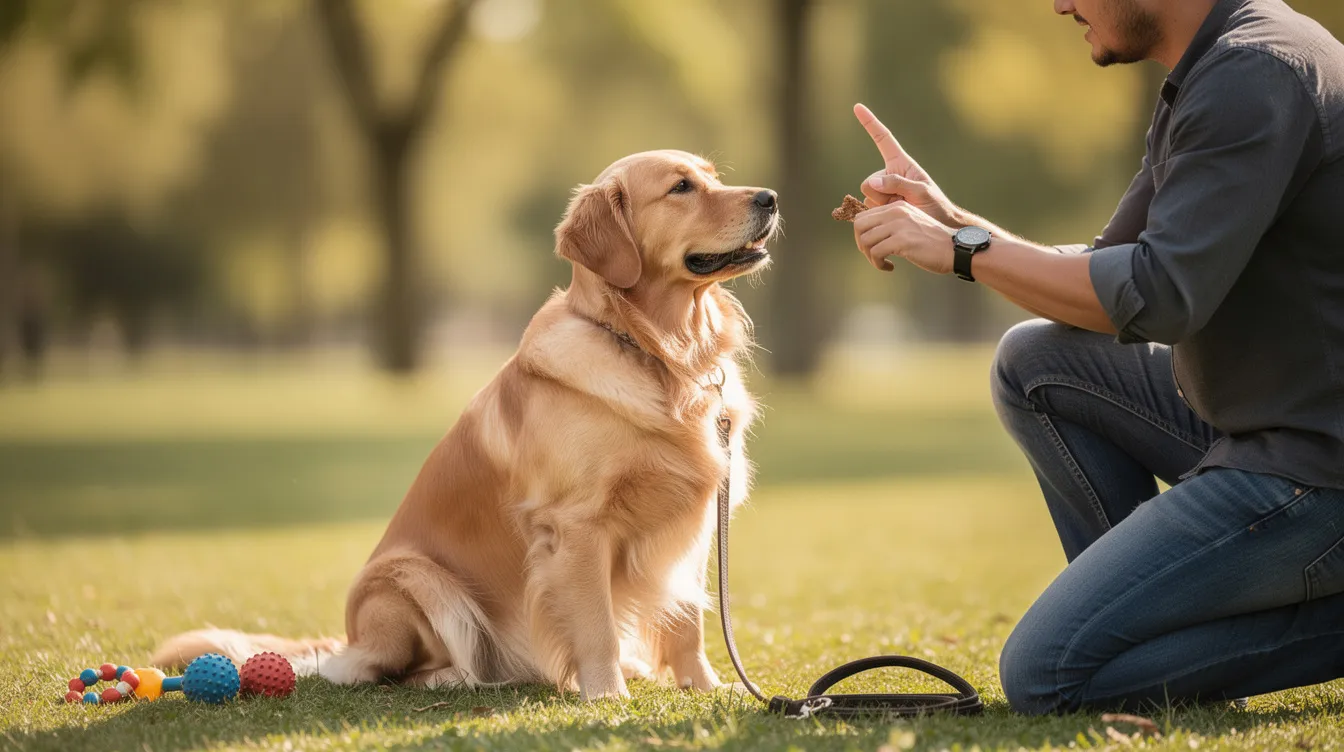
Golden Retrievers are among the top five most intelligent breeds, yet their combination of high energy, social drive, and mouth-oriented instincts means training a golden retriever requires more than just handing out treats. This complete guide delivers practical, breed-specific techniques for training golden retrievers at every stage-from bringing an eight-week-old new puppy home through achieving reliable off-leash obedience with adult dogs.
Whether you’re navigating the chaos of golden retriever puppy training, addressing jumping and mouthing in an adolescent dog, or building off-leash reliability for Southwest Florida’s beaches and dog parks, this guide covers the right techniques grounded in behavioral science and real-world application. Content that falls outside scope: breed-specific health management, conformation showing, and breeding decisions.
Golden Retriever training success requires understanding their people-focused Golden Retriever temperament, high energy needs, and tendency toward over-excitement. With consistent guidance using positive reinforcement, most owners achieve reliable basic obedience within 4–6 months and can progress to advanced off-leash work shortly after.
By the end of this guide, you will:
- Master house training and crate training timelines specific to Golden Retrievers
- Teach essential basic commands including sit, come, down, and stay
- Build reliable off-leash recall even around social distractions
- Solve jumping, mouthing, and destructive behaviors at the source
- Establish lifelong training habits that keep your golden well-behaved and mentally sharp
Understanding Golden Retriever Training Fundamentals
Golden Retrievers are simultaneously one of the easiest and most challenging breeds to train. Their intelligence and strong desire to please make them quick learners-a golden retriever learns new commands in fewer repetitions than most breeds. But that same intelligence, combined with intense sociability and high energy, means they can develop bad habits just as quickly as good behavior if training lacks structure. Setting realistic expectations starts with understanding what drives this breed.
Golden Retriever Intelligence and Learning Style
Golden Retrievers rank among the top five smartest dog breeds for working and obedience intelligence, behind only Border Collies, Poodles, German Shepherds, and Doberman Pinschers. They were originally bred to follow complex handler commands during waterfowl retrieval-work that demanded close attention, impulse control, and responsiveness under distracting field conditions.
This heritage translates directly into training. A golden retriever’s people-pleasing nature makes them highly responsive to positive reinforcement and praise-based training. Positive reinforcement uses rewards to teach desired behaviors, and Golden Retrievers respond well to positive reinforcement techniques-using treats or praise encourages Golden Retrievers to repeat behaviors reliably. Research from the University of Cambridge identified a gene (ROMO1) strongly associated with trainability in Golden Retrievers, suggesting their eagerness to learn has deep genetic roots tied to emotional sensitivity and cognitive performance.
Breed-Specific Challenges
Not all dogs within the breed are identical. Golden Retrievers bred for field work tend to have higher energy, stronger drive, and greater stamina, while show-line Goldens are generally calmer with heavier coats and more settled temperaments. This distinction matters: field-line golden retriever puppies may need more intensive mental stimulation and physical outlets early in a puppy’s life, while show lines risk boredom-driven destruction if under-challenged.
Across both lines, Golden Retrievers’ tendency toward over-excitement when greeting people and other dogs is a persistent training challenge. Their social orientation means strangers, other pets, and interesting smells can overwhelm learned obedience commands-particularly during walks or at the park. This isn’t defiance; it’s a breed with intense social wiring struggling with impulse control. Golden Retrievers may face a challenging adolescent period between 6 to 18 months, when these tendencies peak.
Motivation and Reward Systems
Golden Retrievers respond powerfully to three reward categories: food rewards, verbal praise, and play-based training. Their hunting heritage and natural retrieving instincts create unique training opportunities-a retrieve game with a favorite toy can serve as a high-value reward that also burns energy.
Positive reinforcement builds an enthusiastic learner in dogs, and positive reinforcement strengthens the bond between dog and owner. Consistency is crucial for effective positive reinforcement training; variable or unclear reward delivery confuses intelligent dogs who are actively trying to decode your expectations. Keep training sessions fun to maintain your dog’s attention, and use games to enhance learning during training sessions.
Understanding these fundamentals-intelligence, breed-specific challenges, and what motivates your golden-leads naturally to establishing the practical training foundations every owner must master.
Essential Training Foundations
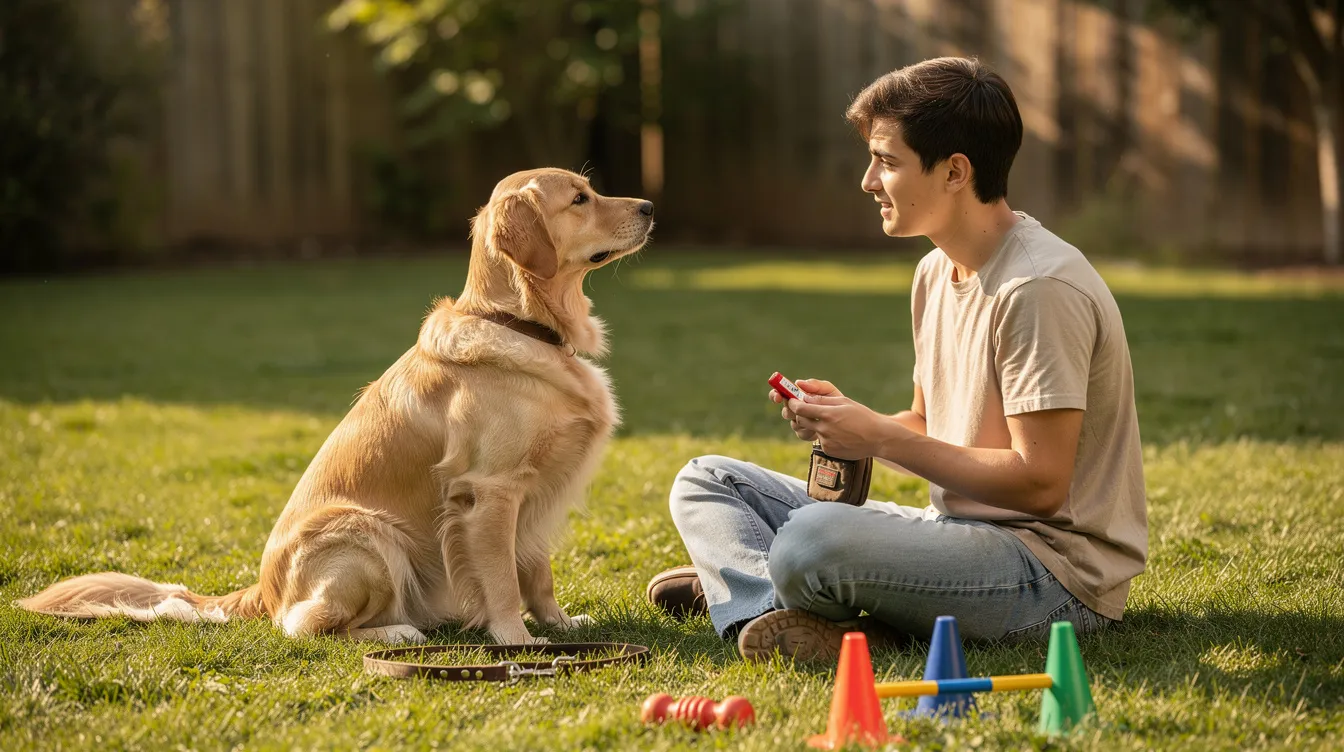
The traits that make Golden Retrievers exceptional companions-intelligence, energy, social drive-are the same traits that demand structured early training. Without proper foundations, these most popular family dogs channel their considerable abilities into counter surfing, leash pulling, and enthusiastic destruction. Here’s how to build those foundations systematically.
House Training and Crate Training
Most Golden Retriever puppies are house trained by 4–6 months when owners maintain a disciplined schedule. According to the AKC’s potty training timeline, most puppies achieve dependable reliability around the 6-month mark, though Golden Retrievers’ intelligence often accelerates progress-many owners report minimal accidents by 3–4 months with consistent effort.
Establish a reliable routine for potty training and crate training early on. Start training Golden Retriever puppies at 8 to 12 weeks old, taking them outside immediately after waking, eating, and playing. Do not punish mistakes during training as it can create fear-instead, interrupt accidents calmly and redirect outside.
Crate training serves as the backbone of house training and much more. A properly sized crate creates a comfortable space that leverages a dog’s natural denning instinct, prevents destructive behaviors when unsupervised, and builds the impulse control that Golden Retrievers specifically need. Begin crate introduction by feeding meals inside, keeping initial sessions short, and treating the crate as a reward rather than punishment. For a detailed approach, see our potty training guide.
Basic Obedience Commands
Teaching “sit” is the gateway command for every golden retriever. It builds focus, establishes eye contact, creates waiting behavior at doors and during greetings, and reinforces impulse control-all areas where Goldens need deliberate practice. Golden Retriever puppies should have short training sessions of 3–5 minutes, since young puppies lose focus quickly. Using consistent commands across different family members aids training success.
Establishing reliable “come” (recall) is the most critical and most difficult command, particularly given Golden Retrievers’ social distractions. UC Davis veterinary research emphasizes building a dog’s intrinsic desire to return through high-value rewards and graduated difficulty. Commands must be clear and non-negotiable for effective training-when your dog understands that “come” always means return immediately, reliability follows. Each training behavior should be generalized to various settings for effectiveness.
“Down” and “stay” commands provide the framework for managing over-excitement and teaching self-control. Shape these gradually: start with short durations, then increase distance, then add distractions. Reward calm behavior alongside training to encourage relaxation-this is especially important for golden retriever puppies who default to excited arousal. For simple commands you can practice at home, consistent daily repetition makes the difference.
Leash Training and Walking Manners
Golden Retrievers-especially field lines-pull strongly toward people, other dogs, and interesting smells during walks. Leash training begins with teaching loose-leash walking using consistent positive reinforcement: reward correct positioning beside you, stop movement when pulling occurs (negative punishment), and resume only when the leash slackens.
Teaching loose-leash walking without relying solely on treats means fading food rewards into a variable reinforcement schedule over time. Environmental management helps: reduce pre-walk excitement through calm departures, walk before feeding so your dog enters the training session more composed, and practice commands during the walk rather than treating it as purely recreational.
These foundational leash skills directly prepare your golden for the advanced off-leash training that makes life with this breed truly rewarding.
Advanced Training Implementation
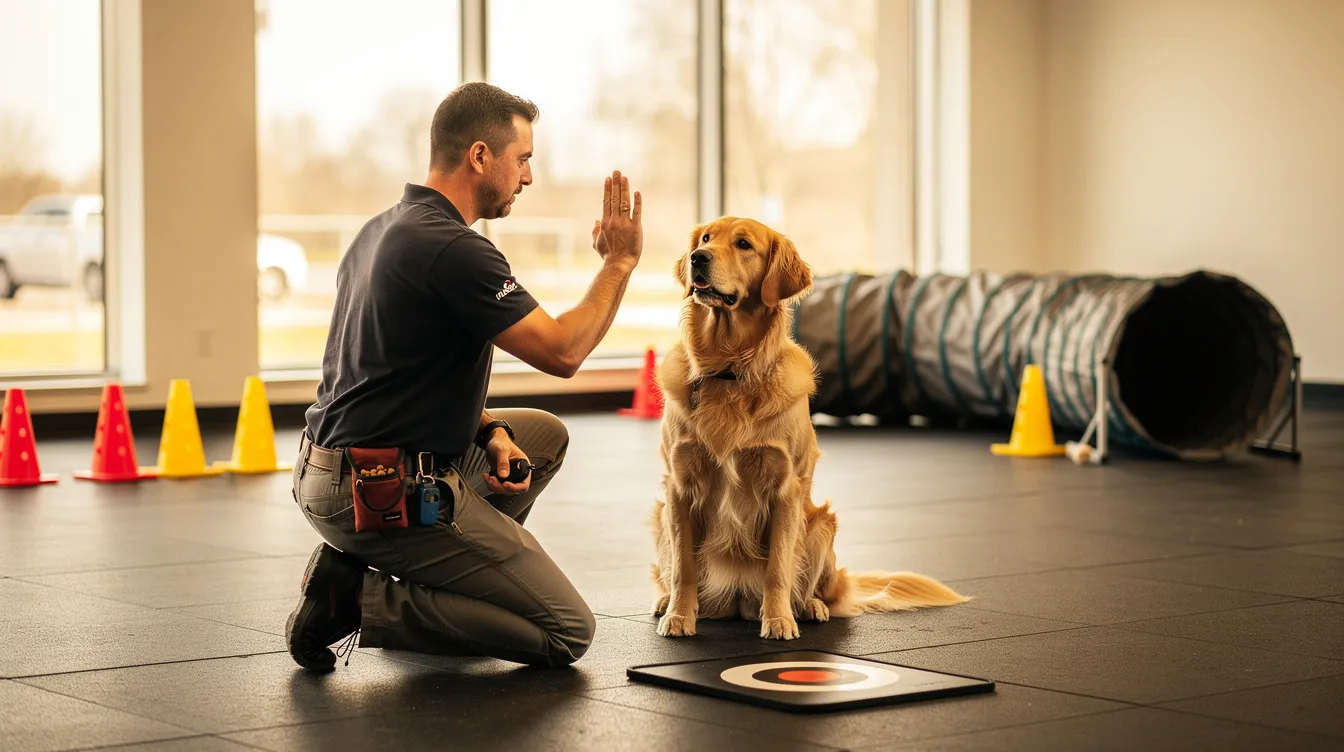
With reliable basic obedience training established, Golden Retrievers are ready for the work they were built to do: responding to commands at distance, under distraction, without a leash connecting them to their handler. This is where the breed’s intelligence and desire to please truly shine-and where training methodology matters most.
Off-Leash Training Process
A golden retriever is ready for off-leash work when recall is reliable at increasing distances with moderate distractions. Rushing this process creates dangerous habits; building it systematically produces a well trained dog who can accompany you to beaches, trails, and dog parks with confidence.
- Establish rock-solid recall in low-distraction environments using a 15–30 foot long-line. Practice commands in your yard or a quiet field, rewarding every successful return with high-value treats or a retrieve game. Golden retriever puppies need 30–60 minutes of exercise daily; channel that energy into recall drills.
- Introduce controlled distractions while maintaining command reliability. Add one distraction at a time-another person, then other dogs at a distance, then food smells. Mark and reward compliance immediately; if the dog fails, return to the previous difficulty level.
- Practice emergency recall scenarios with extremely high-value rewards. Emergency recall should override everything-use a distinct command word and pair it with the best reward your dog knows (real meat, a favorite toy). This is critical in Southwest Florida where wildlife distractions including birds and squirrels are constant.
- Graduate to full off-leash freedom in safe, enclosed areas. Fenced parks or training fields allow practice without risk. Golden Retrievers require at least one hour of exercise daily; off-leash sessions satisfy this while reinforcing training.
- Maintain skills through regular practice and real-world application. Even reliably off-leash dogs need daily recall repetitions. Regular practice during daily activities enhances training effectiveness-integrate recall into walks, play, and feeding routines.
For owners pursuing advanced off-leash goals, professional training programs can accelerate this process significantly, particularly for high-drive field-line Goldens.
Training Program Comparison
| Training Method | Treat-Based Training | Balanced Training Program |
|---|---|---|
| Distraction Reliability | Limited success with excited Golden Retrievers | Works despite social distractions |
| Off-Leash Results | Inconsistent when treats unavailable | Reliable compliance regardless of rewards |
| Timeline to Success | 6–12 months with ongoing treat dependency | 4–8 weeks for basic reliability |
Reward-based training is recommended over aversive methods by veterinary behaviorists. A UK study of 63 dogs referred for off-lead behavioral problems found that reward-based trainers achieved significantly fewer commands per compliance and shorter recall latency than groups using e-collar or mixed methods after just five days. A review of 17 peer-reviewed studies found consistent correlation between aversive tools and increased stress indicators, fear, and aggression-with no evidence that aversive methods outperform reward-based approaches in producing reliable obedience.
The most effective approach for many owners combines positive reinforcement as the primary method with structured expectations that make good behavior non-negotiable. Golden Retrievers are capable of becoming strong dogs without proper management, so building impulse control is crucial in training Golden Retrievers from the earliest stages. For families needing accelerated results, a board and train program provides intensive daily training that condenses months of work into weeks.
Sex and age can impact the training approach for Golden Retrievers-intact males may show more distraction around unknown dogs, while adolescent females can become selectively responsive during hormonal changes. Adjust expectations and reinforcement intensity accordingly.
Common Challenges and Solutions
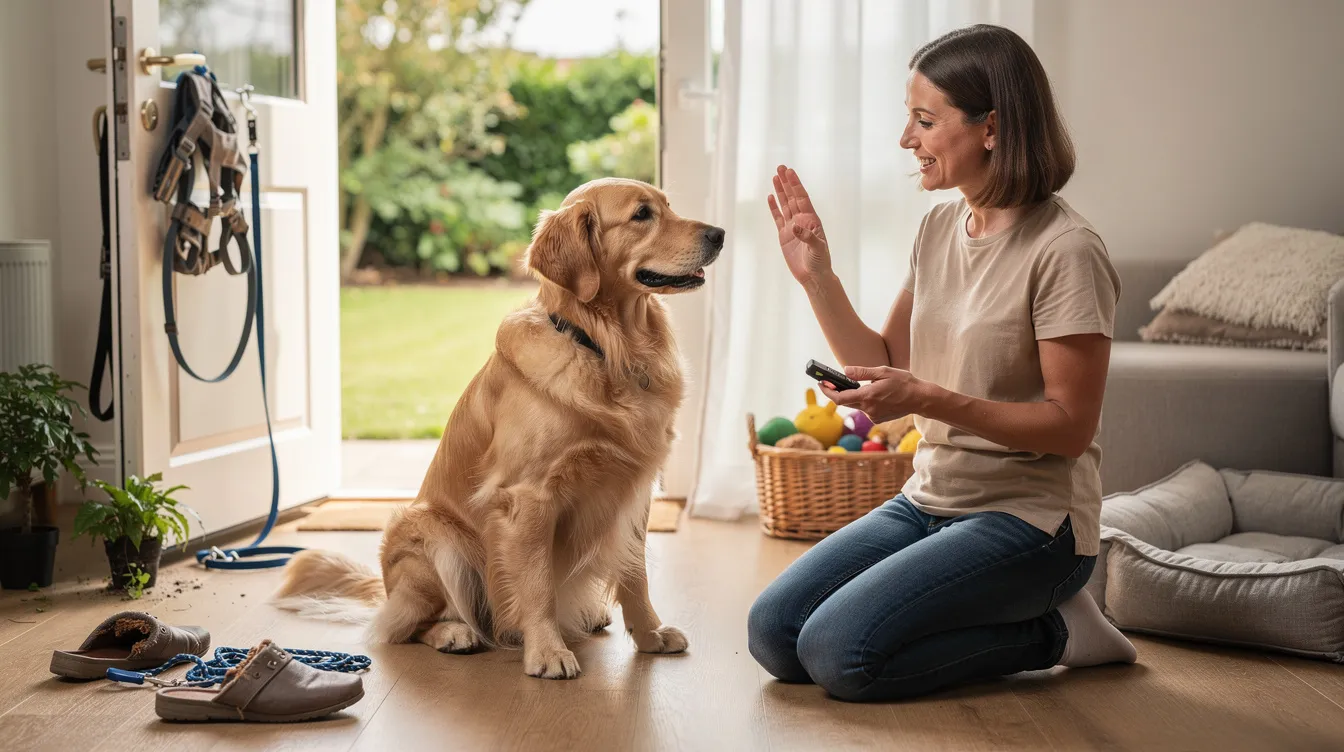
Golden Retrievers develop specific behavioral issues rooted in their breed characteristics-social over-excitement, oral fixation, and intelligence-driven boredom. Understanding the cause behind each behavior makes the solution more effective than simply suppressing symptoms.
Jumping on People
Golden retrievers often jump due to excitement, and this behavior is frequently reinforced unintentionally when family members or visitors respond with attention-even negative attention like pushing the dog away. Ignoring jumping behavior until all paws are on the ground helps correct it.
Teach an incompatible alternative: a reliable sit-stay as the default greeting behavior. Practice with all family members maintaining identical standards. Use impulse control exercises at doorways-the dog must sit before the door opens, and any jump resets the sequence. For field-line Goldens with higher excitement thresholds, expect longer training timelines and more repetitions before the alternative behavior becomes automatic.
Excessive Mouthing and Biting
Golden Retrievers are particularly prone to getting mouthy-they were bred to carry things, and puppies explore the world through their mouths. This is normal breed behavior, not aggression, but it requires consistent bite inhibition training.
Redirect mouthiness by providing appropriate chew toys-rope toys, puzzle toys, and durable rubber toys give appropriate outlets. When a puppy mouths too hard, withdraw all interaction immediately (negative punishment), then redirect to a chew toy. For adult dogs who haven’t outgrown mouthing, consistent boundaries apply: mouthing = interaction stops completely. Avoid yelling or harsh corrections, as these tend to escalate arousal in Golden Retrievers rather than reducing it.
Destructive Behaviors
Destructive behaviors in Golden Retrievers almost always trace to insufficient exercise, inadequate mental stimulation, or both. Goldens thrive on structured activities like fetch, swimming, and scent games. Golden Retrievers need at least one hour of exercise daily to prevent behavioral issues-field lines may need significantly more.
Build structured daily routines that include physical exercise, training sessions, and enrichment activities. Puzzle toys during alone time, tracking exercises that engage their scent drive, and dock diving for water-loving Goldens all provide the outlet this breed demands. When exercise and stimulation are adequate, most destructive behaviors resolve without additional intervention.
Selective Listening
Many owners encounter selective listening-their golden follows commands perfectly at home but ignores them entirely at the park or around other dogs. This happens when training hasn’t been generalized across environments and distraction levels.
The solution is systematic: practice commands at progressively higher distraction levels, always rewarding correct responses immediately. Barking can stem from excitement, boredom, or attention-seeking; teaching “quiet” can help manage excessive barking by giving the dog a clear alternative. Commands should function as non-negotiable expectations, not suggestions your dog evaluates based on what’s more interesting. Socialization helps prevent fear-based behaviors in adult dogs-golden retriever puppies should be socialized between 8 to 16 weeks, and positive experiences during socialization shape adult temperament. Socialization reduces the chances of aggression in golden retrievers and ensures they can follow commands reliably even around unknown dogs and unfamiliar environments.
For persistent selective listening, professional help provides structured exposure protocols that many owners struggle to replicate independently. Veterinary behaviorists can assist with serious training challenges that don’t respond to standard approaches.
Conclusion and Next Steps
Golden Retrievers achieve exceptional training results when owners combine understanding of their breed-specific needs-intelligence, social drive, energy, and oral tendencies-with consistent, structured training methods built on positive reinforcement. Whether you’re starting with a new puppy at eight weeks or retraining an adult rescue, the fundamentals remain the same: clear expectations, immediate reinforcement, gradual progression, and daily practice.
Your immediate next steps:
- Assess your Golden Retriever’s current training level-identify which basic commands are reliable and which break down under distraction
- Establish a daily practice routine with short training sessions (3–5 minutes for puppies, 10–15 for adults) integrated into regular activities
- Address the biggest behavioral challenge first-whether that’s jumping, mouthing, leash pulling, or recall failure
- Consider professional guidance for complex behavioral issues or accelerated off-leash training goals, especially in Southwest Florida’s distraction-rich environment
For Golden Retrievers who master basic and advanced obedience, continued mental stimulation through therapy dog certification, agility training, rally obedience, and competitive obedience keeps these intelligent dogs engaged and prevents the regression that comes when training your golden retriever stops being a daily priority. Golden Retrievers are among the most popular family dogs for good reason-with the right techniques and consistent guidance, they become remarkably well-behaved companions who make life better for the entire family.
