
Introduction
Crate anxiety and separation anxiety are two distinct conditions that produce similar-looking distress in dogs but require fundamentally different training approaches. Crate anxiety-also called confinement anxiety-is a fear response triggered by being physically restricted in a small space like a crate, X-pen, or behind a baby gate, regardless of whether the owner is present. Separation anxiety is a panic disorder triggered by being left alone or separated from a specific attachment figure, regardless of whether the dog is confined or free in the house.
This article covers how to identify, assess, and address each condition through tailored dog training protocols. It’s written for pet parents in Southwest Florida who are dealing with anxious dogs that panic during crating, departures, or both-and who need clarity before investing time and money in the wrong approach.
The direct answer: Crate anxiety occurs specifically when dogs are confined in a small space and may cause panic even if the owner is present. Separation anxiety causes distress regardless of confinement-the trigger is being away from a specific attachment figure. A dog with true separation anxiety may panic whether confined or free in the house, while a crate anxious dog remains calm when left loose in a room.
By the end of this article, you’ll understand:
- How to distinguish crate anxiety from separation anxiety based on observable behavior
- The specific symptoms, triggers, and timeline patterns unique to each condition
- Professional assessment protocols that prevent misdiagnosis
- Realistic training timelines and techniques for each condition (and combination cases)
- When home training is sufficient and when professional intervention is necessary
Understanding These Two Distinct Anxiety Types
Misdiagnosis is the single most expensive mistake pet parents make with an anxious dog. Treating crate anxiety as separation anxiety-or vice versa-doesn’t just waste several weeks of training effort. It actively makes things worse by exposing the dog to triggers without addressing the underlying anxiety. A dog with confinement anxiety who gets forced into a crate as part of a separation anxiety protocol will escalate into frantic escape attempts, broken teeth, and self-injury. A dog with separation anxiety who gets a beautiful crate training program but is never taught to tolerate alone time will continue destroying the house the moment you leave.
In the Fort Myers area, rescue dogs are especially prone to presenting with one or both conditions. Dogs adopted from shelters often show more separation anxiety due to unknown early histories, prior abandonment, or extended kennel stays. Many dogs from these backgrounds also develop crate anxiety after traumatic confinement experiences. A recent Texas A&M study found that over 84% of dogs show some sign of fear or anxiety in everyday situations, underscoring how common these issues truly are.
Crate Anxiety (Confinement Phobia)
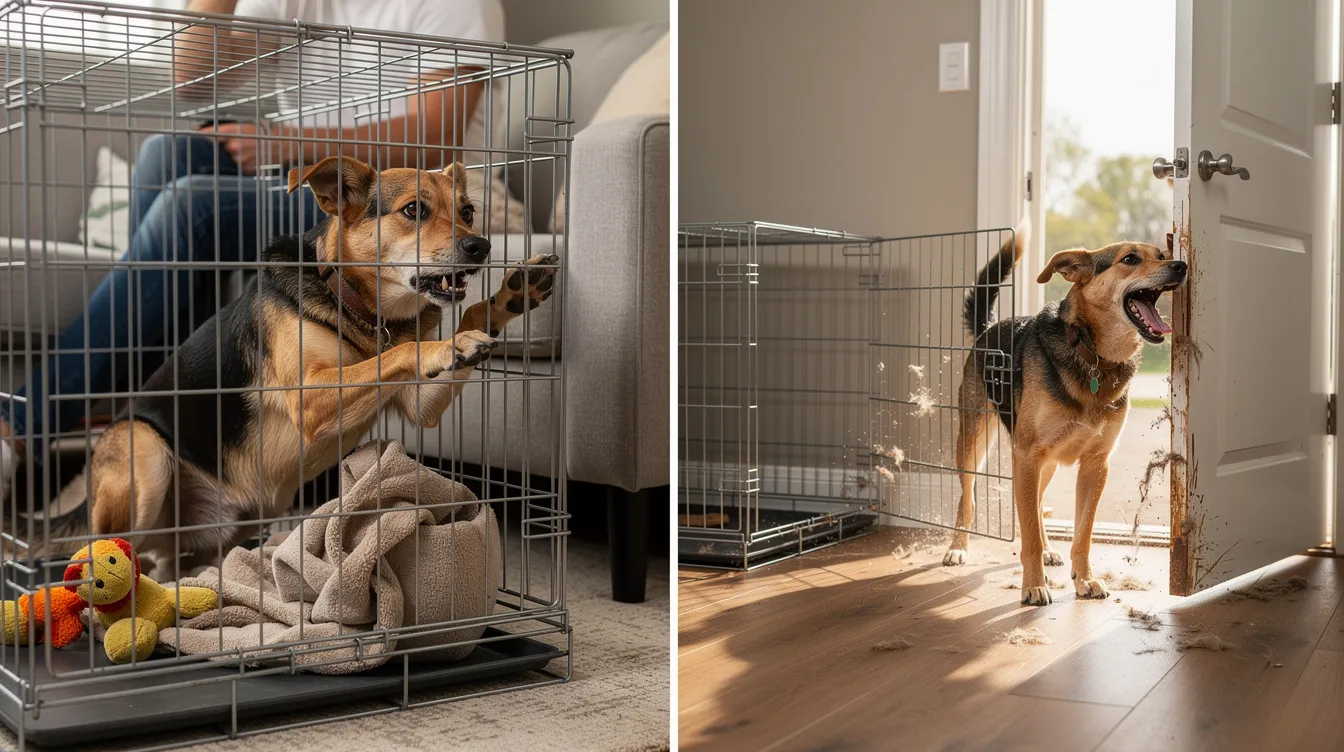
Crate anxiety is a fear response triggered specifically by being confined in a small space. The dog’s anxiety centers on the barrier itself-the crate door, the walls, the inability to move freely-not on being alone. Puppies may experience crate anxiety due to unfamiliarity with enclosed spaces, while adult dogs may develop crate anxiety after traumatic events such as prolonged shelter confinement, improper crate use, or being crated as punishment.
The response is essentially claustrophobic. When the door shut on the crate, the dog enters a stress state that can escalate rapidly to panic, even if the owner is sitting right next to them. Crate training should not be used as a form of punishment-this is one of the fastest ways to create confinement anxiety where none previously existed. Dogs may also feel anxious if they associate crates with being left alone, which is where the two conditions begin to blur.
Separation Anxiety (Isolation Distress)
Separation anxiety is an attachment-based panic disorder. The trigger isn’t a crate or a room-it’s the absence of a specific person. Dogs with separation anxiety become hypervigilant to departure cues: picking up keys, putting on shoes, grabbing a bag. The dog’s behavior shifts into high alert before you even reach the door.
Indicators of separation anxiety include hyper-attachment behaviors when the owner is home-following from room to room, refusing to settle unless touching the owner, becoming visibly anxious when the owner moves toward an exit. Separation anxiety is triggered by being away from a specific attachment figure, and the resulting distress can be severe. Persistent barking or howling, destructive behaviors around exit points like doors and windows, and house-soiling despite being house-trained are hallmark signs. Some dogs eat their own feces when left alone due to the intensity of their anxiety.
This is distinct from a dog who simply prefers company. True separation anxiety involves genuine panic-elevated heart rate, drooling, pacing in a fixed pattern, and an inability to eat, settle, or engage with puzzle toys or food during the owner’s absence. Separation anxiety can impair training due to distress during absence, making it one of the more challenging behavior conditions to resolve.
Combination Cases
Many dogs present with both conditions simultaneously. A shelter dog who was confined in a kennel for months and then rehomed may panic in a crate and panic when left alone. These combination cases require a dual protocol approach and tend to take longer to resolve-typically 8–16 weeks or more.
The critical point is that accurate assessment determines training success. Without knowing which condition (or conditions) you’re dealing with, every training decision is a guess. The next section breaks down exactly how each condition shows up in your dog’s behavior so you can begin distinguishing them at home.
How These Conditions Manifest Differently
Behavioral observation is the primary diagnostic tool used in professional training. While both conditions produce stress, barking, and destructive behavior, the context and timing of these behaviors tell you which anxiety you’re dealing with.
Crate Anxiety Symptoms and Triggers
Dogs with crate anxiety show distress centered on confinement. Symptoms of crate anxiety include frantic escape attempts and self-injury-dogs may bite crate bars, dig at crate floors, and slam against walls trying to get out. Self-injury in crate-anxious dogs may result from these escape attempts, including broken teeth, torn nails, and lacerations. Common indicators include whining when the crate door is shut, excessive barking, heavy panting, salivation, trembling, and potty accidents inside the crate despite being fully house-trained.
Key diagnostic marker: crate anxiety may cause panic even if the owner is present. The dog refuses to enter the crate voluntarily, freezes or pulls away when guided toward it, and escalates within a few seconds to minutes of the door closing. However, the same dog may be completely calm when left loose in one room or behind a baby gate in a larger space.
Triggers include crate size (too small or too restrictive), locking mechanism sounds, previous negative confinement, or insufficient crate acclimation. A crate should allow dogs to stand, turn, and lie down comfortably-a durable crate that’s too small amplifies confinement fear, though a crate should also be snug enough to prevent destructive behavior during training.
Separation Anxiety Symptoms and Triggers
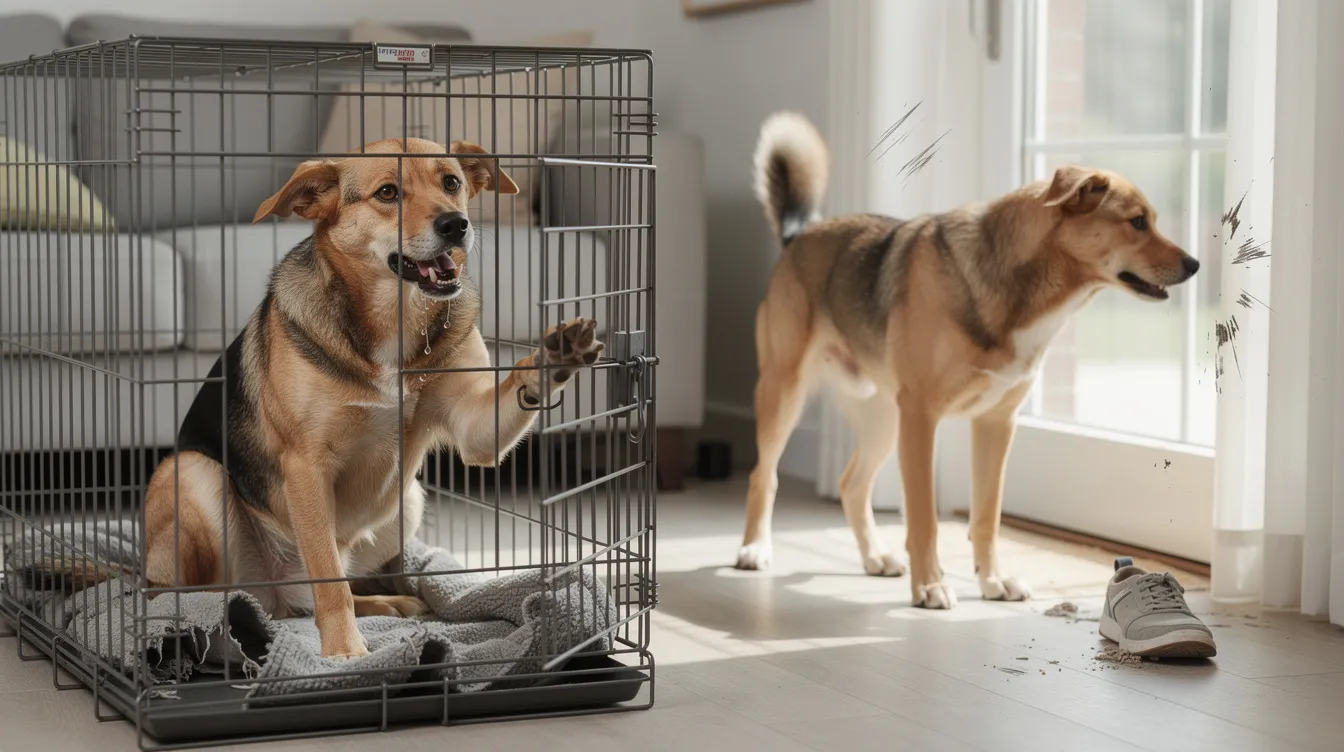
Dogs with separation anxiety show distress centered on absence. Symptoms include vocalization and destruction around exit points-chewing door frames, scratching at windows, digging at thresholds. Dogs may urinate or defecate when left alone. Pre-departure anxiety is a distinctive feature: dogs begin pacing, whining, drooling, or shadowing the owner as soon as departure cues appear.
Key diagnostic marker: the dog is calm when crated with the owner present but panics when left alone, whether crated or free in the house. Separation anxious dogs may panic whether confined or free-the variable is the owner’s presence, not the physical space.
Changes in a dog’s schedule can trigger separation anxiety-a shift in work hours, a move to a new home, or changes in family members’ routines. Upon reunion, dogs with separation anxiety show excessive greeting behaviors-jumping, spinning, inability to settle even minutes after the owner returns. The stress levels remain elevated long after the triggering event begins.
Timeline and Intensity Patterns
The onset and duration patterns differ meaningfully between these conditions:
Crate anxiety produces an immediate reaction. Within a few seconds of the crate door closing, stress escalates rapidly. The dog may reach peak panic within minutes, with frantic escape attempts beginning almost immediately. However, once released from the crate, recovery can be relatively quick-the dog calms down because the trigger (confinement) has been removed. Fear around the crate itself may persist, but the acute episode ends with release.
Separation anxiety follows a ramp-up pattern. Distress begins building during pre-departure cues, peaks during the initial period of absence, and often continues for the entire duration the owner is gone. Pacing in a fixed pattern is a sign of anxiety in dogs and may persist throughout the absence. Recovery after the owner returns is often slow-some dogs take minutes to hours to fully settle, and stress threshold remains lowered for the rest of the day.
Understanding these patterns matters because it determines how you structure training. Let’s look at how professionals systematically evaluate each condition.
Professional Assessment and Training Approaches
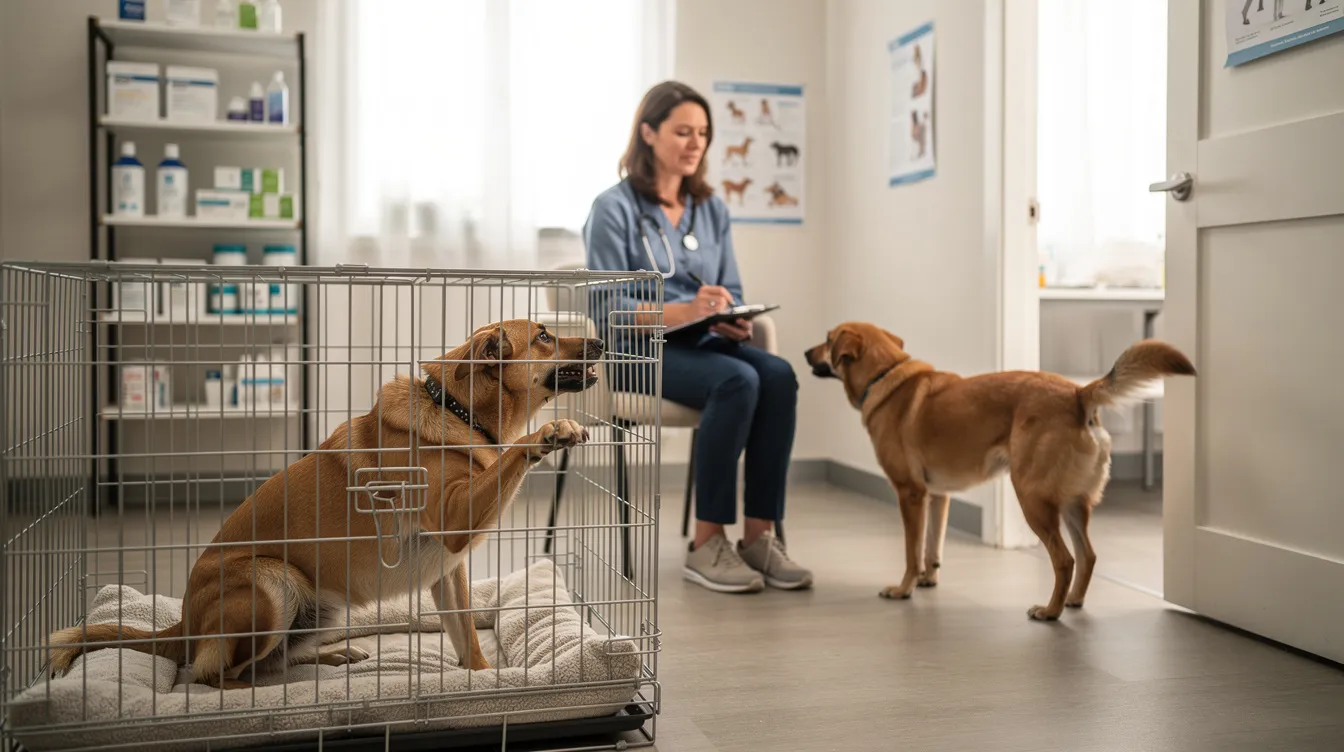
A systematic evaluation process is essential before beginning any behavior modification program. Assessing pet behavior with a camera can distinguish between types of anxiety and eliminates guesswork. Here’s the protocol used in professional dog training programs.
Diagnostic Testing Protocol
- Crate comfort assessment with owner present: Allow the dog to explore the crate with the door open. Toss food and toys inside. Observe latency to enter, body language, and stress signals. Then close the crate door briefly with the owner sitting beside it. If the dog shows panic even with the owner right there, crate anxiety is likely the primary issue.
- Brief departures with dog uncrated: Leave the dog loose in a safe space-a small room or dog-proofed area. Step outside for short periods (starting at a few seconds, then gradually increasing). Monitor via video. If the dog shows destructive behavior, excessive barking, or potty accidents only during these absences, separation anxiety is indicated.
- Crated departures with video monitoring: Combine confinement with absence. Crate the dog and leave. Video captures whether stress levels spike from the crate, the departure, or both. This step identifies combination cases.
- Extended observation periods: Track patterns across a few days to identify consistency. Some dogs show stress only on certain days or in response to specific departure cues. Note whether other dogs or family members in the home affect the dog’s behavior.
This private training evaluation process prevents the most common and costly mistake: applying the wrong protocol to the wrong condition.
Training Method Comparison
| Criterion | Crate Anxiety | Separation Anxiety | Combined Cases |
|---|---|---|---|
| Focus Area | Desensitization to confinement | Independence building and alone time tolerance | Dual protocol addressing both triggers |
| Timeline | 4–8 weeks for most dogs | 6–12 weeks; severe cases 3–6 months | 8–16 weeks or longer |
| Key Techniques | Crate games with door open, counter-conditioning, positive association with food/toys, slowly increase crate time | Neutralize departure cues, systematic desensitization to short periods alone, low key departures and arrivals | Start crate work with owner present, then integrate separation protocols; adjust increments based on video |
| Success Indicators | Voluntary crate entry, calm with door shut, relaxed body language during crate time | Calm during departures, no destructive behavior when left alone, ability to settle during alone time | Both conditions resolved-dog tolerates crate and solitude |
Coping strategies for crate anxiety include positive associations with the crate-feeding meals inside with the door open, using interactive toys and puzzle toys to build a positive association, and desensitization that involves gradually increasing time in the crate from a few seconds to minutes to hours. Positive reinforcement helps dogs associate crates with safety and rewards. Crate training can take 4-8 weeks for most dogs, though desensitization can take several months to reduce crate anxiety in more severe cases.
For separation anxiety, training techniques center on independence building: teaching the dog that alone time is safe, neutralizing departure cues so the dog doesn’t begin escalating before you leave, and gradually building tolerance. Gradual desensitization can help dogs with separation anxiety, but the process must be carefully managed-pushing too fast makes separation anxiety worse.
Calming aids can support dogs with crate anxiety effectively, and pheromone therapy has shown promise for both conditions. For moderate-to-severe cases, the FDA approved Tessie (tasipimidine) in May 2026 specifically for separation anxiety and noise aversion-the first drug approved for both indications. Traditional medications like fluoxetine and clomipramine remain options for extreme separation anxiety, but medication must always be combined with behavior modification to produce lasting results.
Customized approaches achieve better results than generic methods because they match the protocol to the actual trigger. A dog who loves the crate but can’t handle being left alone needs a completely different plan than a pup who panics the moment a crate door closes.
Common Training Challenges and Solutions
Behavior modification for anxious dogs isn’t linear. Here are the most frequent obstacles encountered during training in Southwest Florida-and how to address them.
Mismatched Training Approach
Treating the wrong condition wastes time and makes things worse. A dog with confinement anxiety who is repeatedly crated will escalate into frantic escape attempts, self-injury, and deepening fear. A dog with separation anxiety who receives only crate training will continue to panic whenever left alone, whether crated or loose in the house. Crate training can worsen anxiety if done too quickly or applied to the wrong problem. A crate should not be used for dogs with severe panic as it can add distress.
Solution: Professional assessment before beginning any protocol. A certified separation anxiety trainer or experienced behavior professional uses systematic evaluation-including video monitoring-to identify the correct condition. This prevents months of wasted effort and prevents making the dog’s anxiety worse.
Owner Consistency Issues
Behavioral plans require consistent execution. Desensitization depends on never exceeding the dog’s stress threshold during training. If a pet parent follows the protocol for five days but then leaves the dog alone for eight hours on day six because of work, the regression can erase weeks of progress. The dog learns that sometimes confinement or absence still produces panic, which undermines the entire counter-conditioning process.
Solution: A structured training schedule with clear daily protocols, specific duration targets, and progress tracking. Mental stimulation through enrichment-puzzle toys, food-dispensing toys, chewing items-supports calm behavior during training sessions. Following professional guidance exactly as prescribed, including managing the dog’s environment on days when training can’t happen, is critical.
Plateau in Progress
Some dogs make initial progress-entering the crate voluntarily, tolerating a few seconds of alone time-but then stall. The dog shows no further improvement despite weeks of consistent work. This is common with severe cases, combination cases, and dogs with deep-rooted fear from prior trauma. Medical issues should also be ruled out, as pain or cognitive changes can contribute to anxiety that doesn’t respond to behavior protocols alone.
Solution: A board-and-train program provides intensive, professional intervention when home training stalls. Immersive programs offer consistent exposure, professional monitoring, and the ability to adjust protocols in real time. For dogs with extreme separation anxiety or severe confinement phobia, this professional immersion often produces faster and more reliable results than home-based training alone. Board-and-train programs differ from lesson-based training in intensity and consistency-both of which matter for anxiety cases.
Conclusion and Next Steps
Accurate diagnosis is the single most important factor in successfully resolving a dog’s anxiety. Crate anxiety and separation anxiety look similar on the surface but stem from different triggers, follow different timelines, and respond to different training protocols. Treating one as the other doesn’t just fail-it escalates the problem.
Here are your immediate next steps:
- Document current behaviors with video. Record your dog during crating (with you present and absent) and during departures. This footage is the most valuable diagnostic tool available.
- Schedule a professional assessment. A qualified trainer can distinguish between crate anxiety, separation anxiety, and combination cases within a structured evaluation.
- Stop using punishment-based methods. Scolding, forcing the dog into the crate, or punishing anxious behavior increases stress levels and deepens fear. Crate training should not be used as a form of punishment under any circumstances.
- Manage the environment now. If your dog panics in a crate, use a safe space like a dog-proofed small room instead while you work on crate desensitization separately. If your dog can’t handle being left alone, arrange for someone to be with them until training progresses.
For pet parents dealing with anxious dogs, general obedience training also plays a role-building confidence, impulse control, and the ability to settle translates directly into better outcomes for anxiety protocols. Puppy training programs that incorporate early crate games and independence skills can prevent these conditions from developing in the first place.
Additional Resources
- Free phone consultation for Fort Myers and Southwest Florida residents to discuss your dog’s specific behavior and determine the right starting point
- Board-and-train program details for severe anxiety cases requiring professional immersion and daily structured protocols
- Video monitoring setup: A basic Wi-Fi camera positioned to capture the crate area and exit points provides the clearest picture of your dog’s behavior during absences-essential for distinguishing between crate anxiety and separation anxiety before beginning any training program
