

Introduction
Puppy fear periods are commonly described as developmental stages when a young dog may become more cautious or fearful of familiar objects, people, sounds, or situations. These changes are not automatically a sign of poor training or a temperament problem. Puppies develop at different rates, and genetics, early experiences, socialization, and environment can all influence how fear-related behavior appears.
This guide covers two commonly discussed stages when fearfulness may become more noticeable: an early developmental window around 8–11 weeks and a possible increase in fear or caution during adolescence. These age ranges should be treated as general guides rather than fixed milestones because timing, duration, and intensity vary between individual dogs. Whether you’re a new puppy owner navigating your pup’s first weeks at home, an experienced handler puzzled by a sudden behavioral change in an adolescent dog, or a pet parent trying to distinguish developmental sensitivity from something more serious, this article provides a practical framework.
The short answer: Some puppies and adolescent dogs experience temporary increases in fearfulness as they develop, but there is no universal schedule or fixed 2–3 week duration that applies to every dog. Supportive management, gradual positive experiences, and avoiding forced exposure are more important than waiting for a specific fear period to end.
By the end of this guide, you will be able to:
- Recognize common signs of fear and fearful body language in your puppy
- Understand general developmental stages while allowing for individual variation
- Apply practical management techniques rooted in positive reinforcement
- Distinguish mild developmental caution from red flags that warrant professional guidance
- Build a foundation for confidence and reliable everyday behavior
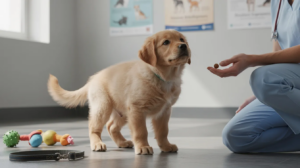
Understanding Puppy Fear Periods
Fear-related behavior can change as a puppy matures. During sensitive developmental stages, young dogs are learning how to respond to people, animals, environments, sounds, surfaces, and unfamiliar experiences. Some puppies become temporarily more cautious during these stages, while others show little noticeable change.
It is important not to assume that every new fear is simply a developmental phase. A puppy that suddenly becomes fearful may be responding to a frightening experience, changes in the environment, inadequate socialization, discomfort, pain, or another behavioral or medical concern.
The most useful approach is to observe when the behavior started, what triggers it, how intense the reaction is, and whether the puppy is gradually improving or becoming more fearful.
The Biological Purpose
Puppies undergo significant behavioral and neurological development during their first months of life. Research has documented changes in fear-related avoidance during early development, with the timing varying between breeds and individual puppies.
A study of 98 purebred puppies compared Cavalier King Charles Spaniels, Yorkshire Terriers, and German Shepherd Dogs. Researchers found breed-related differences in when fear-related avoidance behavior began, illustrating why developmental timing should not be treated as identical for every dog.
Increased caution during development may have an adaptive role by helping young animals respond appropriately to unfamiliar or potentially threatening situations. In domestic dogs, however, genetics, previous experiences, socialization, environment, and individual temperament all influence how strongly fear-related behavior appears.
Rather than thinking of puppy fear periods as rigid biological checkpoints, it is more useful to view development as a process in which sensitivity to new experiences can change as the puppy matures.
Normal vs. Concerning Fear Responses
Temporary hesitation around a particular object, person, sound, or environment can occur during puppy development. Your puppy might suddenly avoid a vacuum cleaner, hesitate around an unfamiliar visitor, or become cautious in an environment that previously seemed easy.
What matters most is the severity and direction of the behavior.
Signs that deserve closer attention include:
- Fear that becomes progressively more intense
- Fear spreading to an increasing number of situations
- Repeated growling, snapping, lunging, or biting
- Refusal to eat, walk, play, or participate in normal activities
- Sudden behavioral changes accompanied by possible pain or illness
- Fear that does not appear to improve with careful management
If your puppy’s reactions are escalating or you notice leash reactivity developing alongside fearfulness, consider speaking with your veterinarian or a qualified behavior professional rather than assuming your puppy will simply grow out of it.
With this foundation in place, let’s look at the developmental stages most commonly associated with increased fearfulness.
Commonly Described Puppy Fear Periods
Two stages are frequently discussed when owners notice changes in confidence: an early fear-sensitive stage during puppyhood and a possible increase in caution during adolescence. Not every dog experiences both stages clearly, and the timing can vary considerably.
Early Fear-Sensitive Period Around 8–11 Weeks
An early increase in fear-related sensitivity is commonly described around 8–11 weeks of age. This often overlaps with the time puppies leave their breeder or litter and begin adjusting to a new family, home, veterinarian, neighborhood, and daily routine.
Common challenges during this period may include:
- New people
- Household appliances
- Vacuum cleaners
- Car rides
- Veterinary visits
- Unfamiliar surfaces
- Traffic sounds
- Sudden noises
- New environments
For Southwest Florida puppies, thunderstorms, air-conditioning systems, neighborhood activity, and other unfamiliar environmental sounds may also be new experiences.
Physical and behavioral signs of discomfort can include cowering, trembling, retreating, hiding, a tucked tail, showing the whites of the eyes, lip licking, panting, freezing, or refusing to approach something unfamiliar.
The duration and intensity of these changes vary between puppies. Instead of expecting the behavior to disappear within a set number of weeks, monitor whether your puppy is gradually becoming more comfortable.
The goal during this developmental stage is gentle, controlled exposure without forcing your puppy into situations that cause obvious fear.
Adolescent Fearfulness
Some dogs show another noticeable increase in caution or fearfulness during adolescence. Owners may notice that a young dog who was previously comfortable around certain objects, people, or environments suddenly hesitates, barks, retreats, or reacts more strongly.
There is no single adolescent fear-period schedule that reliably applies to every dog. Development varies based on genetics, breed, size, temperament, learning history, socialization, and individual maturity.
For some dogs, changes may appear intermittently rather than as one continuous period. Possible triggers can include:
- Specific locations
- Sudden movements
- Unfamiliar people
- Other dogs
- Other animals
- New objects
- Loud noises
- Weather events
- Changes in routine
Because adolescent dogs are larger and stronger than young puppies, behaviors such as pulling away, barking, or lunging may also become more difficult for owners to manage safely.
The appearance of new caution does not mean you need to abandon your training program. Instead, reduce difficulty when necessary and work at a level where your dog can remain engaged and successful.
Breed and Individual Variations
Not all dogs experience fear-related developmental changes with the same timing or intensity.
The study involving 98 Cavalier King Charles Spaniels, Yorkshire Terriers, and German Shepherd Dogs found measurable breed differences in the onset of fear-related avoidance during early puppy development. Cavaliers showed later onset than German Shepherds and Yorkshire Terriers.
That study is useful evidence that developmental timing can differ between breeds, but it should not be used to create fixed fear-period schedules for breeds that were not included in the research.
Individual temperament matters as well. Two puppies of the same breed and age can respond very differently to an unfamiliar sound or environment.
Early experiences, genetics, breeder practices, socialization, health, and the puppy’s previous learning history can all influence behavior. The most reliable guide is your individual puppy’s body language and response to each situation.
Managing Fear Periods Effectively
Proper management focuses on helping your puppy feel safe enough to learn rather than forcing the puppy to confront something frightening.
Appropriate early socialization remains important, but socialization is not simply exposing a puppy to as many experiences as possible. The quality and intensity of those experiences matter.
Veterinary behavior guidance warns that repeatedly exposing a puppy to something while the puppy is already frightened can increase sensitization and make fear worse.
The DO’s and DON’Ts Protocol
Use these guidelines whenever your puppy shows fear or significant hesitation:
- Allow your puppy to create distance from the trigger.
Avoid blocking your puppy’s escape route or dragging them closer. Give your puppy enough distance to observe the situation without becoming overwhelmed. - Reward calm curiosity and voluntary engagement.
If your puppy looks toward an unfamiliar object, takes a step closer, sniffs, or otherwise investigates comfortably, you can reinforce that behavior with food, praise, or play. - Maintain familiar routines while adjusting training difficulty.
Keep feeding, rest, walks, and daily routines predictable when possible. Continue working on foundational skills while reducing distractions or expectations if your puppy is struggling. - Build positive associations gradually.
Pair manageable exposure to unfamiliar people, sounds, objects, and environments with experiences your puppy enjoys. Use calm, predictable handling and watch your puppy’s body language closely. - Do not force interaction or overwhelm your puppy.
Avoid prolonged or forced exposure to a trigger when your puppy is already frightened. Excessive exposure can increase sensitization and worsen fear rather than helping the puppy become comfortable.
For Southwest Florida owners, consider environmental conditions when planning training. Shorter outings during cooler parts of the day may make training more comfortable for young dogs.
During storm season, introduce unfamiliar sounds carefully. If you use recorded thunder or similar noises for gradual exposure, begin quietly and stop or reduce the intensity if your puppy shows signs of distress. Significant noise fear should be discussed with a veterinarian or qualified behavior professional.
Training Approach Comparison
| Criteria | Effective Approach | Counterproductive Approach |
| Exposure method | Gradual exposure with enough distance for the puppy to remain comfortable | Forced exposure or dragging the puppy toward a trigger |
| Reinforcement timing | Reinforce calm observation, curiosity, and voluntary engagement | Punishing fearful reactions |
| Training intensity | Adjust difficulty based on the puppy’s body language and ability to cope | Increasing pressure when the puppy is already overwhelmed |
| Duration expectations | Allow progress at the individual puppy’s pace and monitor whether fear is improving, stable, or worsening | Expecting every puppy to recover within a fixed number of days or weeks |
The practical takeaway is that gradual exposure paired with positive experiences is generally more appropriate than forcing a fearful puppy through an overwhelming situation.
If you are unsure how much exposure is appropriate, a puppy training consultation can help evaluate your puppy’s temperament, current behavior patterns, and training goals so you can develop a plan suited to the individual dog.
Common Challenges and Solutions
Even experienced dog owners can be surprised when a previously confident puppy suddenly responds differently to a familiar situation.
Puppy Refuses to Walk in a Familiar Neighborhood
A puppy that happily walked through the neighborhood last week may suddenly hesitate at the front door or stop when approaching a particular object.
Start with shorter routes and reduce the difficulty of the outing. Bring appropriate rewards, allow sniffing breaks, and give your puppy time to observe the environment.
If your puppy appears afraid of a particular object, such as a trash can, parked vehicle, or construction equipment, begin far enough away that your puppy can notice it without becoming overwhelmed.
Reward calm observation and allow your puppy to choose whether to move closer.
Sudden Fear of Family Members or Visitors
A puppy that previously greeted people comfortably may occasionally become hesitant around a family member or visitor.
Avoid forcing the interaction. Ask the person to give the puppy space and avoid reaching directly toward them.
If the puppy is comfortable taking food, the person can toss treats from a distance rather than using food to lure the puppy closer than they want to be.
Allow the puppy to choose when to approach. Voluntary interaction provides a better opportunity to build positive associations without pressure.
Regression in House Training or Basic Commands
Stress, changes in routine, or environmental changes can sometimes coincide with setbacks in house training or responsiveness to familiar cues.
Return to the basics by increasing supervision, providing frequent outdoor opportunities, simplifying training exercises, and reinforcing successful behavior.
Do not assume that every regression is caused by a fear period. Sudden or persistent changes in elimination, appetite, activity, or behavior may also warrant veterinary attention.
Continue your puppy training fundamentals while monitoring whether the setback improves.
Fear Persists or Worsens
There is no reliable rule that fear must disappear within two or three weeks.
What matters more is whether your puppy is gradually improving.
Seek professional guidance if fearful behavior:
- Continues to intensify
- Begins spreading to many new situations
- Interferes with eating, walking, sleeping, or normal activities
- Causes repeated growling, snapping, lunging, or biting
- Appears suddenly with other physical or behavioral symptoms
A veterinarian can help rule out pain, sensory changes, illness, or other medical factors. For significant anxiety, timidness, reactivity, or aggression, professional dog behavior training may also be appropriate.

Conclusion and Next Steps
Puppy fear periods are a useful way to describe times when some young dogs become more cautious or sensitive, but not every puppy follows the same schedule or experiences the same behavioral changes.
The most important response is not counting how many days the fear lasts. Focus instead on your puppy’s body language, severity of the reaction, ability to recover, and whether the overall pattern is improving.
Your immediate action steps:
- Document fear triggers. Keep a simple log of what frightens your puppy, when the behavior occurs, and how intense the response appears.
- Continue appropriate positive-reinforcement training. Maintain socialization and skill-building at a level your puppy can comfortably handle.
- Avoid overwhelming situations. If your puppy is already showing fear, choose calmer and more controlled environments instead of forcing participation in highly stimulating situations.
- Monitor progression. Seek veterinary or behavioral guidance if fear is severe, worsening, interfering with daily life, or failing to improve.
For related reading, explore puppy training and socialization, tips for managing separation anxiety, and guidance on transitioning from puppy training to advanced obedience as your dog matures.
Frequently Asked Questions
What is puppy socialization and how does it relate to fear periods?
Puppy socialization involves helping your puppy develop positive experiences with people, animals, environments, surfaces, sounds, and everyday situations.
Good socialization is gradual and responsive to the puppy’s body language. Simply exposing a frightened puppy to more stimulation is not always helpful. If your puppy shows fear, reduce the intensity or increase distance so the experience remains manageable.
Can leash reactivity develop during a fear period?
Fear can contribute to reactive behavior on leash, but leash reactivity can have many causes and should not automatically be attributed to a developmental fear period.
If your puppy begins barking, lunging, freezing, or trying to escape around people or dogs, reduce overwhelming exposure and evaluate the specific triggers. Persistent or worsening reactivity may benefit from professional guidance.
How long do puppy fear periods typically last?
There is no universal duration that applies to every puppy.
Some fear-related changes may be brief, while others last longer or appear intermittently. Monitor whether your puppy’s confidence is gradually returning rather than expecting the behavior to resolve within a fixed two- or three-week period.
If fear is severe, worsening, interfering with normal activities, or failing to improve, consult your veterinarian or a qualified behavior professional.
What should I do if my puppy seems frightened for a prolonged time?
Do not wait for a specific deadline if the behavior is causing significant distress.
Seek guidance if your puppy’s fear becomes more intense, spreads to additional situations, interferes with normal activities, or involves aggression. Veterinary evaluation can also help rule out pain or medical problems that may be contributing to the behavioral change.
How can I help my puppy become more confident after a fearful phase?
Allow your puppy to maintain a comfortable distance from frightening stimuli and avoid forcing interaction.
Reinforce calm observation, curiosity, and voluntary engagement. Keep training sessions manageable, maintain predictable routines, and gradually increase difficulty as your puppy becomes more comfortable.
Professional Support Resources
At Off Leash K9 Training in Fort Myers, the Puppy Training Consultation is designed for puppies 5 months or younger. The consultation provides guidance on basic obedience foundations, house training, proper handling, introduction to play, food rewards, and questions owners may have about their puppy or its training.
The puppy training options also include the 5-lesson Pawsitive Puppy Lesson Program, which focuses on basic obedience foundations, play, socialization, positive-reinforcement training, marker and clicker training, confidence building, and basic leash skills.
If you’re concerned about a sudden change in your puppy’s behavior, you can request a free phone consultation to discuss your training concerns and determine which available training option may be appropriate.
For puppies showing more significant anxiety, timidness, reactivity, or aggression, dog behavior training in Fort Myers provides additional behavior-support options based on the dog’s triggers, history, and individual needs.
Calm, thoughtful handling during sensitive developmental stages can support your puppy’s confidence while reducing the risk of making existing fears more intense.
