
Introduction
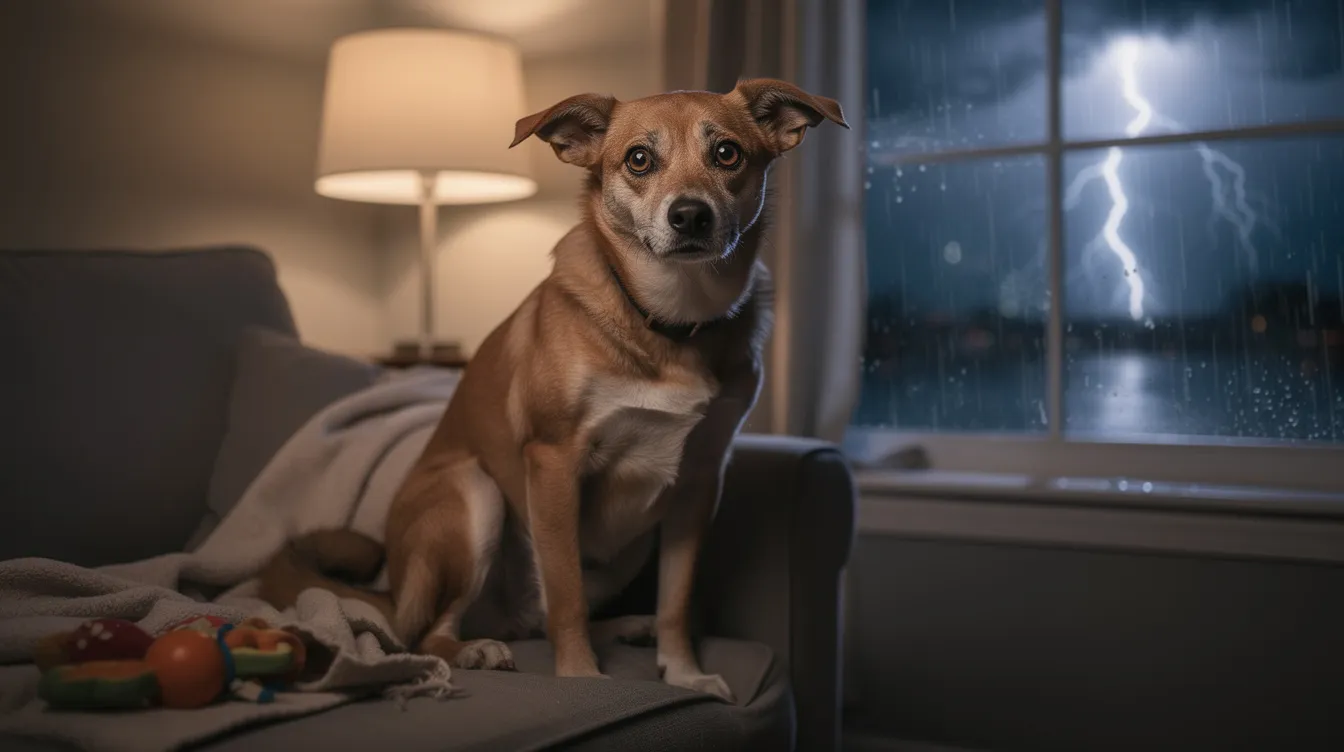
Dog thunderstorm anxiety is one of the most common behavioral problems pet owners face, and if you live in Southwest Florida, you’re dealing with it more frequently than most. With summer storms rolling through Fort Myers, Naples, and Cape Coral almost daily, a dog scared of thunder doesn’t just have a bad afternoon-they endure months of repeated stress that can escalate into a full-blown storm phobia without proper intervention.
This guide is written specifically for dog owners navigating storm season with an anxious dog. Whether your pet trembles at the first rumble of distant thunder or destroys furniture during a downpour, the information here covers the full spectrum-from understanding why dogs develop storm anxiety to implementing practical management techniques and knowing when professional help is the right call. Topics outside the scope of this article, such as general obedience training or unrelated medical conditions, won’t be addressed here.
Dog thunderstorm anxiety is a fear response triggered by storm-related stimuli-including thunder, lightning, barometric pressure changes, and static electricity-that can be managed through a combination of environmental management, behavior modification, and, when necessary, veterinary medication.
By the end of this guide, you will be able to:
- Recognize early warning signs of thunderstorm anxiety before your dog’s fear escalates
- Create a safe environment that reduces sensory overload during storms
- Implement calming techniques that comfort without reinforcing fearful behavior
- Identify when professional training or veterinary intervention is needed
- Apply prevention strategies to reduce anxiety over time
Understanding Dog Thunderstorm Anxiety
Storm anxiety isn’t just a minor inconvenience-it’s a genuine behavioral condition that affects a significant portion of the dog population. Research shows that approximately 15–30% of pet dogs experience thunderstorm phobia or anxiety, and 49% of dogs show a significant fear response to loud noises. Thunderstorm anxiety is common in dogs, and understanding what drives it is the first step toward helping your pet cope.
What Is Thunderstorm Phobia in Dogs
Thunderstorm phobia in dogs is an intense, disproportionate fear response to storms that goes well beyond a normal startle reaction to a loud noise. Where a typical dog might flinch at a thunderclap and then settle, a dog with a dog’s thunderstorm phobia experiences escalating panic-often anticipating the storm before it arrives and remaining distressed long after it passes. One study found that exposure to a simulated thunderstorm recording raised dogs’ salivary cortisol levels by 207% over baseline, and those levels didn’t return to normal even 40 minutes after the stimulus ended.
It’s important to distinguish thunderstorm anxiety from general noise sensitivity and separation anxiety. Noise sensitivity focuses primarily on loud sounds-fireworks, vacuum cleaners, construction-while storm phobia involves reactions to multiple sensory inputs: barometric pressure drops, static electricity, wind, flashing lights, and the smell of ozone. Separation anxiety, on the other hand, centers on distress when a dog is left alone and isn’t tied to weather events. That said, overlap exists-many dogs with storm anxiety also exhibit generalized anxiety or separation-related distress.
Why Dogs Develop Storm Anxiety
From an evolutionary perspective, a dog’s fear of storms makes sense. Loud sounds, sudden environmental changes, and flashing lights signal danger in the wild. Dogs have far more acute hearing than humans and can detect barometric pressure changes, ultrasonic sounds that precede thunder, and shifts in static electricity in the air. These heightened senses, which once helped canines survive, now trigger overwhelming anxiety in domestic settings where the perceived threat carries no actual risk.
Dogs may lack exposure to storms early in development, and this absence of socialization plays a significant role. Puppies that never hear thunderstorms or experience storm-related stimuli during their critical socialization window-roughly 3 to 14 weeks of age-are more likely to develop fear responses later. A dog’s exposure to storms during formative months, under calm conditions with a relaxed owner present, helps build resilience. Without that foundation, a puppy’s first severe storm experience can create a lasting negative association that worsens with every subsequent event.
Physical and Behavioral Signs
Recognizing the common signs of thunderstorm anxiety early gives you time to intervene before your dog’s anxiety escalates into full panic. Many dogs begin showing distress well before the first thunderclap.
Early warning signs before storms arrive:
- Restlessness and pacing
- Excessive panting or lip licking
- Tail tucking and ears flattened
- Seeking out the owner or trying to go indoors
- Whining or becoming unusually clingy
Physical symptoms during storms:
- Trembling or full-body shaking
- Drooling and excessive salivation
- Dilated pupils and rapid breathing
- Vomiting or diarrhea in severe cases
- Anxiety can manifest as avoidance, whining, or trembling
Behavioral expressions:
- Hiding under furniture, in closets, or in bathtubs
- Destructive behavior-scratching doors, chewing furniture, digging at walls
- House soiling despite being housetrained
- Escape attempts that can result in self-injury
- Refusal to eat or drink
In a survey of noise-phobic dogs, 86% were fearful of thunderstorms, 74% feared fireworks, and 41% feared vacuum cleaners-demonstrating that storm anxiety often coexists with other noise-related fears.
Understanding these triggers in detail is essential for building an effective management plan.
Causes and Triggers of Storm Anxiety
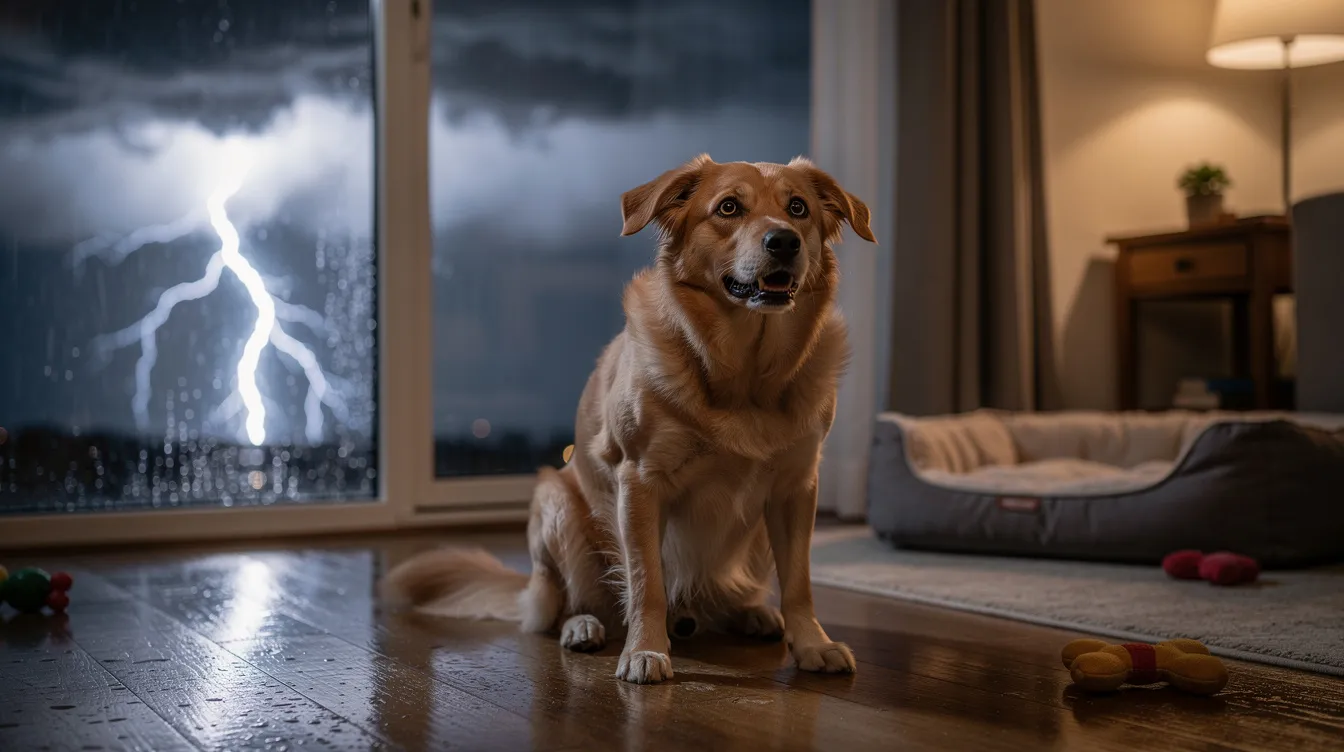
Now that you understand what storm anxiety looks like, it’s critical to identify what actually causes and sustains it. The triggers are more complex than just the sound of thunder-dogs experience storms as a multisensory event.
Environmental Triggers
Dogs can react to changes in barometric pressure before storms-sometimes hours in advance. This drop in air pressure, combined with shifts in humidity, wind, and the electrical charge in the atmosphere, alerts dogs to an incoming storm long before humans notice anything.
Barometric pressure changes are just one piece. The smell of ozone carried on pre-storm winds, the darkening sky, rain hitting windows, and lightning’s flashing lights all compound the scary stimulus. Unlike a single loud noise like a firework, a thunderstorm presents simultaneous, overlapping triggers that make it especially difficult to isolate and address through simple desensitization. Static electricity buildup during storms may also cause physical discomfort-particularly for dogs with thick or long coats-adding a tactile dimension to the fear response.
Genetic Predisposition
Genetic predisposition for emotional reactivity is common in herding breeds like Border Collies and Australian Shepherds, as well as certain working breeds and terriers. Research shows that personality traits like excitability and non-social fear correlate positively with higher cortisol responses when dogs are exposed to storm stimuli. If your dog comes from a breed line with heightened sensitivity, they may require more proactive management than a breed with a naturally calmer temperament.
That said, any dog of any breed can develop storm phobia. Genetics loads the gun; environment pulls the trigger.
Previous Traumatic Experiences
A single frightening storm experience-especially one where the dog felt trapped, couldn’t escape, or was punished for showing fear-can create a lasting phobia. How negative storm experiences can create lasting phobias is well documented: the dog forms a traumatic association between storm stimuli and overwhelming distress, and each subsequent storm reinforces that connection.
There’s also a clear link between the age of first storm exposure and the severity of anxiety. Dogs first exposed to severe storms as adults, without prior positive or neutral experiences, tend to develop more intense reactions than those who encountered mild storms during puppyhood. This is one reason why early socialization and exposure are so valuable.
With a clear picture of causes and triggers, let’s move to what you can actually do when a storm is approaching.
Managing Dog Thunderstorm Anxiety During Storms
Managing dog storm anxiety involves both immediate strategies you deploy when a storm arrives and longer-term approaches that reduce intensity over time. The techniques below focus on what to do right now, during the storm, to help your dog calm down and feel safe.
Creating a Safe Environment
Timing matters. Monitor weather forecasts and begin calming measures when the sky starts to darken or wind picks up-not when thunder is already shaking the house. In Southwest Florida, where summer storms develop rapidly, this means staying ahead of conditions.
Here’s how to set up your dog’s environment:
- Create a safe space like a crate or closet. Choose an interior room with minimal windows. Dogs prefer enclosed spaces for comfort during storms, and a familiar crate, closet, or bathroom can serve as a safe haven. Cover the crate with a blanket to reduce visual stimuli from lightning.
- Implement sound masking. Provide calming music or white noise to mask storm sounds. Classical music played at moderate volume, a fan, or a dedicated white noise machine can significantly reduce the impact of storm noises. Calming music can help mask storm sounds for dogs-start playing background noise before the storm arrives so the transition isn’t jarring.
- Block visual triggers. Close curtains, blinds, or blackout shades to eliminate flashing lights from lightning. For dogs in crates, draping a blanket over the top creates a den-like enclosed space that many dogs find reassuring.
- Add comfort items. Place favorite toys, a worn clothing item with your scent, and a high-value chew or lick mat in the safe space. Offering distraction toys or treats can help calm anxious dogs and redirect their focus.
- Build positive associations daily. Invite your dog to their safe space with treats daily-not just during storms. This ensures the space feels like a safe place rather than a location associated only with fear.
Comfort Techniques vs. Reinforcement Concerns
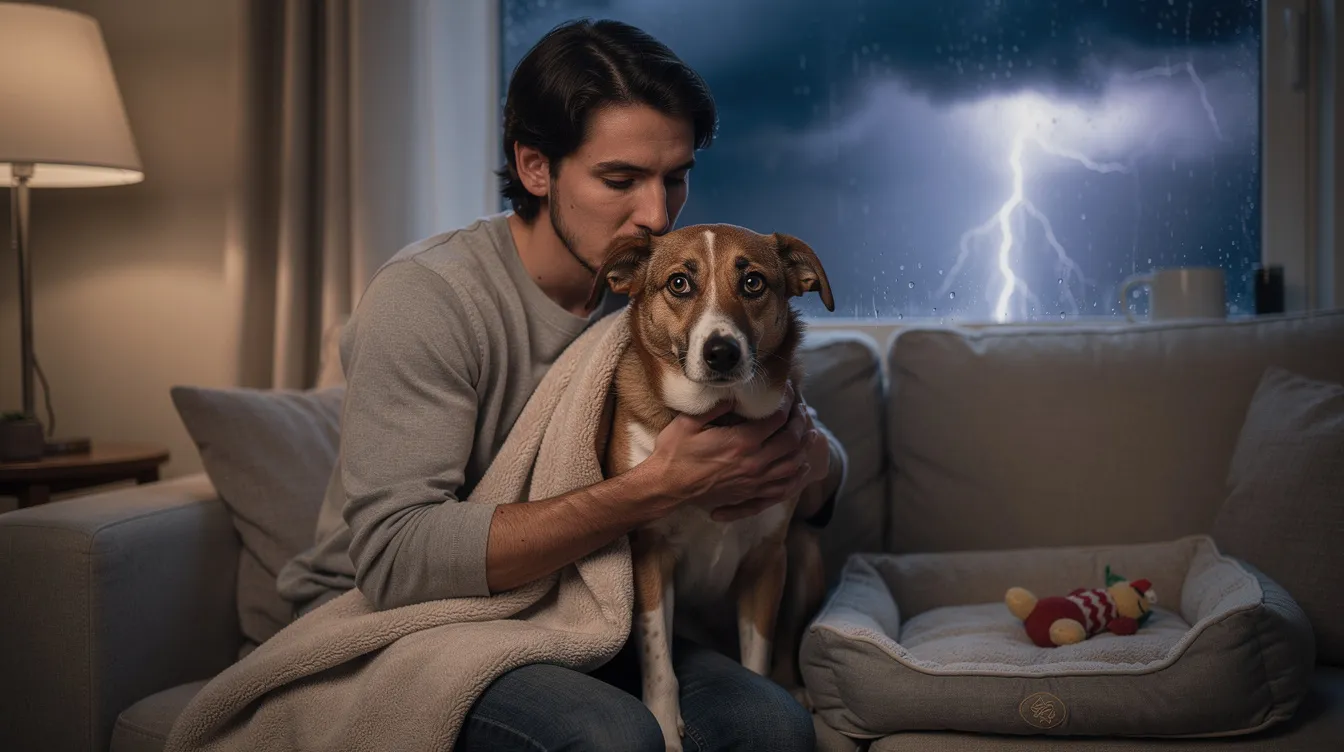
Many owners worry that comforting a fearful dog will reinforce the fearful behavior. The reality is more nuanced. Pets mirror their owners’ emotional cues and energy levels-so your demeanor matters more than whether you pet your dog during a storm. Mindful interaction with dogs during storms can help them feel safe, as long as your own behavior signals calm confidence rather than anxious coddling.
| Technique | Helpful Approach | What to Avoid |
|---|---|---|
| Physical comfort | Calm, steady petting; anxiety wrap or ThunderShirt; sitting nearby without fuss | Frantic hugging, grabbing, or restraining; punishing the dog for fear |
| Verbal reassurance | Soft, even tone; issuing known commands and rewarding calm behavior | Yelling, scolding, high pitched baby talk that conveys your own anxiety |
| Distraction activities | Puzzle toys, frozen KONGs, lick mats; calm play if the dog is willing | Forcing engagement; pushing toys on a dog actively seeking to hide |
| Medication timing | Administering prescribed anti anxiety medications before the storm arrives based on forecast | Giving medication after panic is already at peak; relying solely on meds without behavioral support |
The ThunderShirt helps ease anxiety in fearful dogs, and 89% of owners found the Anxiety Wrap effective after five uses. Anxiety wraps can provide comfort to dogs with storm phobia by applying gentle, constant pressure that helps reduce stress. Adaptil products contain synthetic dog-appeasing pheromones that can further reduce fear-DAP collars were shown to significantly lower active fear scores in dogs exposed to thunderstorm recordings compared to a placebo cape.
Natural calming supplements can support dogs with anxiety as well. Calming supplements like Zylkene may help reduce anxiety when used as part of a broader management plan.
The key distinction: comfort your dog by remaining calm yourself and providing structured support. Avoid dramatic reactions that teach the dog there’s something to be afraid of.
Common Challenges and Solutions
Even with a solid management plan, specific challenges arise repeatedly during storm season. Here’s how to address the most common ones.
Dog Trying to Escape During Storms
Dogs in full panic mode can be remarkably resourceful-and dangerously reckless. Dogs scared of thunder may claw through screens, jump fences, break through windows, or bolt through open doors. The escape impulse is driven by genuine terror, not defiance.
Immediate safety measures:
- Secure all doors, windows, and dog doors before the storm arrives
- Close off rooms with large glass doors or screened porches
- Ensure microchip information and ID tags are current
- If your dog is crate-trained, position the crate against a wall so it can’t tip or slide
Long-term training solutions: Dogs should be desensitized to thunder sounds gradually, starting with recordings played at low volume during calm, positive experiences and slowly increasing intensity over weeks. Counter conditioning-pairing the scary stimulus with high-value treats-builds a positive association with storm noises over time. Training should not occur during actual storms to prevent increased fear. This type of behavior modification requires patience and consistency, but research supports its effectiveness. In one study, 30 out of 32 dogs improved with medication and behavior modification combined.
Destructive Behavior During Thunderstorms
When a dog destroys furniture, scratches walls, or tears apart cushions during storms, it’s a stress response-not revenge or disobedience. Understanding destruction as a coping mechanism changes how you respond.
Management strategies:
- Provide durable chew toys and food-dispensing puzzles before the storm hits
- Restrict access to rooms with valuable or dangerous items
- Use an anxiety wrap to provide calming pressure that reduces frantic movement
- Supervise your dog during storms rather than isolating them in a room alone, which can make them feel trapped
Building resilience: Practice settling exercises during non-storm times. Reward calm behavior consistently so your dog develops a default relaxation response. Building overall confidence through structured training makes dogs more resilient to all stressors, including storms. Studies also note that the presence of other dogs in the household can reduce severity and help cortisol levels recover more quickly.
Anxiety Symptoms Starting Before Storm Arrives
In Southwest Florida, summer thunderstorms often develop within minutes. Dogs may detect barometric pressure changes, static buildup, and scent shifts well before the first visible signs appear. If your dog starts pacing or whining on a sunny afternoon, check the forecast-they may be sensing what you can’t yet see.
Proactive intervention strategies:
- Track weather forecasts daily during storm season and begin calming protocols at the first advisory
- Provide structured exercise earlier in the day to burn off excess energy
- Apply dog appeasing pheromones or an anxiety wrap preemptively
- Play calming music or white noise as consistent background noise throughout the day during storm season-not only when storms hit
For dogs with severe anticipatory anxiety, consulting a veterinarian is recommended for severe anxiety in dogs. Veterinary medication may be necessary for extreme anxiety cases in dogs, particularly when behavioral approaches alone aren’t producing results. A randomized controlled trial found that imepitoin administered at 30 mg/kg twice daily significantly reduced storm-anxiety behaviors compared to placebo, and benzodiazepines combined with behavioral training produced around a 52% decrease in storm anxiety signs. An integrative approach combining Traditional Chinese Veterinary Medicine (acupuncture, herbal medicine), behavior modification, and rescue medication achieved an average 77.2% improvement in thunderstorm aversion behaviors across 23 dogs over 120 days.
These results underscore that professional support-whether from a veterinarian, a certified behavior specialist, or both-can make a dramatic difference for dogs with moderate to severe storm phobia.
Conclusion and Next Steps
Thunderstorm anxiety is a manageable condition. It requires understanding, consistency, and the right combination of environmental adjustments, comfort techniques, and-when needed-professional intervention. The dog’s fear is real, physiologically measurable, and deserving of a thoughtful response. With proper techniques applied over time, many dogs show significant reductions in panic episodes, destructive behavior, and anticipatory anxiety.
Start with these immediate steps:
- Assess your dog’s current anxiety level-note specific signs, triggers, and timing
- Set up a designated safe space in an interior room with sound masking and visual barriers
- Begin monitoring daily weather forecasts and implementing calming protocols proactively
- Introduce storm sound recordings at low volume during calm, positive moments to begin gradual desensitization
- If your dog’s anxiety is severe or worsening, schedule a consultation with your veterinarian to discuss whether medication or supplements are appropriate
For dog owners in the Fort Myers area dealing with persistent storm anxiety or reactive behavior, Off Leash K9 Training offers professional behavior modification programs designed to build confidence and reduce fear-based responses. A structured training program tailored to your dog’s specific triggers can accelerate progress far beyond what environmental management alone achieves.
Related topics worth exploring include managing separation anxiety, building overall confidence through obedience training, and addressing other anxiety-driven behavioral problems that often coexist with storm phobia.
