
Introduction
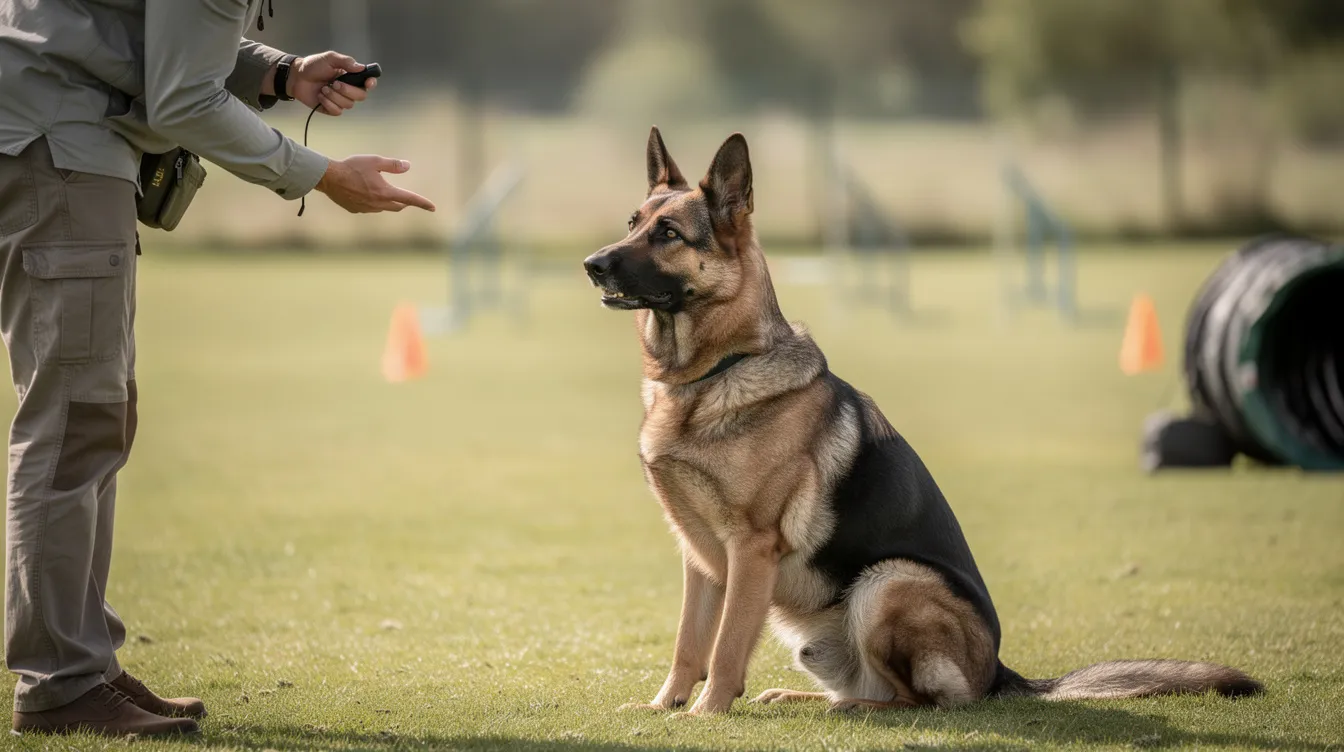
German Shepherds are among the most trainable, versatile working dogs ever developed-bred for intelligence, courage, and an unmatched willingness to partner with their handler. Training a German Shepherd successfully requires starting early, staying consistent, and understanding how this breed’s unique temperament shapes every aspect of the learning process, from the first sit command to advanced off-leash reliability in real-world environments.
This guide covers the full spectrum of German Shepherd training: puppy foundations, basic obedience, behavior modification for common issues, advanced distraction-proof off-leash work, and specialized skills. While many of the environmental examples reference Southwest Florida (Fort Myers, Naples, Cape Coral, Bonita Springs), the principles apply to German Shepherd owners everywhere. The target audience is any GSD owner-whether you have a German Shepherd puppy from a reputable breeder, a rescue dog, or an adult dog with existing behavior challenges-seeking reliable, real-world obedience.
German Shepherds require consistent, positive reinforcement training starting at 8 weeks old, with realistic expectations of 6–12 months for solid foundational obedience and 12–24 months for advanced off-leash reliability in complex, distraction-rich environments.
By the end of this guide, you will understand how to achieve:
- Reliable recall and distraction-proof off-leash obedience
- Elimination of common bad habits like jumping, pulling, and mouthing
- Development of impulse control, focus, and self control under pressure
- A well-balanced, well trained family companion prepared for an entire life of partnership
- Clarity on when and how to seek professional training support
Understanding German Shepherd Temperament and Training Fundamentals
The German Shepherd breed was developed in late 19th-century Germany by breeders like Max von Stephanitz, who prioritized temperament, trainability, and courage over appearance. That heritage makes today’s German Shepherd dog incredibly intelligent, deeply loyal, and driven to work. These traits give German Shepherd owners a significant training advantage: the breed absorbs commands rapidly, stays motivated through complex tasks, and can generalize skills from basic commands to protection, service work, scent detection, and agility.
However, German Shepherd temperament also presents specific training considerations. German Shepherds are highly intelligent and eager to please, but their protective instincts and sensitivity mean that punishment based training or physical force can trigger stress, fear aggression, or reactive behavior rather than compliance. A long-term study on German Shepherds using shock collars during guard dog training documented acute stress responses-yelping, avoidance, redirection aggression-and longer-term increases in fear and anxiety. German Shepherds can be aloof and suspicious toward strangers, which is a natural extension of their guard dog heritage, not a flaw. But it means proper socialization and training approach matter enormously from the start.
Working Line vs. Show Line Considerations
Working line German Shepherds are more intense and driven than pet lines. They tend to have higher energy, greater prey and protection drive, and a stronger need for both mental stimulation and physical exercise. A working line GSD puppy may require more structured impulse control work, earlier off-leash proofing, and more frequent, challenging training sessions to stay engaged and balanced.
Show line German Shepherds are often bred for structural conformation and typically display calmer baseline temperaments-but they still retain the core intelligence and drive that define the German Shepherd breed. In Southwest Florida’s active lifestyle environment, where dogs encounter beaches, parks, wildlife, and year-round outdoor living, understanding your dog’s bloodline helps calibrate training intensity and timelines. Whether your dog is a hardworking police dog prospect or a family companion, the fundamental training methods remain the same-only the volume and pace change.
The German Shepherd Learning Style
What sets training German Shepherds apart from training many other breeds is the combination of a strong desire to please with genuine independent thinking. A German Shepherd thinks through problems, and when a German Shepherd understands what you want, the response is typically enthusiastic and precise. But this intelligence cuts both ways: if rules are inconsistent or leadership is unclear, a German Shepherd will make its own decisions-and those decisions often look like bad behavior to the owner.
Consistency involves using the same verbal cues and hand signals for every command, every time, across all family members. German Shepherds require consistent training from an early age to thrive, and inconsistency is the single most common reason training attempts stall. These incredibly intelligent dogs need a handler who is predictable, fair, and clear. When those conditions are met, German Shepherds are among the easiest breeds to train-and among the most rewarding to work with.
Understanding this temperament foundation is what makes everything that follows-from puppy basics to advanced off-leash work-practical and achievable.
Essential German Shepherd Training Foundations
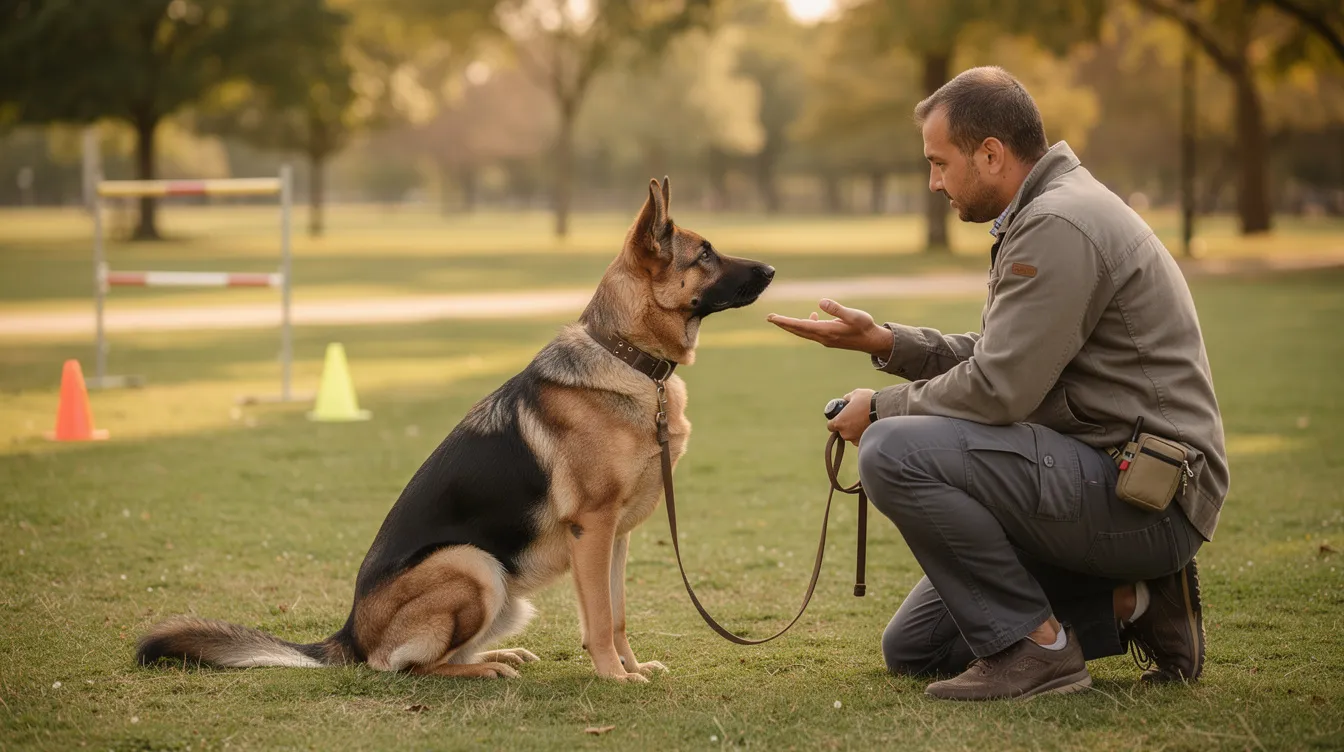
With a clear picture of how German Shepherds learn and what motivates them, the next step is building hands-on training foundations. Training should start as soon as the puppy comes home. German Shepherds excel at obedience training from an early age, and early investment pays dividends across the dog’s life.
Puppy Training Fundamentals (8–16 Weeks)
The period from 8 to 16 weeks is the most consequential window in a German Shepherd puppy’s development. Neural plasticity is at its peak, and experiences during this time shape the dog’s lifelong confidence, social skills, and trainability.
Socialization is crucial for German Shepherd puppies before 16 weeks old. Expose your GSD puppy to diverse people, other dogs, animals, surfaces, noises, water, grooming tools, car rides, and veterinary handling-all in calm, positive contexts. Socialization involves introducing dogs to new experiences to build confidence, and socialization builds confidence in German Shepherd puppies. Under-socialized German Shepherds may view everyone as a threat, and early exposure to diverse environments is crucial for preventing fear-based reactivity. In Southwest Florida, this means controlled introductions to beach environments, wildlife sounds, humid outdoor settings, and the varied foot traffic of places like Fort Myers or Naples. Proper socialization helps prevent aggression in German Shepherds, and the socialization window begins closing after approximately 14–16 weeks-missing exposures during this period significantly increases the risk of later fear or aggression.
Basic commands-sit, stay, come, down-should be introduced during the first weeks your puppy is home. Short training sessions of 5 to 10 minutes help maintain focus in German Shepherds, since puppy attention spans at this age range from 30 seconds to 2 minutes. Positive reinforcement is the most effective training method for German Shepherds: mark the desired behavior immediately with a reward (treat, toy, praise). Every training session should aim to teach desirable behaviors without causing fear or intimidation. Clicker training is particularly effective for marking precise moments of good behavior.
Crate training helps with housetraining and reduces anxiety. Crate training provides a safe space for German Shepherd puppies, facilitates housetraining for German Shepherds, and can help prevent destructive behaviors in puppies. Crate training also helps reduce separation anxiety in puppies when introduced properly. Potty training should begin immediately at 8 weeks: take the puppy outside after sleep, meals, and play, reward elimination outdoors, clean accidents with enzymatic cleaners, and never punish mistakes. Puppies should not be crated for more than a few hours at a stretch. German Shepherd puppies should learn to be calm and still early-structured rest periods inside the crate teach this skill naturally.
Handling and grooming should be paired with rewards to ensure a dog’s comfort. Introduce brushing, nail trimming, ear cleaning, and tooth inspection early. German Shepherds shed heavily, and grooming aversion that develops from late introduction creates unnecessary stress throughout the dog’s life.
Establishing Leadership and Structure
German Shepherds need consistent training to prevent behavioral issues-not because they need to be dominated, but because they need predictability. Creating consistent rules and boundaries means every family member enforces the same expectations. Commands must be clear and non-negotiable for effective training. If one person allows jumping on the couch and another doesn’t, the dog receives mixed signals and training stalls.
Teaching impulse control is vital to prevent problem behaviors. Require your GSD to sit before getting food or play. Impulse control exercises-waiting at doorways, holding a sit while food is placed on the floor, earning toys through calm behavior-build the self control foundation that later supports advanced obedience. Impulse control helps curb excessive barking and digging, and impulse control training should continue into adulthood for GSDs. Providing legal alternatives to chewing prevents destructive behavior in dogs-redirect mouthing to appropriate chew toys rather than simply suppressing the behavior.
Incorporating training into everyday life helps reinforce obedience behavior in dogs. Ask for a sit before meals, a down-stay while you prepare food, a wait before exiting the front door. These micro-training moments accumulate rapidly and create a well behaved dog without requiring marathon training sessions. Consistent training at home is essential for reliable obedience in dogs.
Leash Training and Walking Manners
Because of their size and strength, German Shepherds that pull on leash become a serious management problem as they grow into a big dog. Address pulling tendencies early using the “be a tree” method: stop moving when the leash goes tight, resume walking only when slack returns. Frequent direction changes, marking slack-leash moments with rewards, and keeping initial walks short build the foundation for loose leash walking that lasts.
In Southwest Florida neighborhoods, real-world distractions-lizards, other dogs, joggers, bicycles-challenge leash manners early. Gradually increasing training distractions leads to more reliable behavior. Avoid pulling back or using physical corrections, which trigger opposition reflex (the instinctive tendency to push against pressure) and increase frustration for both you and the dog.
Heat safety matters: avoid hot pavement during midday, keep sessions short in high humidity, and protect growth plates by avoiding high-impact exercise until skeletal maturity at 12–18 months. This physical exercise foundation prepares your German Shepherd for the ultimate goal-reliable off-leash freedom.
Advanced German Shepherd Training and Specialized Skills
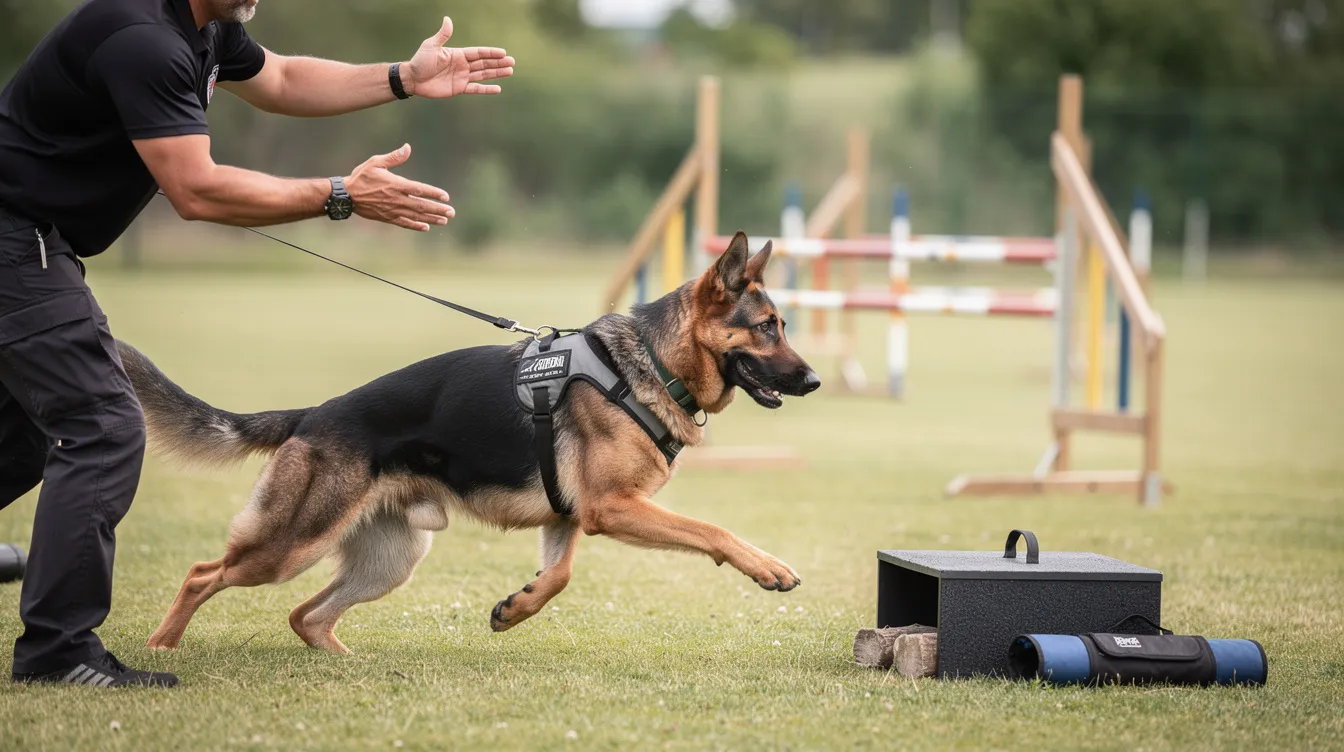
Once your German Shepherd has solid foundational obedience-reliable basic commands, consistent impulse control, and comfortable leash manners-the progression toward advanced skills begins. This is where training a German Shepherd becomes genuinely rewarding, as you unlock the breed’s full potential for partnership and freedom.
Distraction-Proof Off-Leash Obedience
Off-leash reliability is essential for safety and freedom, particularly in open, distraction-rich environments like beaches, parks, and trails. A strong recall command is fundamental for safety and effective training. Self-control training helps German Shepherds listen reliably under distractions, but achieving this requires disciplined progression-not rushing to remove the leash before your dog is ready.
The process follows a structured path from controlled to complex environments:
- Controlled indoor practice: Begin with verbal cues and hand signals in low-distraction indoor spaces. Every correct behavior is marked and rewarded immediately. Build duration and distance on sit, down, and stay commands.
- Fenced yard training: Move outdoors where environmental stimuli (birds, sounds, movement outside the fence) introduce mild distractions. Reinforce attention and recall consistently.
- Long-line transitioning: Use 20- to 30-foot lines to simulate off-leash freedom while retaining safety. Gradually fade leash reliance as reliability increases. Do not attempt off-leash work in unfenced open spaces until your dog consistently obeys over a long line with distractions present.
- Full off-leash in open areas: Introduce real-world complexity-other dogs, wildlife, water, unfamiliar people-gradually increasing difficulty. In Southwest Florida, this means proofing recall near beaches, nature trails, and public parks where environmental temptations are high. Always reinforce recall and attention generously at this stage.
Physical maturity affects this timeline. Most German Shepherds reach skeletal maturity between 12 and 18 months, with full mental maturity arriving at 2–3 years. Avoid forced jumps and excessive running until growth plates close. German Shepherds need mental stimulation to avoid destructive behavior-scent work, puzzle toys, and structured problem-solving complement physical training and keep the dog engaged during the maturation process. A 2026 study found that scent work enhances dogs’ perceived quality of life, while obedience classes improve trainability and judgment bias-both contribute meaningfully to a balanced dog’s life.
Behavior Modification for Common Issues
Some German Shepherd training challenges go beyond basic obedience into deeper behavior modification territory. These issues often stem from insufficient socialization, fear, anxiety, or inconsistent training history. The following table compares common issues, their root causes, and evidence-based interventions:
| Behavior Problem | Root Causes | Intervention Strategies |
|---|---|---|
| Leash reactivity toward dogs or people | Poor early socialization; fear; high arousal; protective instincts | Counter-conditioning and desensitization below threshold; structured exposure; focus and impulse control training; professional behaviorist for severe cases |
| Separation anxiety | Insufficient alone-time exposure; abrupt departures; insecure attachment | Gradual desensitization to departures; crate training as safe space; mental enrichment during absences; veterinary behavior consult if needed |
| Excessive barking and guarding | High sensitivity; overprotection; inconsistent boundaries; breed predisposition | Controlled exposure; teaching a “quiet” cue; redirection to obedience commands; avoiding punishment that escalates fear |
| Fear aggression toward strangers | Under-socialization; traumatic experiences; genetic predisposition | Systematic desensitization with positive associations; teaching “observe without reacting”; never forcing interaction |
Reward-based training is recommended for all dog training and behavior modification. Teasing and physically forcing a German Shepherd can worsen behavioral issues. Positive reinforcement is effective for modifying German Shepherd behavior, and teaching a German Shepherd to observe without reacting supports good behavior in situations that previously triggered overreaction.
For dogs with entrenched reactive behavior, professional intervention often accelerates progress. A case study of a 7-year-old German Shepherd named Bear, who had severe reactivity to other dogs, demonstrated that even adult dogs with long-standing issues can achieve reliable off-leash obedience through structured board-and-train programs emphasizing real-world distraction exposure and consistent reinforcement. This validates the feasibility of behavior rehabilitation in older dogs when approached correctly.
Common German Shepherd Training Challenges and Solutions
Even with strong foundations, German Shepherd owners encounter breed-specific behavioral tendencies that require targeted solutions. Most German Shepherds go through predictable developmental phases where specific challenges emerge, and knowing what to expect prevents frustration and keeps training on track.
Excessive Jumping and Mouthing
Young German Shepherds love using their mouths to explore the world, and jumping for attention is a natural-but unacceptable in a big dog-behavior. The solution is not suppression but redirection: teach an alternative desired behavior like “four paws on the floor” or an automatic sit for greetings. Only reward when the dog performs the alternative. For mouthing, teach bite inhibition by immediately withdrawing attention when teeth contact skin, then redirect to appropriate chew toys. Short, engaging training sessions enhance learning and prevent frustration in dogs during this phase. Expect regression during teething (around 12–16 weeks) and adolescence-this is normal and temporary.
Protective Overreaction and Stranger Wariness
German Shepherds are loyal dogs with natural protective instincts, but unmanaged protectiveness becomes a liability. German Shepherds need exposure to various people and environments throughout development-not just during the puppy socialization window. Use positive associations (treats, play) when encountering strangers in controlled settings, then gradually increase diversity and complexity. Teach a “look at me” cue to redirect attention from potential triggers. Never scold fear-fearful dogs need safety and gradual habituation, not correction. Socialization is crucial to prevent aggression in German Shepherds, and good socialization is an ongoing process, not a one-time event. Research from the Swedish Dog Mentality Assessment of nearly 6,000 German Shepherds confirmed that trainability and reduced aggression are strongly tied to early acquisition (before 12 weeks) and breadth of training experience.
Selective Listening and Distraction Issues
During adolescence (6–18 months), many German Shepherds display “selective hearing”-they clearly understand commands but choose not to respond in distracting or emotionally charged situations. This is a developmental phase, not defiance, and it responds to systematic training. Practice recall and obedience commands with gradually increasing distractions: first indoors, then the yard, then quiet streets, then parks with other dogs. Use variable reward schedules to maintain motivation. Self-control is crucial for GSDs to listen amidst distractions. Training impulse control can prevent chasing behaviors in GSDs, and the combination of adequate physical exercise, mental stimulation, and structured rest creates a German Shepherd that is neurologically prepared to pay attention. A well-exercised, mentally stimulated German Shepherd that understands the rules is far more likely to respond reliably than one whose energy and drive have no productive outlet. Destructive behaviors can result from lack of mental stimulation in dogs, and paying attention under pressure is a trained skill, not an innate gift-even in the most intelligent dogs.
German Shepherds require early and continuous training for a well-balanced companion, and the challenges of adolescence are temporary when met with patience and consistency. Training should start early to prevent behavioral issues in German Shepherds, but it’s never too late to make meaningful progress with the right training methods.
Conclusion and Next Steps
German Shepherds are among the most popular dog breeds in the world for good reason: their intelligence, loyalty, and trainability create a partnership potential that few other breeds can match. Whether you’re raising a German Shepherd puppy, rehabilitating rescue dogs, or refining skills in adult dogs, the principles remain consistent-positive reinforcement, clear communication, structured progression, and unwavering consistency.
German Shepherds require consistent and ongoing training to thrive. This is not a breed you train once and consider finished. From puppyhood through their entire life, German Shepherds are at their best when they have a job, a structure, and a handler who communicates clearly. The right training transforms a high-drive, potentially overwhelming big dog into a reliable, confident companion that enhances every aspect of your daily life.
Your immediate action steps:
- Assess your dog’s current training level: Identify which foundational skills are solid and where gaps exist-particularly in impulse control, recall, and socialization.
- Establish a daily training routine: Even 5–10 minutes of focused, consistent practice produces measurable results within weeks.
- Consider professional guidance for advanced goals: Off-leash reliability, behavior modification for reactivity or separation anxiety, and specialized skills like therapy dog preparation or protection sports benefit enormously from working with a professional dog trainer experienced with the German Shepherd breed.
Related topics worth exploring include specialized training for therapy work, protection dog development, service dog preparation, and competitive obedience-all areas where German Shepherds excel and where professional trainers can accelerate your progress dramatically. The Belgian Malinois is often compared to the German Shepherd in working dog contexts, but the GSD’s combination of versatility and family temperament makes it the preferred choice for most owners seeking both a working partner and a household companion.
Professional Training Resources in Southwest Florida
For German Shepherd owners in Southwest Florida seeking professional support, several options can accelerate your dog’s progress:
Board-and-train programs offer intensive behavior modification and obedience training in structured environments. These programs are particularly effective for addressing entrenched behavior problems, building off-leash reliability, and establishing foundations that owners then maintain at home. Programs typically run 2–3 weeks with follow-up owner training sessions to ensure lasting results. Understanding the differences between board-and-train and private lessons helps you choose the format that fits your German Shepherd’s needs and your schedule.
Private lesson programs provide customized German Shepherd training approaches tailored to your specific dog, environment, and goals. Professional dog trainers working one-on-one can address nuances-your dog’s body language patterns, your handling mechanics, and the specific distractions in your neighborhood-that group classes cannot.
Puppy obedience class options and group training settings provide valuable socialization exposure alongside structured obedience training. A 2026 survey of professional dog trainers’ perspectives on training methods indicates a growing professional consensus favoring reward-based approaches, with increasing awareness of the welfare implications of aversive techniques-an important consideration when choosing a dog trainer for your German Shepherd.
Fort Myers, Naples, Cape Coral, and Bonita Springs area residents with German Shepherds-whether dealing with a new puppy, an adolescent testing boundaries, or an adult dog needing behavior rehabilitation-can explore free consultation opportunities to determine the best training path forward. German Shepherds are good at reading their environment and responding to clear leadership; the right professional trainer helps you become the handler your dog already wants you to be.
