
Key Takeaways
- Set a strict pre-bedtime potty and play routine, then keep lights low and use the same sleep cue every night.
- Put the crate near your bedroom at first so your puppy can hear you and feel secure.
- Take your puppy out for a potty break right before the crate at night, and expect a young puppy to need 1-2 trips outside during the night.
- If your puppy cries, learn to tell the difference between a whimper of needing to pee and a tantrum for attention.
- Never use the crate as punishment. Crate training a puppy at night requires patience and consistency.
Puppy crate training at night can feel hard in the beginning, especially when a new puppy cries after lights out. The goal is not to “lock up” your pup. The goal is to create a safe place where your dog can sleep, relax, and build good house training habits.
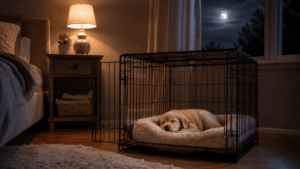
Understanding Puppy Crate Training at Night
Crate training teaches a puppy that the crate is a calm sleeping area and personal space. Puppies are used to sleeping with their littermates, so being isolated can cause anxiety. At night, the house is dark and quiet, and your puppy may suddenly feel alone.
A dog crate can help because many puppies like small, den-like spaces when those spaces are introduced kindly. Crate training provides a safe and secure space for puppies, reducing anxiety and stress while promoting relaxation. It is also one of the quickest and most effective methods for house-training puppies, as they instinctively avoid soiling their sleeping area.
New puppies, older dogs, and adult dogs can all learn to sleep calmly in a crate or kennel. A young puppy simply needs more patience, more potty breaks, and shorter steps. With steady training, many puppies settle better within 1-3 weeks, even if the first few nights are noisy.
Setting Up the Crate for Night Time Comfort
Think of the crate as a small bedroom, not a cage. Choose a dog crate that lets your puppy stand, turn around, and lie down, but not one so large that one end becomes a toilet area.
Place the crate near the owner’s bedroom or beside the bed at first. Being close to their owner helps puppies feel secure at night, and placing the crate in a location near the owner’s bedroom can help reduce a puppy’s nighttime anxiety and allow the owner to hear the puppy’s needs, leading to a calmer environment for both.
Inside the crate, use a flat dog bed, pad, towel, or light blanket if your pup will not chew or swallow it. Add one favorite toy or safe chew. To create a positive association with the crate, provide your puppy with safe chew toys and treats while they are inside, making it a rewarding experience.
Introduce your puppy to the crate as soon as it is brought home, placing treats inside to encourage voluntary entry. To create a positive association with the crate, place treats or toys inside, and encourage your dog to enter voluntarily, which helps them view the crate as a safe and inviting space. Leave the door open throughout the day so the dog can enter on their own, explore, and nap before you use the crate at night.
Optional comfort items include an old shirt with your scent, a snuggle toy, or a light cover over three sides of the crate. Keep airflow clear and keep fabric away from the crate door if your puppy might pull it in.
Creating a Simple Bedtime Routine
A predictable routine helps your puppy know what to expect. Try this plan:
- 6-7 pm: feeding, light play, and age-appropriate exercise
- 7-8:30 pm: calm time with easy training or chewing
- 9-10 pm: last short play, then final potty trip
- 10-11 pm: bedtime, lights low, “crate time,” then sleep
Remove food and water 2-3 hours before bed to reduce bladder pressure and prevent accidents. Follow your vet’s advice if your puppy has special needs.
Before bedtime, use quiet cuddles and a soft voice. Avoid rough play. Say the same phrase, like “bedtime” or “crate time,” to signal rest.
Last Potty Breaks and Nighttime Needs
Young puppies need 1-2 potty breaks at night due to small bladders. They can usually hold their bladder for one hour per month of age—for example, a 3-month-old for about 3 hours.
Take your puppy out for a potty break right before crating, using a leash and calm praise. Keep nighttime trips quiet with dim lights and no play to signal it’s sleep time.
Set alarms for the first few nights if needed, then gradually increase intervals. Consult a vet if accidents or unusual thirst occur.
Helping Your Puppy Settle in the Crate at Night
The first nights can feel emotional. Your puppy may cry, and you may wonder if you are doing something wrong. You are not. It is normal for puppies to cry or protest for a few nights after being placed in the crate.
Lead your puppy in calmly with treats or a bit of kibble. Do not push them. When the dog enters, praise softly. Then close the door gently. If the puppy needs help, sit nearby for a few minutes where they can hear you.
Once the crate door is closed, use soft talking, gentle shushing, or a hand resting on the crate for a minute. A fan or white noise may help. Some puppies settle with a food-stuffed toy or safe chew. Providing safe chew toys or edible chews in the crate can keep your dog entertained and help build positive associations with the crate, preventing boredom and frustration. Choose age-appropriate, vet-approved chews.
Avoid constant petting, rocking, or opening the door every time your puppy fusses. Those habits can teach your pup that noise makes people appear.
Responding to Whining, Crying, and Barking
Puppies cry because they want company, feel unsure, need potty, or are testing what works. PetMD notes that some crate crying is common early on.
Use this simple decision guide:
- If it has been a couple of hours, assume your puppy may need potty.
- If your puppy just went out, wait a short moment before responding.
- Wait for a brief moment of quiet before letting a puppy out of the crate to avoid reinforcing bad behavior.
For potty-whining, open the door calmly, go outside on leash, allow a quick toilet break, praise softly, then return to the crate. For attention whining, wait for a pause, then offer brief reassurance without opening the crate door.
Do not yell, bang the crate, or keep opening the door. This can increase fear or reward barking. Contact a vet or qualified trainer if you see panic-level screaming, drooling, escape attempts, self-injury, or signs of separation anxiety rather than normal fussing.
Common Mistakes to Avoid in Night-Time Crate Training
Never use the crate as a form of punishment for your puppy. Sending a dog there after misbehavior makes the dog crate feel unsafe and slows the crate training process.
Do not leave a young puppy in the crate for long periods. Puppies need social interaction, exercise, and regular potty breaks, and should not be left in a crate for long periods, especially during the day. Using a crate can prevent destructive behaviors in puppies by keeping them confined when unsupervised, thus protecting both the dog and the owner’s belongings, but it should not replace attention.
Only using the crate at night can make it feel like isolation. Add short periods of happy crate time during the day. Also avoid too much food or water before bed, skipping exercise, or changing rules every night between crate, bed, and couch.
Daytime Habits That Support Night-Time Crate Training
What happens throughout the day affects the night. Use the crate for short naps, feeding from the food dish, and calm chew time. Crate training should involve short intervals at first, gradually increasing the time your puppy spends inside to help them adjust positively.
Crate training sessions should be kept short and positive, gradually increasing the time your dog spends inside the crate to help them feel comfortable and secure. This helps build positive associations and creates positive associations from past experiences.
Give your puppy play, walks, and puppy training games so they do not carry pent up energy into bed time. In the evening, lower noise and excitement. If several people help, share sort notes like last potty, last feeding, and sleep hours.
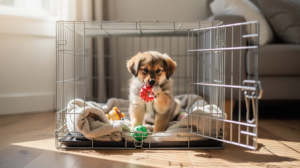
Adjusting the Crate Plan as Your Puppy Grows
Crate training is a process. Over several weeks, your puppy’s bladder control, confidence, and house manners should improve. Gradually increase overnight time only when your pup is relaxed and not having accidents.
Some dogs keep choosing the crate with the door open because it feels like security. Others move to a nearby dog bed once fully crate-trained. There is no perfect age to stop using the crate. Focus on safety, house training reliability, and your dog’s comfort.
The important benefits come from calm structure, not hard work for its own sake. If your dog lies down willingly, sleeps, and wakes calmly, your plan is working.
Frequently Asked Questions
How long can my puppy stay in the crate at night without a break?
Many 8-week-old puppies manage about 3-4 hours at night. A 12-week-old puppy may manage about 4-5 hours. Some need more frequent breaks. If your puppy is soiling the crate, add calmer, earlier potty trips.
Should I ever let my puppy sleep in my bed instead of the crate?
Some pet parents allow bed-sharing later, but early house training is usually easier with a crate at night. A good compromise is putting the crate beside the bed in the bedroom while your puppy learns. Mixing bed nights and crate nights can confuse the routine.
What if my puppy hates the crate and seems truly panicked?
Normal protest sounds come and go. Panic looks like frantic scratching, drooling, trying to escape, ignoring food, or hurting themselves. Slow down with more door open practice, shorter door closed sessions, comfort items, and help from a vet or trainer if needed.
Is it okay to cover the crate at night?
Yes, if your puppy relaxes with it. Cover three sides at first and leave airflow clear. Do not use dangling blankets that your puppy can chew or pull inside.
When will my dog be fully crate-trained at night?
A fully crate-trained dog goes in willingly, settles quickly, sleeps most nights without overnight accidents, and wakes calmly. Many puppies improve after a few weeks, with steadier results by 4-6 months. Keep the routine kind, boring at night, and consistent.
Ready to Make Nighttime Crate Training Easier?
Start creating a calm, safe space for your puppy tonight. With patience and positive reinforcement, you’ll help your puppy settle comfortably in their crate and enjoy peaceful nights together. Remember, consistency is key—stick to your bedtime routine, keep the crate nearby, and respond gently to your puppy’s needs.
If you need extra guidance or personalized support, consider reaching out to a professional trainer who can help you and your puppy succeed with crate training at night. Your puppy’s happy, restful sleep is just a few steps away!
