
If every walk feels like a tug-of-war, you are not alone. Leash pulling is one of the most common problems dog owners face, and the good news is that it can improve with clear rules, the right equipment, and consistent training. Here is how to stop a dog pulling on leash in a way your dog can understand.
Key Takeaways
- Dogs usually pull because it works, not because they are “bad.” If pulling gets them to a smell, person, or park, the pulling behavior is rewarded.
- The core rule is simple: stop walking when the leash goes tight, then start walking again when there is slack.
- Reward calm, loose leash walking beside you, especially when your dog stays near your leg in a heel position.
- Start leash training in the house, yard, or driveway before practicing around other dogs, traffic, or busy parks.
- A front clip harness, standard 4 to 6-foot leash, or properly introduced gentle leader can help, but avoid punitive collars and harsh leash corrections.
Why Dogs Pull on the Leash
Pulling on the leash is normal, fixable behavior. Most dogs are built to walk faster than humans, and their natural instinct is to explore their environment quickly.
Common reasons include:
- Pulling gets results. When a dog pulls and reaches the grass, another dog, or an interesting smell, the dog learns that pulling works. Avoid letting the dog reach their destination while pulling as this reinforces the pulling behavior.
- Excitement and energy. After a long day inside, a pup may hit the sidewalk ready for a long walk at full speed.
- Curiosity. Dogs move toward smells, people, wildlife, and distractions because their noses lead the way.
- Opposition reflex. When dogs feel pressure or tension on the leash, many instinctively pull harder against it. No-pull harnesses are designed to discourage pulling by effectively “tricking” the opposition reflex, which is the instinctive tendency for dogs to pull against pressure.
- No one has taught the skill yet. Many dogs have never been shown how to walk, when to wait, or how to keep a loose leash.
A shelter walking study found an average of about six pulling events per walk, with younger dogs pulling more often than seniors, so this is a common training issue, not a personal failure.
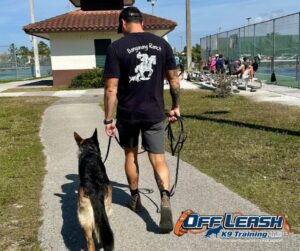
Common Mistakes That Make Leash Pulling Worse
Walks get frustrating when the dog and owner are learning different rules. These mistakes often make leash walking harder:
- Continue forward when the dog starts pulling. If the dog moves toward a reward while dragging you, pulling is being paid.
- Yanking or jerking. Leash corrections can confuse the dog, increase tension, and put pressure on the dog’s neck or throat.
- Using retractable leashes in busy places. A longer leash can be useful in safe open areas for decompression, but on crowded sidewalks, it often teaches forging ahead for more freedom.
- Being inconsistent. Consistency is crucial in leash training; if you stop when your dog pulls only some of the time, they will learn that pulling can still lead to forward movement.
- Punishing without teaching. It is not enough to discourage pulling. You must teach your dog to walk nicely and reward the moments you like.
Choosing the Right Equipment for Loose Leash Walking
Training tools do not replace training, but they can give you more control and make practice safer.
- Use a standard leash. A standard 4 to 6-foot leash is recommended for dog training to avoid giving too much slack. Nylon or leather works well.
- Try a front clip harness. Most no-pull harnesses have a leash attachment on the front near the dog’s breastbone, which helps to redirect the dog’s movement and reduce pulling. A well-fitted harness also helps prevent injury to a dog’s neck and throat, as traditional collars can cause harm when a dog pulls against them.
- Know how special designs work. The PetSafe Easy Walk No-Pull Harness features a patented front Martingale loop that tightens slightly when pressure is applied, helping to discourage pulling behavior.
- Consider a headcollar for strong pullers. A gentle leader style headcollar is attached around the dog’s head, and the leash attaches under the dog’s chin. Like a horse halter, it gently turns the head so the body follows. Introduce it slowly with treats so your dog can eat, relax, and feel comfortable.
- Avoid harsh tools. Choke chains, prong collars, and other punitive collars may stop pulling briefly, but they can create stress and do not teach loose leash skills.
A study in Frontiers in Veterinary Science found that equipment changes can affect leash tension, but tools alone do not solve the habit. Training still matters.
Step-by-Step: How to Stop Dog Pulling on Leash
Use these steps during real dog walks:
- Start in a low-distraction area. Training should begin in a low-distraction environment, such as indoors, before gradually introducing more distractions as the dog learns to walk politely on a leash. Use the hallway, yard, driveway, or quiet street.
- Teach the Stop and Wait method. The “Stop and Wait” method teaches dogs that pulling halts the walk. If there is tension on the leash, stop walking. The moment the leash relaxes, take one step forward.
- Reward the right spot. The dog should be rewarded when walking calmly beside the owner in the “heel” position. Give tiny treats near your leg so the dog learns where to stay close.
- Use direction changes. Another technique involves changing direction when the dog pulls, encouraging them to focus on you and rewarding them when they follow your lead.
- Pick a walking zone. Choose one side, such as the left, with your dog’s shoulder near your leg. This gives your dog a clear point to aim for.
- Keep it short. Dogs learn best in short training sessions of 5 to 10 minutes to avoid frustration.
Pacing rewards during leash training helps improve the dog’s focus and behavior. At first, reward every few steps of calm walking. Then slowly space out rewards as your dog improves.
Red Light, Green Light Game for Loose Leash
To teach a dog to walk on a loose leash, one effective method is to use the “red light, green light” game, where you stop walking when the dog pulls and only move forward when the leash is slack.
- Red light: The dog pulls, you stop. Stand still and silently wait.
- Green light: The leash softens into a loose leash, you praise and start walking.
- Practice from the front door to the driveway, then around the block.
At first, you may barely leave the driveway. That is fine. Your dog is learning that a tight leash stops the fun, while a loose leash keeps the walk moving.
Using Direction Changes to Refocus Your Dog
When your dog lunges toward another dog, squirrel, or smell, calmly turn 90 or 180 degrees in the opposite direction. Keep your hands low, remain calm, and use your body instead of jerking the leash.
When your dog catches up, mark the moment with “yes,” then reward. Repeating this several times teaches your dog to check in with you instead of scanning the environment for the next exciting target.
Setting Your Walks Up for Success
Preparation can dramatically reduce pulling on the leash.
- Give your dog a few minutes of play, sniffing, or simple training before a busy evening walk.
- Practice at quieter times of day before attempting crowded parks.
- Ask for a sit position before clipping the leash to the dog’s collar or harness.
- Wait at the door until your dog is calm, then open it.
- Start in the house, yard, driveway, or quiet cul-de-sac before adding more distractions.
- Keep early walks shorter in distance but higher in quality.
Management strategies, such as choosing less crowded walking routes and using longer leashes, can help prevent leash pulling while training your dog to walk politely on a leash. Just use longer leashes only where it is safe and legal, not on busy sidewalks.
How to Reward Calm, Loose Leash Walking
A loose leash means the clip hangs down and the leash forms a soft J-shape. Your dog’s shoulder should be roughly beside your leg, not out front in a straight line.
Use pea-sized soft treats so your dog can swallow quickly and keep walking. Mark good moments with “yes” or a clicker, then deliver the treat by your leg on the same side as your dog.
Using treats to reward your dog for walking with a loose leash can reinforce the desired behavior, making it more likely they will stay close to you during walks. You can also use praise, sniff breaks, and permission to greet a calm dog as rewards.
To effectively manage leash pulling, it is important to reward your dog for walking with a slack leash, as this reinforces the desired behavior and helps them learn where to be during walks.
When to Get Extra Help With Leash Pulling
Needing help is normal, especially if safety is a concern.
Get professional guidance if:
- Your dog lunges aggressively at people, bikes, or other dogs.
- Your dog is large or powerful enough to drag you.
- Smaller dogs cough, gag, or show neck discomfort when pulling.
- You have practiced for several weeks and still cannot stop leash pulling.
- Your dog becomes anxious, frantic, or unable to respond around distractions.
Look for training that focuses on positive reinforcement, real-world leash walking, and teaching the dog what to do instead of only correcting mistakes.
FAQ
How long does it take to teach my dog to walk nicely on a loose leash?
Many dogs improve within 2 to 3 weeks of daily 5 to 10-minute sessions. Strong habits can take several months, especially if your dog has practiced pulling for years. Track small wins, like fewer leash corrections or making it to the end of the block with better focus.
Should I stop walks completely until my dog stops pulling?
No. Most dogs still need exercise. Instead, split one long walk into several short training walks, then add yard play or indoor games for extra energy. Every walk is practice, so quality matters more than distance.
Is a gentle leader or headcollar safe to use for leash pulling?
A properly fitted gentle leader style headcollar can be safe and helpful for strong pullers when introduced slowly with treats. Avoid sudden jerks or hard corrections, and supervise your dog while it is wearing one.
What should I do if my dog pulls only when they see another dog or squirrel?
That is a distraction issue. Increase distance by crossing the street or turning away before your dog explodes forward. Reward your dog for looking at you, staying near you, and walking calmly at a distance where they can still think.
Can older dogs learn loose leash walking, or is it only for puppies?
Older dogs can absolutely learn to stop pulling. They may need shorter, gentler sessions and softer treats, but patience and consistent training matter more than age. Start easy, reward often, and build from there.
Ready to Enjoy Calm, Pull-Free Walks?
If you’re tired of feeling pulled in every direction on your walks, now is the perfect time to take control. Start practicing these simple tips today to teach your dog how to walk politely on leash. Remember, patience and consistency are key, and every step forward is a win.
Need extra support? Consider consulting a professional dog trainer who can provide personalized guidance tailored to your dog’s unique needs. With the right approach and a little practice, you and your dog can enjoy peaceful, enjoyable walks together.
Take the first step toward stress-free strolls—start training your dog to stop pulling on the leash today!
