
If your dog growls over a bone, freezes when you walk near the food bowl, or runs away with a sock, it can feel scary and confusing. Dog resource guarding is stressful for owners, but it is also understandable once you know what is happening.
This guide explains what resource guarding means, why it happens, what warning signs to watch for, and how to manage it safely with calm, consistent training.
Key Takeaways
- Resource guarding in dogs is common and rooted in survival instincts, not “dominance,” spite, or disobedience.
- A dog may guard food, toys, a dog bed, favorite people, resting places, or spaces from humans, other dogs, or other animals.
- Early signs of resource guarding can be quiet, such as stiffening, hard staring, hovering over an item, or eating faster when approached.
- Safe management, space, trading items, positive reinforcement, and professional help when needed are more effective than punishment if you want to stop resource guarding from getting worse.
What Is Dog Resource Guarding?
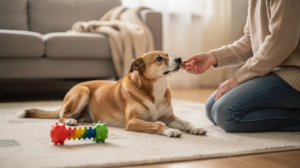
Dog resource guarding is when a dog protects something they value, like food, toys, a bed, a person, or a space. This behavior can be subtle, like freezing or turning away, or obvious, such as growling, snapping, or biting.
It’s an instinct dogs developed to survive by protecting resources like food and shelter, especially during scarcity. While natural, resource guarding can be dangerous at home, particularly around children, guests, or multiple pets.
A guarding dog isn’t “bad” or “dominant”—they’re worried about losing something important. The term “resource guarding” focuses on what the dog is protecting rather than blaming the dog. Studies show about 15% of shelter dogs display some guarding, often mild like freezing.
Different dogs guard different things—food bowls, toys, beds, favorite people, or spaces. The behavior varies by the dog’s experiences, environment, and presence of others. Common triggers include food, toys, chews, resting spots, people, tight spaces, competition, past punishment, and stress.
Dogs guard because they fear losing a valued item. If people frequently take things without giving anything back, dogs learn to see approaching hands as threats.
Signs range from stiffening, freezing, hard staring, or eating faster to growling, snapping, lunging, or biting. Dogs may fight to keep items or run away with them. Growling is a warning, not a challenge, and punishing it can increase aggression.
Keeping notes on what, when, and how your dog guards helps understand and manage the behavior safely.
How to Safely Manage a Resource Guarding Dog Day to Day
Management means changing the environment and routine, so your dog has fewer reasons to guard. It does not replace training, but it lowers the chance of biting and helps everyone stay safe while behavior modification is underway.
Training for resource guarding should begin with management strategies, such as feeding the dog in a separate area to prevent them from feeling threatened while eating, which helps reduce the likelihood of guarding behavior. Using management strategies can help prevent resource guarding before it starts.
Try these practical steps:
- Feed dogs with food aggression in separate rooms, crates, or behind a baby gate.
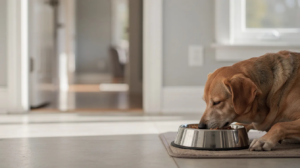
- Create a quiet feeding area where the dog can eat without people, children, or other pets walking by.
- Do not reach into the dog’s food bowl while the dog is eating.
- Wait until the dog has finished eating before picking up bowls.
- Avoid grabbing bones, toys, or high-value chews directly from a guarding dog.
- Pick up high-value items when you cannot supervise.
- Managing the environment by removing access to items that your dog may guard can help prevent the development of resource guarding behaviors.
- High-value items should be kept out of reach to limit guarding behavior.
- Give long-lasting chews only when the dog is alone in a safe space.
- Use gates, crates, closed doors, or leashes indoors when needed to prevent conflict.
- Block access to guarded furniture, beds, couches, narrow hallways, or resting places until training improves safety.
- In multi-dog households, avoid letting dogs crowd each other during meals, treats, or chew time.
- Keep children away from dogs who are eating, chewing, resting, or holding toys.
- On dog walks, be alert around dropped food, trash, sticks, dead animals, or anything your dog may decide is worth guarding.
Avoiding actions that may decrease your dog’s trust, such as reaching into their food bowl or taking away their toys without positive reinforcement, is crucial in preventing resource guarding.
Teaching your dog early on that your presence is associated with positive outcomes can help prevent resource guarding behaviors. For example, calmly walking by and dropping a treat near the bowl can help some dogs learn that people approaching mean good things happen.
The goal is not to “let the dog win.” The goal is to reduce pressure so the dog does not feel forced to defend the resource.
Gentle Training: How to Start Changing Resource Guarding
Training should be slow, positive, and focused on changing how the dog feels. You are not just teaching obedience. You are changing the dog’s emotional response to people, dogs, or hands near valued items.
Counter conditioning is a key technique in training for resource guarding, where the goal is to change a dog’s emotional response to the presence of a person approaching their guarded item, making it a positive experience instead of a threatening one. A 2024 review of counterconditioning research found that it can help reduce unwanted behaviors, though careful setup and consistency matter. You can review the summary in this systematic review on counterconditioning.
Here are high-level training steps:
- Start with safety. Use distance, gates, leashes, or separate spaces so nobody is at risk.
- Begin with lower-value items that the dog guards lightly, not the most highly valued food or chews.
- Approach only to a distance where the dog stays loose and relaxed.
- Toss high-value treats, then move away.
- Repeat until the dog looks happy when you approach.
- Gradually work closer only if the dog stays relaxed.
- Use the trade game with care.
- The “Trade” Game is a technique where a trainer offers a higher-value item in exchange for a guarded item.
- Offer a better treat, let the dog move away from the item, and only remove the item if the dog is calm.
- Teach “drop it” and “leave it” with easy toys first.
- Teaching commands like ‘drop it’ and ‘leave it’ are essential skills for dogs that struggle with resource guarding, as these commands help them learn to relinquish items willingly and safely.
- Reward good behavior generously.
- Keep sessions short, often just a few minutes.
- End before the dog becomes tense, worried, or defensive.
Positive reinforcement matters because it teaches the dog that cooperation pays. When dogs learn that people bring high-value treats, trades, and safety, they are less likely to guard.
In some cases, a dog trainer may build a full treatment plan that includes counter conditioning, management, obedience cues, relaxation skills, and safe practice around food bowls or toys. Severe cases should not be handled through trial and error.
What Not to Do With a Resource Guarding Dog
Some common advice can quietly make resource guarding worse. Avoid these mistakes:
- Do not punish growling, snapping, freezing, or other warning signs.
- Do not try to prove control by taking the dog’s food bowl away while the dog is eating.
- Do not stick your hands into food bowls to “teach the dog to accept it.”
- Do not repeatedly remove toys, bones, or food items without trading.
- Do not hit, yell, pin, or use rough handling to correct guarding behavior.
- Do not use forced “alpha rolls” or dominance methods.
- Do not assume the dog is trying to become the top dog.
- Do not chase a dog that runs away with a stolen item.
- Do not grab items quickly from the dog’s mouth unless there is an immediate emergency.
- Do not let children test the dog around food, toys, or resting places.
- Do not ignore mild signs until they become biting.
- Do not rely on internet “quick fixes” for aggression cases.
- Do not move too fast from easy items to high-value chews or meals.
Grabbing, chasing, and punishing often teach the dog that people are unsafe around resources. That can damage trust and make guard items more intensely defended next time.
When to Get Professional Help
Some resource guarding cases are risky and deserve one-on-one support. Asking for help does not mean you failed. It means you are taking safety seriously.
Seek help from a qualified dog trainer, Certified Dog Behavior Consultants (CDBC), a veterinary behaviorist, or professionals certified through the Certification Council for Professional Dog Trainers if you see these red flags:
- The dog has bitten a person or another animal.
- The dog has snapped close to the skin.
- Guarding is directed at children.
- The dog guards multiple items or spaces.
- Guarding is spreading to new situations.
- The dog guards people from other humans or other pets.
- You feel afraid of your dog.
- There is severe food aggression.
- Guarding between dogs is creating fights.
- The dog swallows dangerous objects to avoid losing them.
- The dog has other behavior issues that raise risk.
Medical issues can also matter. Pain, dental problems, stomach issues, vision changes, or arthritis can make a dog less tolerant. Severe food aggression or guarding between dogs may require a veterinary check to rule out pain or medical causes.
Ask your veterinarian about a physical exam, and in more complicated cases, a thorough physical exam may be important before training begins. This is especially true if guarding appears suddenly in an adult dog.
When you contact a professional, share details:
- When the guarding started
- What items are guarded
- Who was nearby
- Whether other dogs or other animals were involved
- What the dog did
- Whether there has been biting
- What you have already tried
Choose help that uses reward-based, fear-free methods and has real experience with resource guarding, aggressive behaviors, and behavior modification. Trainer and author pat miller has long emphasized force-free handling and trust-building around guarded resources, which fits the modern approach many behavior professionals recommend.
Living With and Supporting a Resource Guarding Dog
Living with a resource-guarding dog can be frustrating, but improvement is possible. The goal is safer, calmer behavior, not perfection in every situation.
Most dogs do best with predictable routines. Feed at consistent times. Keep the feeding area quiet. Decide where the dog may eat, chew, and rest. Make sure every family member follows the same plan.
Helpful long-term habits include:
- Keep meals calm and predictable.
- Use separate rooms for dogs who compete over food.
- Put high-value items away when guests or children visit.
- Practice “drop it” and “leave it” as games, not confrontations.
- Teach a relaxed mat or bed cue so the dog has a safe place to settle.
- Supervise all interactions around food, toys, and resting places.
- Reward calm choices and good behavior.
- Keep notes so you can see progress over time.
Resource guarding in dogs can improve greatly when owners stop creating conflict and start building trust. Be patient. Move slowly. If your dog guards something, ask what would help the dog feel safer instead of forcing the dog to give it up.
Safe, consistent training can reduce stress for both the dog and the household.
FAQ: Dog Resource Guarding
These answers cover extra questions owners often have about dog resource guarding in everyday life.
Is resource guarding in dogs normal, or is my dog “aggressive”?
Resource guarding is common and rooted in normal behavior and survival instincts, even in well-cared-for pets.
A dog can show guarding behavior without being an “aggressive dog” in every part of life. What matters most is the intensity of the reaction, whether biting has happened, and whether the home feels safe. Focus on management and gentle training instead of labels like “good” or “bad.”
Can puppies show resource guarding, and what should I do if I see it early?
Yes. A puppy can begin resource guarding as early as a few months old, especially around food, stolen items, toys, or chews.
Start prevention right away. Trade treats for toys, walk past the bowl dropping food, and avoid grabbing items roughly. Keep interactions with the puppy’s food and chews calm and positive so the puppy learns that people nearby are safe. If the puppy growls, snaps, or bites to protect resources, especially around children, contact a professional early.
Will neutering or spaying stop resource guarding in dogs?
Spaying or neutering does not directly cure resource guarding. Guarding is usually about fear of losing things, not just hormones.
Some dogs may become generally calmer after surgery, but owners should not rely on it as the main solution. Management, careful training, positive reinforcement, and trust-building are still needed regardless of spay or neuter status.
Is resource guarding connected to other behavior issues like separation anxiety?
Resource guarding and separation anxiety are different behavior problems, but both can be made worse by stress and insecurity.
A dog who feels anxious or unsafe in general may react more strongly around food, toys, people, or resting spots. Calm routines, predictable schedules, safe spaces, and gentle training can help reduce stress that may feed both issues.
Can resource guarding ever be completely cured, or just managed?
Some dogs improve so much that resource guarding is rarely seen. Other dogs may always need extra management around high-value food, chews, or crowded situations.
Early, consistent training and safe routines often lead to major improvement. Think in terms of long-term progress and safety, not overnight change. With patience, many dogs learn that people approaching their resources can predict something good, not something scary.
Get Support for Managing Dog Resource Guarding
If your dog shows signs of resource guarding or you want help preventing it, don’t hesitate to reach out for professional guidance. A qualified dog trainer or behavior consultant can create a safe, effective plan tailored to your dog’s needs. With patience and consistent training, you can build trust and reduce guarding behaviors, making life safer and more enjoyable for everyone.
Start today by observing your dog’s behavior, practicing gentle management techniques, and seeking expert help when needed. Remember, safe, calm, and consistent training is the key to helping your dog feel secure around their valued resources.
