
Key Takeaways
- High energy and zoomies are normal for a hyperactive puppy, but structure and training help them settle.
- Calm behavior comes from a consistent puppy routine, age-appropriate exercise, and mental stimulation.
- Obedience skills like sit, down, place, recall, and leash manners build impulse control and calmer habits.
- Overstimulation and overtiredness are often the real reasons behind wild behavior, not a “bad” dog.
- If a hyper puppy is overwhelming daily life, professional puppy training can provide clear guidance and support.
Introduction: How to Calm a Hyper Puppy
If you are wondering how to calm a hyper puppy, you are not alone. Living with a puppy that seems to have an endless supply of energy can feel exhausting, especially when the biting, jumping, and zoomies never seem to stop.
The good news is that hyperactive behavior is common in young puppies and does not mean your canine companion is broken or badly behaved. Calm behavior is a skill that develops over time with routine, clear boundaries, and gentle puppy training. This article covers why puppies are so hyper, how to create a calmer home routine, simple training skills that make a real difference, and when to seek extra help.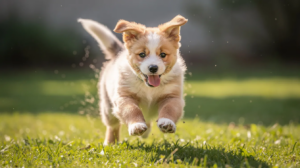
Why Puppies Become Hyper
Puppy energy, curiosity, and limited impulse control often look like nonstop hyperactivity. But most puppies are not truly hyperactive dogs in a clinical sense. They are simply young animals whose brains are still developing the ability to pause, think, and settle.
Certain dog breeds are naturally more energetic than others. Certain dog breeds are naturally more energetic than others. Herding dogs like Border Collies and other working breeds may need additional guidance to manage their energy productively.
Puppies explore the world with their mouths and feet, so biting, grabbing clothes, and racing through the house are all common behaviors during puppyhood. If mouthing becomes frequent or painful, learning how to stop a puppy from nipping and biting can help you redirect the behavior and establish better habits early. Factors like age, breed tendencies, and environment all influence how hyper a puppy appears.
Insufficient physical exercise and a lack of mental stimulation are two of the most common reasons puppies act out.
Common Triggers for Hyperactive Puppies
Many hyper puppies “switch on” around specific events. Recognizing common triggers helps you stay ahead of the chaos. Typical triggers include:
- Visitors arriving at the door
- Leashing up for a walk
- Mealtimes and food preparation
- Exciting toys or rough play with children
- Other dogs are playing nearby at a dog park or in a fenced yard
Noisy environments, frequent changes, and crowded outings can overstimulate a hyper dog quickly. Lack of sleep and inconsistent nap times often make hyperactive behavior worse in the late afternoon and evening. Try keeping a simple log of when your pup gets the wildest so you can spot patterns.
Overstimulation, Overtiredness, and Stress
There is a real difference between a happy, active puppy and one who is overstimulated or stressed. An overtired puppy often bites harder, ignores cues, tears through the house for no apparent reason, and struggles to settle in the crate.
Many young puppies need up to 18 to 20 hours of sleep each day, although individual needs vary. When they miss naps or experience too many new activities in one day, such as busy parks or long visits with other dogs, their behavior may become harder to manage at home. Quiet breaks and regular nap opportunities can reduce overtired behavior and help your pup settle more easily during waking hours.
If hyperactivity seems extreme, sudden, or paired with weight loss, constant pacing, excessive barking, or compulsive behaviors, talk to your vet. These can sometimes signal a health issue rather than normal puppy development.
How to Calm a Hyper Puppy at Home
Understanding how to calm a hyper puppy at home starts with one key idea: the goal is not to remove energy but to guide it into healthy routines and calm behavior patterns. Consistent expectations help hyperactive dogs learn when it is time to play and when it is time to rest. Small changes at home, repeated over days and weeks, make a big difference in how quickly a puppy can settle.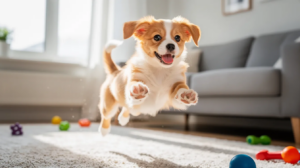
Build a Predictable Puppy Routine
Puppies thrive on predictable schedules for meals and naps. When mornings, afternoons, and evenings follow a similar pattern, dogs feel safer and calmer. A consistent daily routine helps puppies anticipate activities, which reduces anxiety and overexcitement.
Set regular times for:
- Wake-up and potty breaks
- Meals (regular meal times help stabilize a puppy’s energy levels)
- Short walks and play sessions
- Training sessions
- Nap periods throughout the day
A balanced mix of play and rest is essential for puppies. Young puppies often need multiple nap periods spread across the day. Maintaining a predictable schedule helps puppies regulate their routine, and inconsistent routines can lead to restless behavior. Post a simple schedule on the fridge so the whole family stays consistent. Keep in mind that changes like holidays or visitors may temporarily increase hyperactivity and require extra patience.
Nutrition supports a puppy’s overall growth, health, and development, but energetic behavior should not automatically be blamed on specific food ingredients. Feed a complete and balanced diet formulated for your puppy’s life stage, measure portions carefully, and keep treats to a small part of the puppy’s daily calories. If you notice sudden changes in appetite, weight, digestion, or behavior, speak with your veterinarian about whether a nutrition or medical issue may be involved.
Exercise: Age-Appropriate Ways to Use High Energy
Hyperactive puppies need movement, but too much exercise or the wrong type of activity can leave them overtired or overstimulated. Exercise should be matched to the puppy’s age, breed, health, fitness level, and stage of development rather than calculated with one fixed formula. Several short, self-paced walks and play sessions are usually more appropriate than one long or intense workout.
Puppies need several short play sessions daily rather than one long, exhausting outing. Good exercise ideas include:
- Gentle fetch in the yard
- Short walks around the block
- Engaging in structured tug with clear start and stop rules
Structured exercise gives your puppy an appropriate outlet for energy and supports a healthier daily routine. Keep activities short, controlled, and appropriate for your puppy’s stage of development. Avoid forced running, repeated stair climbing, or excessive jumping that places unnecessary strain on a growing puppy.
Following exercise with a calm activity, such as offering a puppy-safe chew in the crate or resting area, can help your puppy practice settling after play. Think of each session as part of a broader exercise plan that balances effort and recovery.
Mental Stimulation and Enrichment
Mental stimulation gives a hyper puppy a focused way to use energy without relying only on physical exercise. Sniffing, searching, and simple problem-solving activities provide valuable enrichment and may help some puppies settle more easily afterward. Keep these activities short and enjoyable so the puppy stays engaged without becoming frustrated or overwhelmed.
Try these enrichment tools:
- Snuffle mats for scatter feeding
- Puzzle toys that make your puppy work for kibble
- Nose work games with hidden treats around the house
- Interactive toys that provide essential mental stimulation
Giving meals in puzzle toys or scatter-feeding in the yard encourages sniffing and problem-solving. Even 5 to 10 minutes of focused enrichment can help a high-energy puppy relax more easily afterward. Rotate toys and activities across the week so your puppy stays engaged without being overwhelmed. Mental challenges like these build focus and support better self-regulation over time.
Create Calming Spaces and Use Crate Training
A crate or quiet puppy zone can provide a comfortable place where an energetic puppy can rest away from household activity. Gradual, positive crate training can help puppies become more comfortable with structured downtime.
Introduce the crate slowly with treats, comfortable bedding when appropriate, and a puppy-safe chew so the puppy associates the space with rest and comfort. Avoid placing essential oils, diffusers, or strongly scented products near the resting area unless your veterinarian confirms that the specific product and method are safe. Soft background music or white noise may help reduce distracting household sounds during naps.
Many energetic puppies benefit from a quiet crate or separate resting area away from busy hallways and television noise. If you partially cover the crate to reduce visual distractions, keep the ventilation openings clear and make sure the puppy cannot pull the covering inside. Use the crate for comfortable rest and downtime, never as punishment, and build positive associations gradually.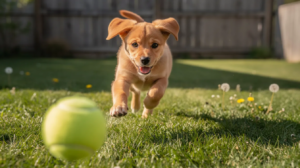
Simple Training Skills That Build Better Habits
Basic obedience is one of the most effective ways to guide a hyper puppy’s energy into productive behavior. Training provides structure, clear communication, and impulse control in real-life situations.
Training sessions for puppies should be short but frequent. Sessions of 3 to 5 minutes often work well for energetic puppies with developing attention spans, although the ideal length varies by puppy. The goal is not perfection in one day, but consistent practice that turns skills into everyday habits.
Core Obedience Skills for Hyper Puppies
Start with the foundations that every puppy should learn early:
- Sit: Gives your puppy an alternative behavior to jumping or rushing toward people.
- Down: Encourages your puppy to remain in a lower, more settled position.
- Place: Teaches your puppy to remain on a designated bed or mat while normal activity continues nearby.
- Recall (come): Helps you redirect your puppy away from play or excitement when the cue has been practiced reliably.
- Leash manners: Builds more controlled walking habits and helps reduce pulling around people, dogs, and other distractions.
Practice these skills first in quiet areas indoors before adding distractions like the yard, driveway, or front sidewalk. Redirecting biting urges onto chew toys is also key for hyperactive puppies during training. As your puppy grows more reliable, you can begin transitioning to more advanced training.
Building Impulse Control
Impulse control is the puppy’s ability to pause and think instead of reacting automatically to every sight, sound, or smell. Impulse control games can be used to train puppies effectively. Try these simple exercises:
- Wait at the door before going outside
- Leave it with food on the floor
- Sit before getting the leash or meal
Clicker training helps teach calm behavior effectively by marking the exact moment your puppy makes a good choice. Use clear markers like “yes” or a clicker paired with small treats to reward moments of self-control. Practice impulse control daily in short bursts, such as before going outside or greeting family members.
Rewarding Calm Behavior
Many owners accidentally reward hyperactive behavior by talking, touching, or playing when the puppy is wild. Instead, quietly notice and reward calm behavior like lying on a mat, chewing a toy, or choosing to rest near the family.
Teaching commands like “settle” rewards calm behavior and gives your dog a clear signal for what you want. Use gentle praise, calm petting, or a small treat delivered slowly when the puppy is relaxed. Rewarding the behavior you want helps your puppy understand which choices earn praise, treats, attention, or access to activities.
Pause interactions when the puppy gets overly excited, and resume only when four paws are on the floor or the dog sits. Over time, most puppies learn that calm behavior brings more attention and access to fun.
Common Mistakes That Can Increase Puppy Excitement
Small daily habits often keep a hyper puppy stuck in a cycle of wild behavior. The tips below are not about blame. They are about quick adjustments owners can make right away. Changing how humans respond to a hyper dog is often just as important as changing the dog’s routine.
Overdoing Exercise Without Balance
Long, intense play sessions can leave hyperactive puppies more wired instead of satisfied. Constant stimulation, such as hours at dog parks with other dogs, can increase reactivity and overexcitement. Replacing training and structure with endless fetch or rough play rarely produces a calm dog.
Pair active games with calm decompression time, like a stuffed chew toy in the crate, to teach the puppy to settle. High energy plus no boundaries often leads to jumping, mouthing, chewing, and difficulty listening.
Inconsistent Rules and Routines
Mixed messages confuse a hyper puppy. Letting the puppy burst through doors one day and expecting a sit-and-wait on another teaches nothing. Everyone in the house should use the same words, cues, and expectations for calm behavior. Consistent training helps puppies understand expectations and can reduce undesirable behavior over time.
Create simple household rules, such as “sit before everything the puppy wants,” to build predictability. Hyperactive behavior often decreases once the puppy can predict what works and what does not. Inconsistent routines can lead to restless behavior in puppies at any age.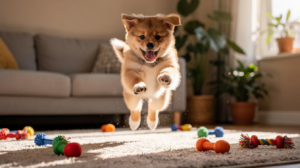
Too Much Attention for Wild Behavior
Shouting, chasing, or wrestling with a hyper puppy often feels like a fun game to the dog. Even negative attention can reward hyper dogs who are seeking interaction. Calm, consistent handling can help owners avoid adding more excitement to an already energetic situation.
Calmly remove access to rewards (toys, attention, movement) when the puppy is wild, and offer them again when the dog calms down. Plan quiet greetings at the door with the puppy on a leash or behind a baby gate to prevent chaotic jumping on guests. Noticing and praising calm behavior must happen more often than reacting to chaos.
Final Thoughts
Learning how to calm a hyper puppy is a gradual process, not a one-day fix. High energy and curiosity are normal, especially in puppies and adolescent dogs, but structure and consistent training help channel that energy into better habits.
Stay patient, keep routines predictable, and celebrate small improvements in calm behavior. Combining age-appropriate exercise, mental stimulation, comfortable rest periods, and obedience skills can help a puppy develop into a calmer and more confident adult dog. Avoid relying on herbal products, essential oils, or calming scents unless your veterinarian recommends a specific product that is appropriate for your puppy.
It is never too early or too late to start building better habits with a hyper puppy. If your dog’s behavior feels overwhelming, professional training can help you build a clear routine, stronger obedience skills, and a calmer everyday life together.
FAQ
When do most puppies start to calm down?
Many puppies begin to show better self-control between their first and second year. Some high-energy breeds, like Border Collies and other herding dogs, may mature more slowly. Regular puppy training, impulse control games, and consistent routines can help calm behavior appear earlier. Focus on progress over weeks and months instead of waiting for a single age when everything changes. Each dog is individual, and breed, genetics, and environment all influence energy levels.
Is my puppy hyperactive or just bored?
Bored puppies often create their own fun with destructive behavior like chewing, digging, and racing around, especially when left without guidance. If adding structured exercise, mental stimulation, and training sessions improves your dog’s behavior, boredom was likely a major factor. True clinical hyperactivity is rare and usually diagnosed by a vet after a full health check. Talk with your veterinarian if intense hyperactivity persists despite a solid routine and age-appropriate activity.
How can I handle evening zoomies and wild behavior before bed?
Evening zoomies are a common mix of leftover energy and overtiredness in young puppies. A predictable pre-bed routine helps: try a short, calm walk or potty break, a brief training game, and a quiet chew in the crate. Reduce rough playtime and loud games in the hour before bedtime. Stay calm, avoid chasing the puppy during zoomies, and redirect gently to a simple sit or a safe toy.
What should I do if my puppy cannot settle when left alone?
Some puppies struggle when they are left alone, but the cause may be normal adjustment, incomplete alone-time training, confinement distress, or separation-related anxiety. Begin with very short absences that do not cause panic and use a safe area where the puppy can remain comfortable. Do not force crate confinement if it leads to intense barking, drooling, escape attempts, or possible injury, and contact your veterinarian or a qualified behavior professional when serious distress continues.
When should I consider professional puppy training for a hyper dog?
Professional help is useful when a hyper puppy’s behavior feels overwhelming or starts affecting daily life at home. A trainer can design a clear exercise plan, puppy routine, and obedience program tailored to your dog’s age and energy levels. Early training often prevents bigger behavior issues later, especially in high-energy or working breeds. If you want help building calm behavior, better leash manners, and reliable everyday obedience, consider reaching out for a structured training program to give your puppy the best start in life.
