
Introduction
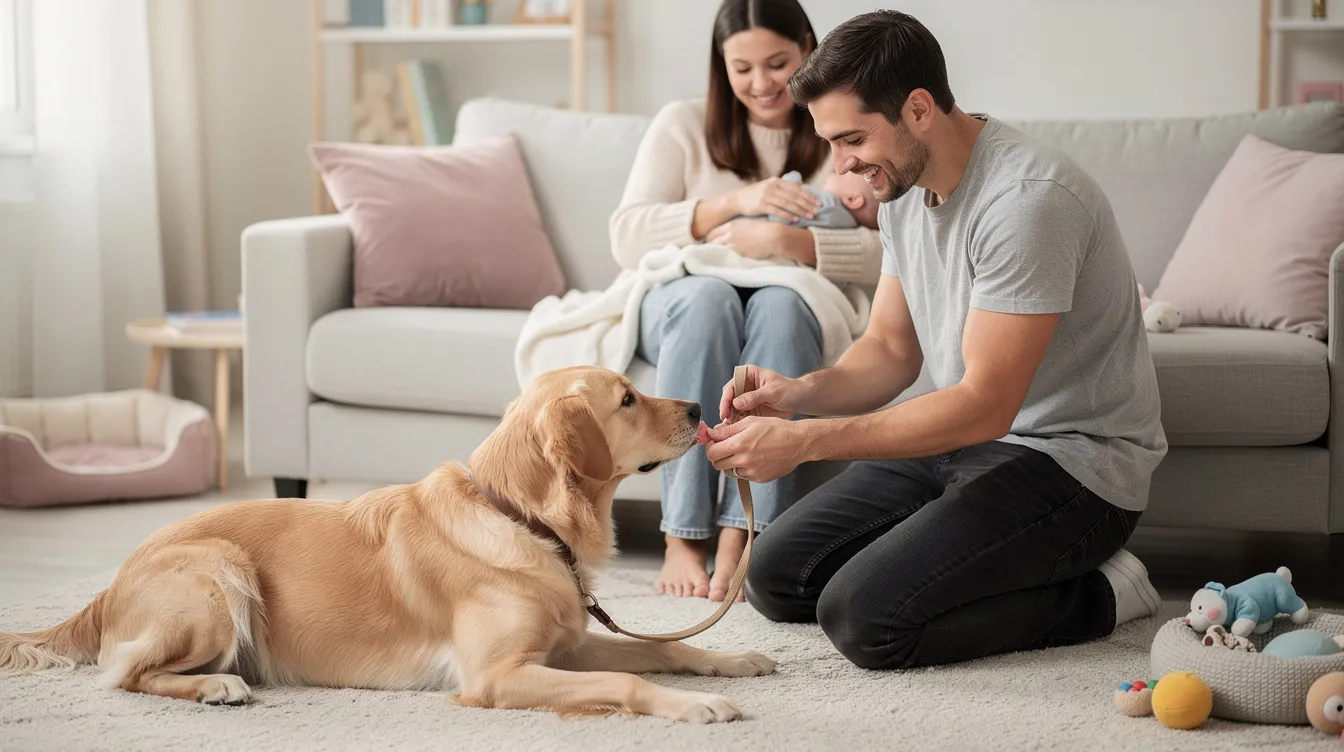
Bringing a new baby home changes your dog’s entire world: the sounds, the smells, the schedule, and the amount of attention available. Knowing how to introduce your dog to a new baby before and after the baby arrives determines whether the transition is smooth or stressful for the whole family.
This guide covers three phases: pre-arrival preparation (starting months before the due date), the controlled first meeting process, and ongoing management during the first few weeks and beyond. It does not cover medical decisions about your pet’s health or cases where a dog has a history of biting; those situations require a veterinary behaviorist.
The target audience is dog parents in Southwest Florida who are expecting a new family member and want a clear, step-by-step plan. Whether you have a Labrador who has never been around young children or a smaller breed that already shares the house with older children, this guide applies.
Here is the direct answer: successfully introducing a dog and the baby requires starting preparation 3 to 6 months before the baby’s birth, using scent and sound desensitization, conducting controlled first meetings with a leash, and maintaining ongoing supervision. No shortcut replaces that timeline.
By the end of this guide, you will have:
- A week-by-week preparation timeline starting months before your due date
- Proven scent introduction and first meeting techniques backed by veterinary behavioral guidelines
- Solutions for resource guarding, jealousy, and overstimulation
- Safety protocols for every stage, from newborn baby through crawling
- Clarity on when to seek professional training support
Understanding Canine Psychology During Family Changes
Dogs interpret household structure through consistent routines, access to resources (food, attention, resting spots), and predictable social roles. When a new arrival disrupts those patterns, dogs rely on their prior training and temperament to cope. Understanding how your dog processes change is the foundation for every preparation step that follows.
Pack Dynamics and Hierarchy Shifts
Dogs view families as social units with predictable patterns of interaction. Your dog knows who feeds it, who walks it, who allows it on the couch. A new baby shifts those patterns: the baby’s room may become off limits, a family member who once spent quality time with the dog now focuses on feeding schedules, and more visitors enter the house during those early weeks.
Dogs that have received consistent training and clear boundaries before these changes adjust more quickly. According to VCA Hospitals, dogs exhibiting aggression or fear around children often lacked early exposure to children or consistent leadership when facing new situations. The takeaway: dogs without established basic manners and clear house rules before the baby comes face a steeper adjustment curve.
Stress Responses and Behavioral Indicators
Dogs may feel unsettled due to changes in routine, and they communicate discomfort through specific body language. Early warning signs include lip licking, yawning when not tired, a tucked dog’s tail, ears pinned back, and avoidance of the new stimulus. More serious indicators include growling (which is a warning signal that should never be punished, only addressed), resource guarding, or snapping.
UC Davis veterinary guidelines confirm that dogs undergoing major household changes show elevated cortisol levels. Recognizing stress signals early, before they escalate to aggression, gives you time to intervene with redirection or distance. Indifference towards the baby actually indicates a relaxed dog; you want calm neutrality, not anxious fixation.
Aggression or extreme fear requires professional help. VCA reports that while most dogs accept infants after a period of adjustment, roughly 5 to 10 percent show distress or aggression that demands a veterinary behaviorist’s direct involvement.
With stress indicators understood, the next step is building a preparation plan that reduces the number of surprises your dog faces when the baby arrives.
Pre-Arrival Preparation Strategies
The goal of preparation is to separate the changes from the baby’s arrival. If your dog’s routine, environment, and sensory experience all shift on the same day the baby comes home, the dog associates every disruption with the new family member. Spreading changes across weeks prevents that connection.
Environmental and Routine Adjustments
Start preparing the physical environment 3 to 4 months before the due date. Set up baby equipment (crib, stroller, swing, high chair) months in advance for your dog to explore at its own pace. Introduce baby items gradually to avoid overwhelming your dog; add one piece of gear per week rather than assembling an entire nursery overnight.
Install baby gates to establish which rooms have free access and which are off limits. If the baby’s room will be a no-dog zone, begin enforcing that boundary now. Gradually introduce changes to your dog’s routine before the baby arrives: adjust your dog’s routine months before the baby arrives by shifting walk times, feeding locations, and sleeping arrangements so the dog acclimates to the new normal without connecting it to the baby. Set a realistic walking schedule before the baby comes home; if you currently walk twice daily for 45 minutes but know that will drop to 20 minutes post-baby, start tapering now. Consider hiring a dog walker to maintain exercise consistency during the first few weeks.
Dogs thrive on routine. Create a routine that includes both the dog and the new baby to ease transitions, even if that means shorter but more consistent interaction windows.
Essential Obedience Skill Reinforcement
Four commands matter above all others when a baby enters the picture: sit, stay, place (go to your mat/bed), and leave it. Practice skills like “leave it” and “stay” for better management around the baby. A strong recall (“come”) ensures you can call your dog away if the baby starts crying and the dog becomes agitated. “Leave it” prevents your dog from grabbing the baby’s toys or clothes.
Teach your dog basic commands like sit and stay before the baby comes, and practice them in distracting environments (outdoors, with noise, around friends) rather than only in a quiet living room. UC Davis guidelines note that dogs obeying basic commands perform measurably better in the presence of infants when those commands have been reinforced amid distractions. If your dog’s obedience is inconsistent, a private training program or board-and-train program compresses the timeline and builds reliability under pressure.
Teach a reliable cue system to manage dog behavior around the baby. Start teaching “place” as a default behavior: the dog goes to a designated mat or bed and stays there until released. This single command becomes your most-used tool during diaper changes, feeding, and tummy time.
Sensory Desensitization Training
Babies produce sounds, smells, and movements that are completely foreign to most dogs. Introduce baby-related sights and sounds gradually to reduce stress for the dog.
Sound: Play baby sounds at low volume to acclimate your dog. Use recorded baby noises (crying, cooing, shrieking) and increase volume over 4 to 6 weeks. Reward calm behavior with a tasty treat each time the sound plays. If the dog starts pacing or showing stress, lower the volume and rebuild.
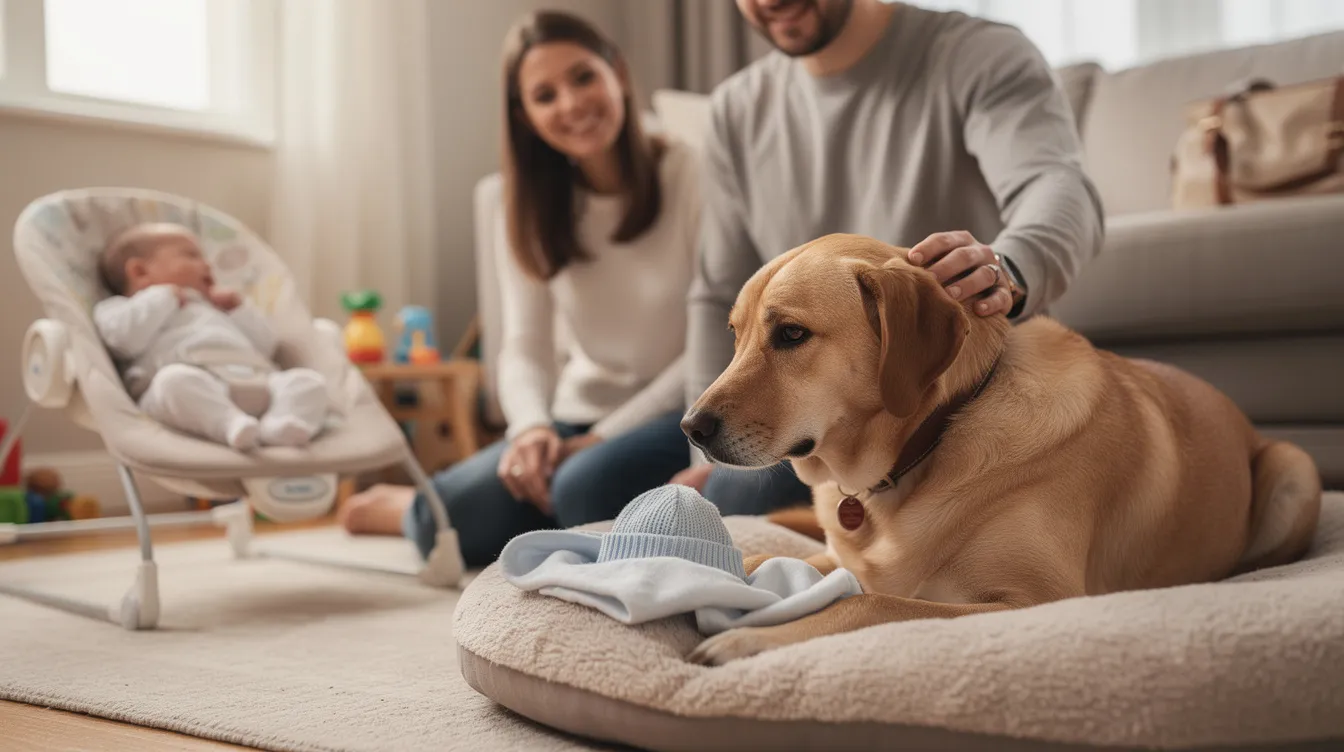
Scent: Practice introducing baby-related items and scents before the baby arrives. Apply baby powder and lotion to a blanket, and let the dog sniff it during calm moments. Allow your dog to sniff baby clothes before the baby arrives so the baby’s smell is already familiar. Introduce baby scents before arrival using baby clothes sent from friends or purchased new.
Motion: Use a doll in a stroller or swing to mimic the unpredictable movement of a real baby. Move the doll while asking the dog to hold a “stay” or “place” command, rewarding stillness.
The ideal preparation window is 8 to 12 weeks. Sessions should last 5 to 10 minutes daily, with gradual intensity increases. Preparing a dog for a new baby requires gradual positive association; rushing the process creates more anxiety, not less.
Step-by-Step Introduction Process
Everything above builds toward the actual meeting. The first interaction between your dog and the newborn baby sets the emotional tone for months. A calm environment is crucial for the first introduction of a dog and a baby.
Hospital Scent Introduction Protocol
Before you bring the baby home, bridge the gap between preparation and reality with the baby’s scent.
- Send a scent item home early. Have a family member bring a blanket or piece of the baby’s clothes from the hospital 24 to 48 hours before discharge. This gives the dog time to investigate without the added stimulus of a crying infant.
- Pair scent with rewards. Let the dog sniff the item while receiving high-value treats. Soft, aromatic treats work best. This builds a positive association between the baby’s smell and something the dog enjoys.
- Practice settling near the item. Place the blanket in the same room where the dog relaxes. Ask the dog to hold a “settle” or “place” command near the item for 15 to 20 minutes, rewarding calm posture throughout.
- Feed meals near the scent. Position the dog’s food bowl close to the baby scent item so the dog’s strongest positive drive (eating) connects to the new smell.
AKC and ASPCA guidelines confirm that introducing scent ahead of the real baby reduces startle responses and shifts the dog’s reaction from fear to curiosity.
First Meeting Methodology Comparison
Two approaches work for the first face-to-face meeting. The right choice depends on your dog’s temperament and your living space.
| Factor | Outdoor Introduction | Indoor Introduction |
|---|---|---|
| Control Level | More physical space for distance management; easier leash handling | Familiar territory; may trigger territorial behavior in some dogs |
| Stress Reduction | Fewer echoes from baby noises; open air reduces sensory overload | Scent of home can be calming, but concentrated baby-gear smells may overwhelm |
| Space Management | Dog can retreat naturally; no corners or tight hallways | Requires pre-set baby gates, crates, or gated areas to manage movement |
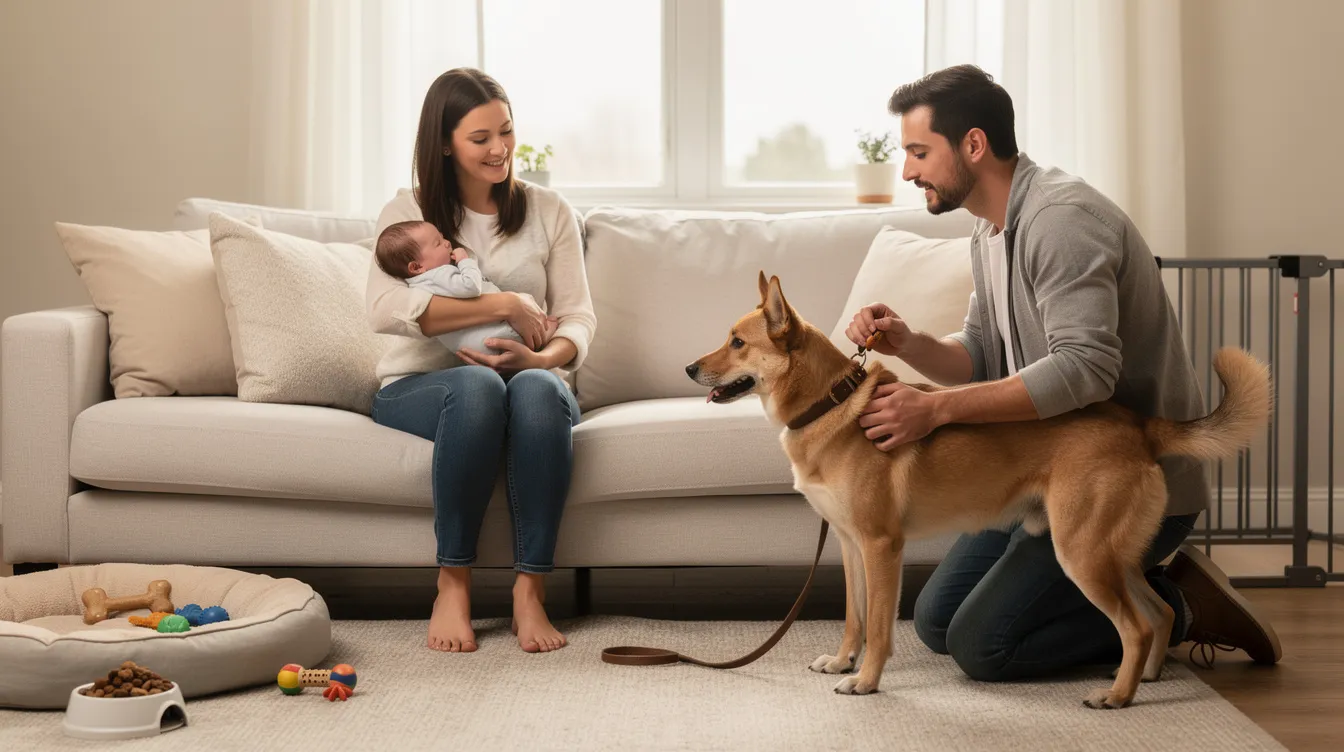
Use a leash during the first introduction to the baby regardless of method. Allow your dog to sniff the baby from a distance first. Let the dog gently approach at its own pace; do not force proximity. Keep your dog on a leash during the first introduction and have at least two adults present.
For dogs that are large, excitable, or have shown separation anxiety or stress behaviors indoors, outdoor introductions provide the retreat space that prevents cornered-animal reactions. In Southwest Florida, year-round mild weather makes outdoor introductions feasible for most of the year, though you should move indoors during high heat or thunderstorms. For smaller or naturally calm dogs, an indoor introduction in a prepared room with safe zones works well.
Reward calm behavior to create positive associations with the baby. Provide positive reinforcement when the dog interacts calmly with the baby. Never leave your dog and baby unsupervised together, even for a moment.
Common Challenges and Solutions
Even families who start preparing months ahead encounter friction. Three problems appear most frequently during the first few weeks after the baby arrives.
Resource Guarding Around Baby Items
Some dogs treat baby’s toys, blankets, or even the baby’s presence as resources to control. The dog starts growling when someone approaches items it has claimed, or it picks up baby items and refuses to release them.
The solution begins well before the baby comes home. Train “drop it” and “leave it” using the dog’s own toys first, then gradually introduce baby items during supervised sessions. Offer a high-value chew toy as a swap whenever the dog picks up something belonging to the baby. Keep baby items out of the dog’s free access zones when you are not actively supervising. For dogs with established resource guarding patterns, professional intervention before the baby’s arrival prevents escalation.
Attention-Seeking Behaviors and Jealousy
When a new baby absorbs parental attention, some dogs bark, nudge, jump, or act out to reclaim dog attention. This is not spite; it is a learned behavior pattern where the dog has discovered that disruption produces interaction.
Allocate 5 to 10 minutes daily for quality time with your dog, separate from baby care. A short walk, a training session, or spending time playing fetch while the baby naps gives the dog its own predictable window of engagement. Build positive associations with the baby’s presence by delivering treats or affection when the baby cries, so the dog learns that baby sounds predict good things rather than competition. A structured daily routine where the dog gets its own consistent attention window reduces attention-seeking behavior because the dog learns when its turn comes.
Overstimulation During Baby Care Routines
Feeding, diaper changes, and tummy time create noise and movement that can push a dog past its threshold. The dog paces, whines, or tries to insert itself into the activity.
Set up a crate or gated area for the dog to have their own calm space. Train the “place” command so you can send the dog to its designated spot when baby care begins. Set up safe zones for the dog to retreat from baby-related activities; these should be comfortable areas with a bed, water, and a chew toy. The dog should associate its calm zone with relaxation, not punishment. Observe dog body language for signals of stress during baby interactions and intervene before the dog reaches its breaking point.
As the baby grows and becomes mobile, new challenges emerge. A crawling baby grabs ears, pulls on the dog’s tail, and invades the dog’s space. This is where reliable off-leash obedience becomes critical; you need to call the dog away from a crawling baby without physically intervening every time.
Conclusion and Next Steps
A safe introduction between your dog and your new baby is not a single event; it is a process that starts months before discharge day and continues as the baby grows into a toddler spending time on the floor alongside the family pet. The dogs that adjust best are those whose owners invested in obedience, desensitization, and routine changes well before the baby arrived.
Your immediate action steps:
- Schedule a professional consultation to assess your dog’s current obedience level and temperament. A trainer can identify gaps you might not see. Private lessons in Fort Myers provide customized plans for expecting families.
- Begin your preparation timeline 3 to 6 months before your due date. Introduce environmental changes, adjust routines, and install baby gates in the first month.
- Implement daily obedience reinforcement focusing on place, leave it, stay, and recall. Practice in distracting settings so the commands hold when the house fills with new sounds and more visitors.
As your baby grows and starts crawling, walking, and interacting with the dog, the training needs evolve. Gradually introduce your dog to each developmental stage. Families that maintain training through the toddler years often find their dog develops a close bond with the child, and some dogs go on to excel in therapy dog work because of their early exposure to unpredictable human behavior.
The transition from a fur-baby household to a family with a newborn is a wonderful experience when both the baby and the dog have their needs met. Make sure your dog enters this chapter with solid training, and the whole family benefits.
Additional Resources
- Free consultations for expecting families: Off Leash K9 Training in Fort Myers and Southwest Florida offers assessments for dog parents preparing for a new baby. Contact the team to discuss your dog’s specific needs and timeline.
- Puppy preparation programs: For families planning both a puppy and a baby, early socialization and obedience training prevents compounding two major life transitions.
- Emergency behavior support: If your dog has already shown reactivity or fear around young children, do not wait. A board-and-train program can address behavioral concerns on an accelerated timeline when the due date is approaching.
